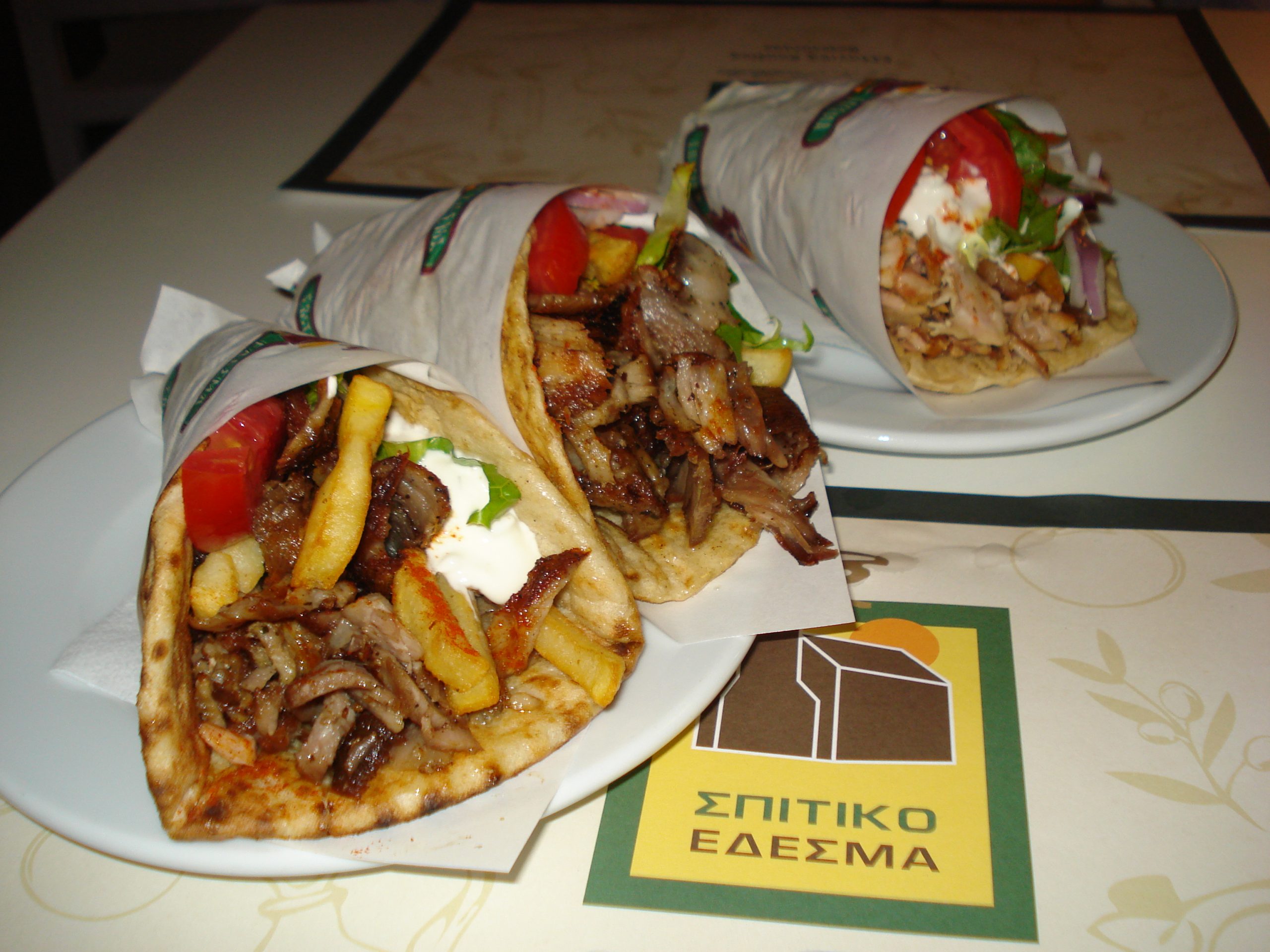
Gyros is the street food that fuels Greece: seasoned meat roasted until the edges crisp, sliced thin, and tucked into a warm pita with tomato, onion, a handful of fries, and a generous smear of cool tzatziki, then wrapped up to eat on the move. It is savory, garlicky, tangy, and satisfying, the whole thing eaten out of hand. Making it at home skips the giant vertical spit but keeps everything that matters: well-marinated meat cooked hot, warm pita, and the right fillings, including those fries.
Greek Street Food
Gyros takes its name from the Greek word for turn, a reference to the vertical rotisserie the meat is cooked on, where stacked, seasoned meat rotates against a heat source and is shaved off as the outside cooks. In Greece it is most often made with pork or chicken, served wrapped in a soft pita with tomato, onion, fried potatoes, and tzatziki. It is fast, cheap, filling food, sold from shops on nearly every street. It belongs to a broad family of vertical-spit meats found across the eastern Mediterranean and Middle East, each region with its own version.
Cooking Without a Spit
The authentic gyros needs a vertical rotisserie stacked with meat, which no home kitchen has. The good news is you can get excellent results other ways. Slice the meat thin, marinate it, and cook it in a hot pan or on a grill until the edges char and it cooks through. For something closer to the original, stack the marinated slices on skewers into a loaf and roast it, then shave off the outside. Any of these gives you the seasoned, crisp-edged meat that makes a gyros. The key is high heat for those browned, charred edges that carry so much flavor.
The Marinade
The flavor of gyros meat comes from its marinade, and the essential notes are Greek: olive oil, red wine vinegar, lots of garlic, and dried oregano, rounded out with warm spices like paprika, cumin, and coriander. The vinegar tenderizes and adds tang, the oregano and garlic give it that unmistakable Greek character. Marinate the sliced meat for at least a few hours, or overnight, so the flavor penetrates. Pork shoulder, with its fat, stays juicy and is traditional; chicken thighs work well and are common. Whichever you use, do not skimp on the garlic and oregano, since they define the taste.
The Fillings, Fries Included
What goes in the wrap is not negotiable if you want a real Greek gyros. Alongside the meat go sliced tomato, sliced red onion, tzatziki, and, crucially, a handful of fried potatoes tucked right inside the pita. The fries in the wrap surprise people used to gyros abroad, but in Greece they belong there, adding starch and crunch. The tzatziki, the cool garlic-yogurt-cucumber sauce, is what ties it all together, cutting the richness of the meat. Some add a sprinkle of paprika. Keep the fillings simple and traditional; the combination is balanced exactly as it is.
Wrapping It Up
Assembly is quick and the technique matters a little. Warm the pita first, briefly on a hot pan or grill, so it turns soft and pliable and wraps without cracking. A stiff, cold pita splits and spills. Lay the meat down the center, add the tomato, onion, fries, and a generous spoon of tzatziki, then roll the pita up tightly around the filling and wrap the bottom in paper to hold it together and catch drips. Eat it right away, while the pita is warm and the meat is hot. A gyros is meant to be eaten fresh and by hand, on the go.
Serving and Variations
Beyond the classic wrap, gyros meat is served as a plate, gyros merida, with the pita, fries, salad, and tzatziki arranged alongside rather than rolled together, which suits a sit-down meal. The same marinated meat works in bowls over rice or salad too. Make extra marinated meat and it cooks fast for quick meals through the week. Set out the pita, fillings, and tzatziki and let everyone build their own wrap, which makes gyros a fun, casual dinner for a group. Serve with extra tzatziki and lemon wedges on the side.
Common Questions
What meat is traditional?
In Greece, pork and chicken are the usual choices for gyros. Pork shoulder stays juicy thanks to its fat; chicken thighs work well too. Lamb and beef are used in some places and in related dishes across the region.
Do fries really go inside?
Yes. In an authentic Greek gyros, fried potatoes go right inside the pita with the meat and tzatziki. It surprises people used to versions abroad, but the fries are traditional and add welcome crunch and starch to the wrap.
How do I get the meat crisp without a spit?
Slice the meat thin and cook it over high heat in a hot pan or on a grill so the edges char. For a closer imitation, stack marinated slices on skewers, roast the loaf, and shave off the browned outside.
Gyros is a Greek street food of meat cooked on a vertical rotisserie, sliced thin and served in pita bread with tomato, onion, fried potatoes, and tzatziki sauce.