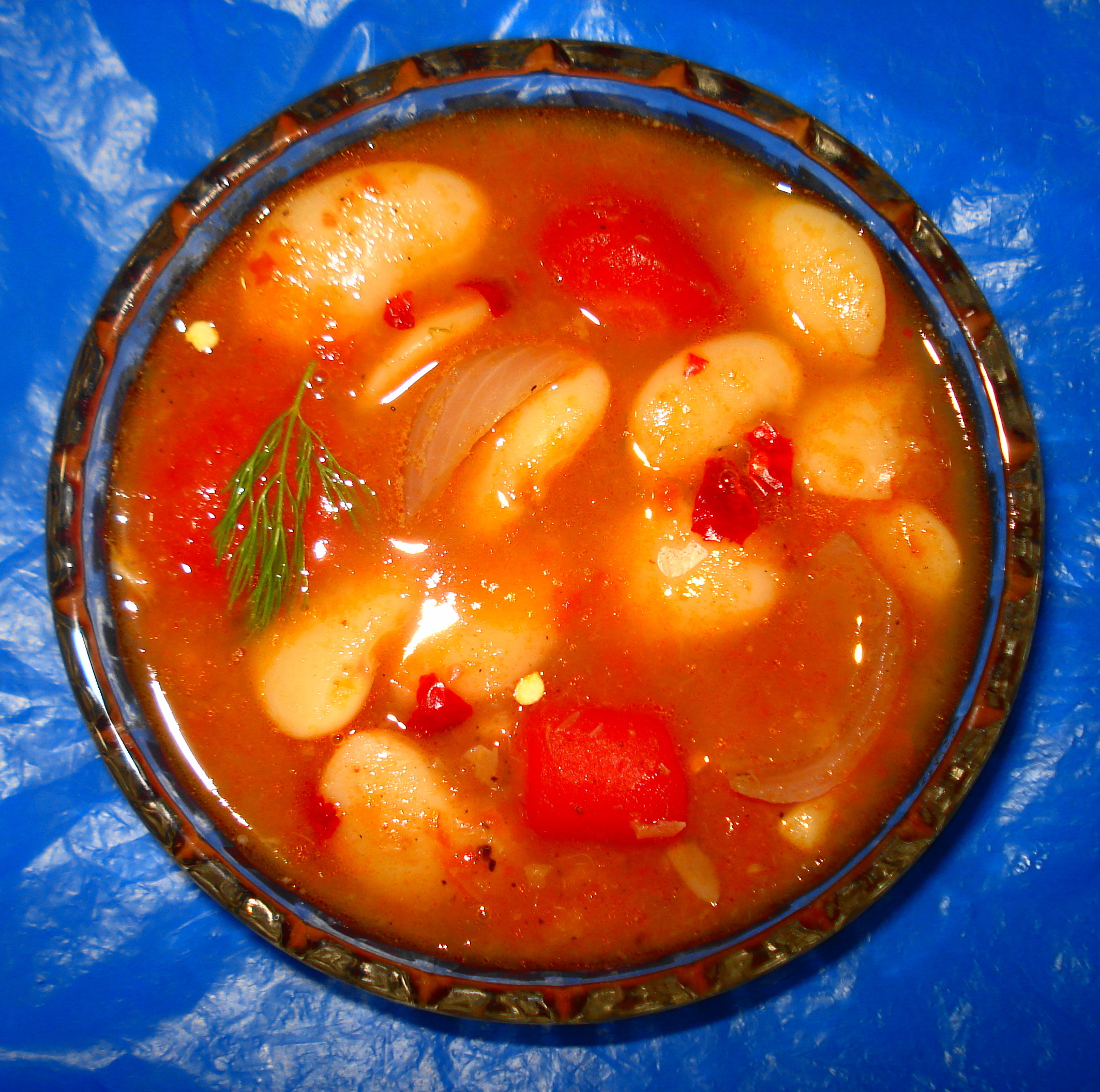
Fasolada is a bowl of white beans simmered slowly with carrot, celery, onion, and tomato, finished with a heavy pour of good olive oil and a squeeze of lemon. It is about as simple as cooking gets, and it is also the dish many Greeks name first when asked what their country really eats. Cheap, filling, naturally vegan, and deeply comforting on a cold day, fasolada proves that the best Greek food is often the plainest, provided the olive oil is good and the beans are given time.
The National Dish of Greece
Ask about Greek food and most people abroad think of moussaka or souvlaki, but inside Greece fasolada is frequently called the national dish. Its name comes straight from fasoli, the Greek word for bean, and it has fed generations through hard times, which is a large part of why it is held in such affection. Beans and pulses have long been central to the Greek kitchen as an affordable, filling source of protein, eaten routinely rather than as an occasional dish. Because it contains no meat or dairy, fasolada is also a staple of Orthodox fasting periods, when it appears on tables across the country.
The Beans
Dried white beans are the heart of this soup, and cooking them from scratch gives a creaminess canned beans cannot match. Medium white beans are traditional, though cannellini or navy beans work fine. Soak them overnight in plenty of cold water, then drain, cover with fresh water, and parboil them briefly before draining again; this first quick boil is a Greek habit that gives a cleaner-tasting soup. From there they go into the pot with the vegetables to simmer until fully tender. Old beans stay stubborn no matter how long they cook, so buy them somewhere with good turnover rather than reaching for a dusty bag at the back of the cupboard.
The Vegetables
The vegetable base is plain and unchanging: onion, carrot, and celery, cooked gently in olive oil until soft and sweet before the beans and water go in. Use the celery leaves as well as the stalks, since they carry a lot of flavor. Tomato comes in as paste or chopped fresh tomatoes, giving the soup its faintly red color and a mild acidity that lifts the beans, though some families make a paler, lemon-forward version with no tomato at all. Garlic and dried oregano round out the seasoning. Nothing here is expensive or hard to find, which is exactly the point of the dish.
Slow Simmering
Fasolada asks for time rather than technique. Keep the pot at a gentle simmer, never a hard boil, which would break the beans apart before they turn creamy, and top up with hot water whenever the level drops below the beans. Hold the salt until the beans are nearly tender, because salting early can leave the skins tough. When they are soft, mash a ladleful against the side of the pot and stir it back in; the released starch thickens the broth naturally, with no flour, cream, or blender needed. The finished soup turns thick and creamy, somewhere between a soup and a stew.
The Olive Oil
Olive oil is not a background ingredient in fasolada, it is the flavor. Greek cooks use a startling amount by the standards of most soup recipes, both at the start with the vegetables and again raw over each bowl at the table. That final drizzle of good extra virgin oil is what turns a plain bean soup into something silky and full of flavor, so this is the moment to open the better bottle. Lemon plays the same role from the other direction, cutting the richness with a bright, sharp finish. Set both oil and lemon wedges on the table and let everyone dress their own bowl.
Serving Fasolada
Serve fasolada steaming hot in deep bowls with crusty bread for dipping, a few Kalamata olives, and a wedge of feta on the side, which is how it appears on Greek tables through the winter. Salted fish or pickled vegetables also traditionally accompany it. Like most bean dishes it improves overnight, so making it a day ahead is an advantage rather than a compromise. It keeps several days in the fridge and freezes well, and it thickens as it sits, so loosen it with a little hot water when reheating. Few dishes give back this much for so little money and effort.
Common Questions
Can I use canned beans?
Yes, for a much faster soup, though the texture differs. Cook the vegetables first, then add drained canned beans and simmer briefly so the flavors meet. Dried beans cooked from scratch give a creamier broth, since their starch thickens the soup as they cook.
Why are my beans still hard?
Usually the beans are old, or salt or acid went in too early. Buy dried beans somewhere with good turnover, soak them overnight, and add salt and tomato only once they are nearly tender. Hard water also slows bean cooking in some areas.
Is fasolada vegan?
The classic recipe is, since it contains only beans, vegetables, and olive oil, which is one reason it is eaten so widely during Orthodox fasting periods. Some cooks add meat, but the traditional version is entirely plant-based and naturally gluten-free as well.
Fasolada is a Greek soup of white beans, vegetables, and olive oil whose name comes from fasoli, the Greek word for bean, and which is often described as the national dish of Greece.