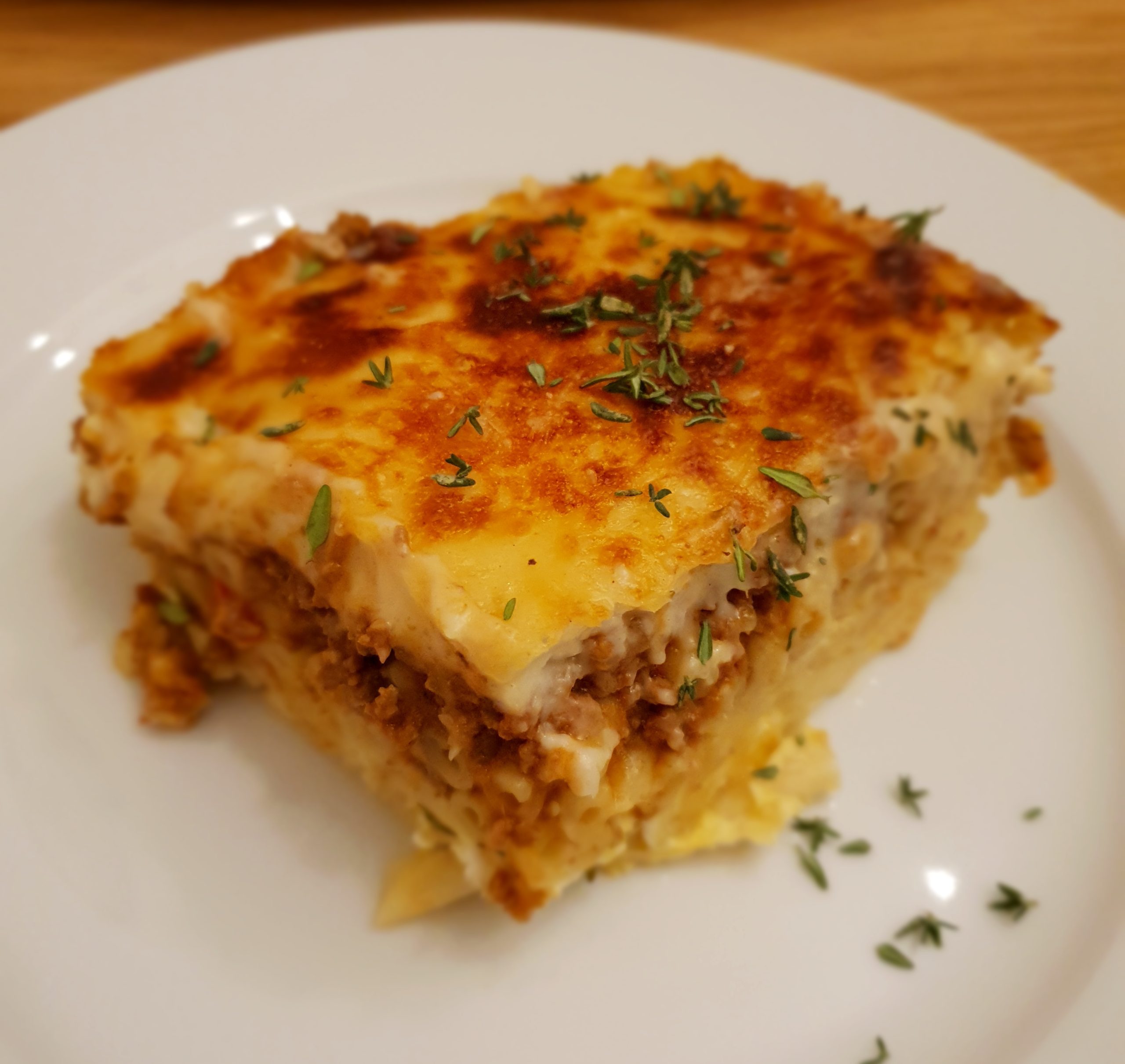
Pastitsio is the great baked pasta of the Greek table: a deep dish of thick tubular pasta, a warmly spiced meat sauce scented with cinnamon and clove, and a thick blanket of bechamel that bakes into a golden, custardy top. Cut into it and you get three distinct layers in every square. It is a dish for Sunday tables, name days, and family gatherings, and it feeds a crowd generously. The steps are simple enough, and the reward is one of the most satisfying casseroles in Mediterranean cooking.
A Name From Italy
Pastitsio takes its name from the Italian pasticcio, a baked savory pie, and its route into Greek cooking ran through the Ionian Islands, which spent centuries under Venetian rule before joining Greece. The Italian ancestor, such as the famous pasticcio di maccheroni of Ferrara, was baked in a pastry shell with pasta, a meat ragu, and a nutmeg-scented bechamel. Early Greek versions were also enclosed in pastry, often phyllo, and did not include bechamel at all. The modern form, with its pasta base and thick bechamel top baked in an open dish, took shape in the early twentieth century and is now the version everyone knows.
The Pasta
Greek cooks use a thick, hollow, straight pasta sold specifically for this dish, often labeled pastitsio no. 2, and bucatini or long ziti stand in well. The hollow shape matters: the tubes trap sauce and hold their structure through baking so the layers stay defined rather than turning to mush. Boil the pasta until just short of tender, since it continues cooking in the oven, then drain it and toss it with a little butter and grated cheese while hot. Some cooks stir in a beaten egg white as well, which helps the base set firmly. Lay the tubes in the dish going the same direction for the tidiest slices.
The Meat Sauce
What separates pastitsio from Italian baked pasta is the spicing of the meat. Brown ground beef or lamb with onion and garlic, then add tomato paste, a splash of red wine, and the signature warm spices: a cinnamon stick and a couple of whole cloves, sometimes with allspice or a bay leaf. Simmer it until the liquid cooks away and the sauce is thick and glossy rather than loose, because a watery meat layer makes the whole dish soggy. Fish out the whole spices before assembling. The cinnamon should sit quietly in the background, warming the tomato and meat without announcing itself as dessert spice.
The Bechamel
The bechamel is the crown of pastitsio and it wants to be thick, far thicker than a pouring sauce. Melt butter, whisk in an equal amount of flour and cook it briefly, then add warm milk gradually, whisking, until the sauce coats a spoon heavily. Season it with salt, white pepper, and a grating of nutmeg. Off the heat, once it has cooled a little, beat in egg yolks and most of the grated cheese, which is what makes the top set into a firm, sliceable custard rather than sliding off the pasta. Add the yolks only after the sauce has cooled slightly so they enrich the bechamel instead of scrambling in it.
Layering and Baking
Assembly follows a set order. Spread half the buttered pasta in a deep baking dish, spoon the thick meat sauce evenly over it, then cover with the remaining pasta, pressing gently to level everything. Pour the bechamel over the top so it sinks into the tubes at the edges, smooth it flat, and dust generously with grated kefalotyri or parmesan. Bake in a moderate oven until the top is set, puffed, and deeply golden brown in patches. A hard, savory cheese matters here, since it browns well and gives the sharp, salty edge that balances the rich bechamel. The dish comes out bubbling gently at the sides.
Serving Pastitsio
Let pastitsio rest at least twenty minutes before cutting, and longer does no harm. This is the step home cooks skip and regret, since a hot pastitsio slumps into a delicious mess while a rested one cuts into clean, architectural squares. Serve it with a Greek salad and crusty bread, which is all it needs. It is even better the next day, reheated in the oven, and it freezes well either baked or assembled raw, making it a favorite for feeding a crowd or stocking the freezer before a busy week. Cut generous squares; nobody has ever complained about too much pastitsio.
Common Questions
What pasta should I use for pastitsio?
Thick hollow tubes are traditional, sold in Greek markets as pastitsio no. 2. Bucatini or long ziti work well. The hollow shape traps sauce and holds its shape through baking, which keeps the layers distinct instead of collapsing into one soft mass.
How is pastitsio different from moussaka?
Both are Greek baked casseroles topped with bechamel and spiced meat, but pastitsio is built on pasta while moussaka uses layers of eggplant and often potato. The meat sauce and bechamel are close cousins; the base is what sets them apart.
Can I make pastitsio ahead?
Yes, and many cooks prefer to. Assemble it a day ahead and refrigerate, then bake it, adding time for the cold dish. It also freezes well before or after baking. Reheat in the oven rather than the microwave to keep the top firm.
Pastitsio is a Greek baked pasta dish of tubular pasta, ground meat, and bechamel that came to Greece from the Ionian Islands, its name taken from the Italian pasticcio, a baked savory pie.