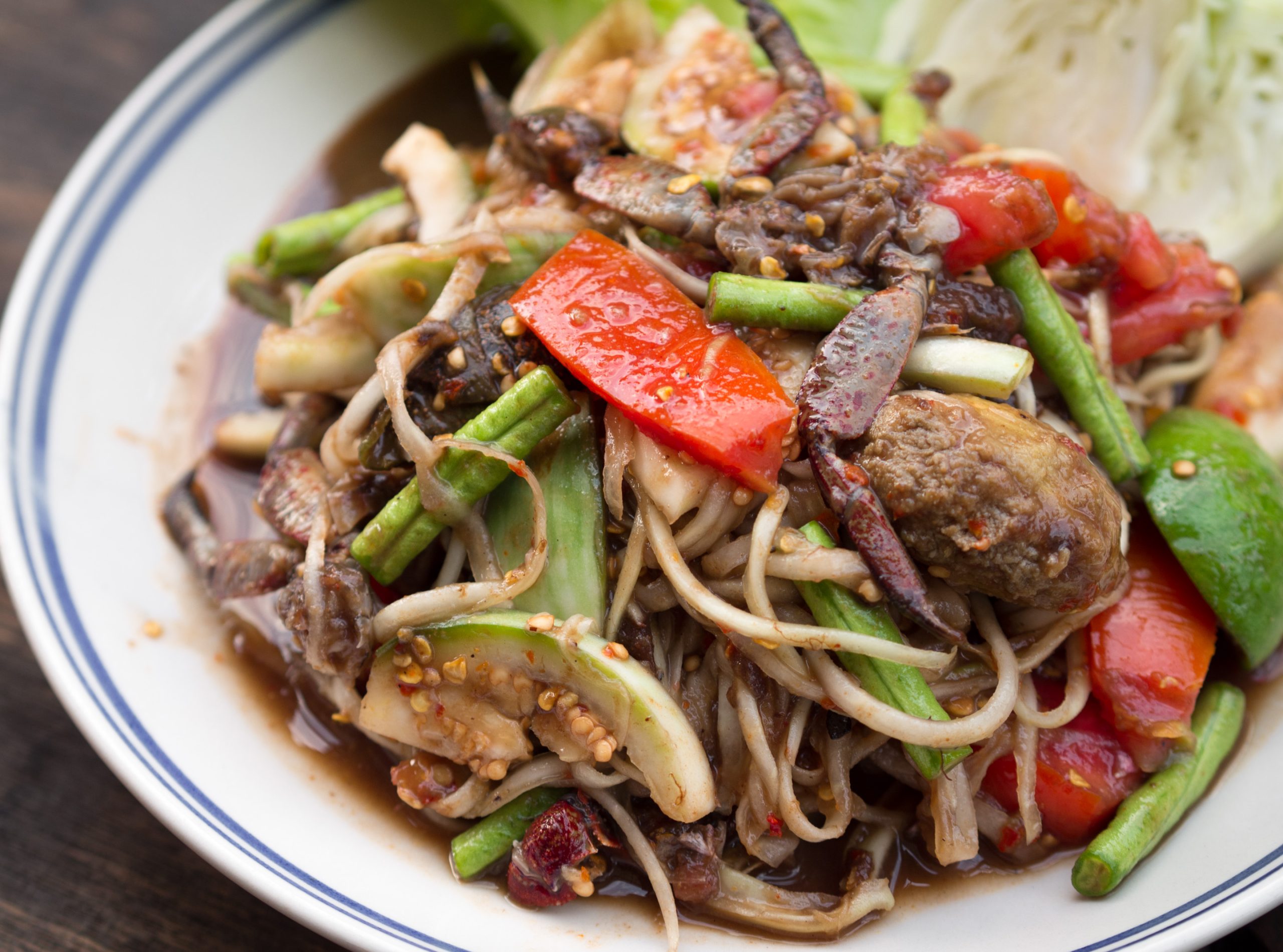
Som tum is a salad unlike any other: crunchy shreds of unripe green papaya pounded in a mortar with lime, fish sauce, chili, garlic, tomatoes, and peanuts until every strand is coated in a dressing that hits sour, salty, spicy, and sweet all at once. It is bright, fiery, refreshing, and addictive, a dish that wakes up the whole mouth. Made fresh in a big clay mortar, it comes together in minutes, and once you taste a proper one, you understand why it is one of the most loved dishes in Thailand.
The Pounded Salad of Isan
Som tum takes its name from the method: som means sour and tum refers to the pounding of the ingredients in a mortar, so the name is roughly sour pounded. The dish is rooted in the culinary traditions of Isan, the northeastern region of Thailand, and neighboring Laos, where it is a staple and where versions with fermented fish and pounded crab reflect the local palate; its origins across that Lao-Isan world are the subject of friendly debate. From Isan it spread throughout Thailand to become a national favorite. The version most familiar abroad, som tum Thai, is the milder, peanut-and-lime style described here.
Green Papaya
The base is green papaya, which is simply unripe papaya, firm and pale green inside rather than orange and sweet. It has almost no fruity flavor; its role is crunch and a neutral canvas for the dressing. Shred it into thin strips, using a papaya shredder, a julienne peeler, or a knife, and keep the strands firm and crisp. Ripe papaya will not work here, since it is soft and sweet and collapses into mush. Green papaya is sold at Thai and Asian markets; where it is hard to find, shredded green mango, carrot, or even cucumber stands in for a different but related salad.
The Mortar and Pestle
Som tum is made in a large mortar, and the pounding is the technique, not just for show. Start by pounding garlic and chili into a rough paste, then add the palm sugar, fish sauce, and lime and pound to combine. Bruise the tomatoes and long beans lightly to release their juices, then add the papaya and pound gently while lifting and turning it with a spoon. The goal is to bruise the papaya so it softens slightly and drinks in the dressing while keeping its crunch, not to mash it to pulp. A big mortar makes this easy; a bowl and a sturdy spoon can approximate it.
The Balance
Som tum is a masterclass in the Thai balance of flavors, and getting it right is the whole art. Four tastes must come together: sour from lime, salty from fish sauce, spicy from chili, and sweet from palm sugar, over the crunch of the papaya. None should dominate; the salad should make your mouth water. Taste as you go and adjust, adding more lime if it is flat, more fish sauce if it is thin, more chili for heat, or more sugar to round it. The papaya is bland on purpose, so make the dressing assertive. This constant tasting and tweaking is how every cook makes it their own.
Peanuts and Additions
Roasted peanuts go in near the end, added and given a final toss so they keep their crunch, and they are central to the som tum Thai style, adding richness against the sharp dressing. Dried shrimp bring a salty, savory depth and are traditional. From there, regional and personal variations multiply: som tum Thai keeps it to peanuts and dried shrimp, while the Lao-Isan som tum pla ra uses pungent fermented fish sauce and often salted crab for a funkier, bolder salad. Long beans and cherry tomatoes are standard in most versions. Add the peanuts last so they stay crisp rather than turning soft in the dressing.
Serving Som Tum
Serve som tum fresh, right after pounding, while the papaya is at its crispest and the dressing bright. It is classically eaten with sticky rice and grilled chicken (gai yang), a trio that is a meal across Isan and beyond, the sticky rice cooling the heat and soaking up the dressing. It also works as a fresh, spicy side to any Thai meal. Som tum does not keep, since the papaya softens and weeps once dressed, so make it just before eating. Adjust the chili to your crowd, and set out extra lime and fish sauce for those who like to tune their own plate.
Common Questions
Where do I get green papaya?
Thai and Asian markets sell unripe green papaya, sometimes already shredded. Choose a firm, heavy one with pale green flesh. If you cannot find it, shredded green mango, carrot, or cucumber makes a related salad with the same dressing, though the texture differs.
Do I need a mortar and pestle?
A large mortar is traditional and helps bruise the papaya and meld the dressing. Without one, pound the garlic and chili with any bowl and a sturdy tool, then toss and squeeze the salad by hand or spoon to bruise the papaya and coat it well.
Can I make it less spicy or vegetarian?
Yes. Use fewer chilies for a milder salad. For a vegetarian version, replace the fish sauce with soy sauce or a vegan fish sauce and skip the dried shrimp. Keep the lime, sugar, and peanuts so the balance holds.
Som tum is a spicy pounded salad of shredded unripe papaya, rooted in the Isan region of northeastern Thailand and neighboring Laos, its name meaning sour pounded.