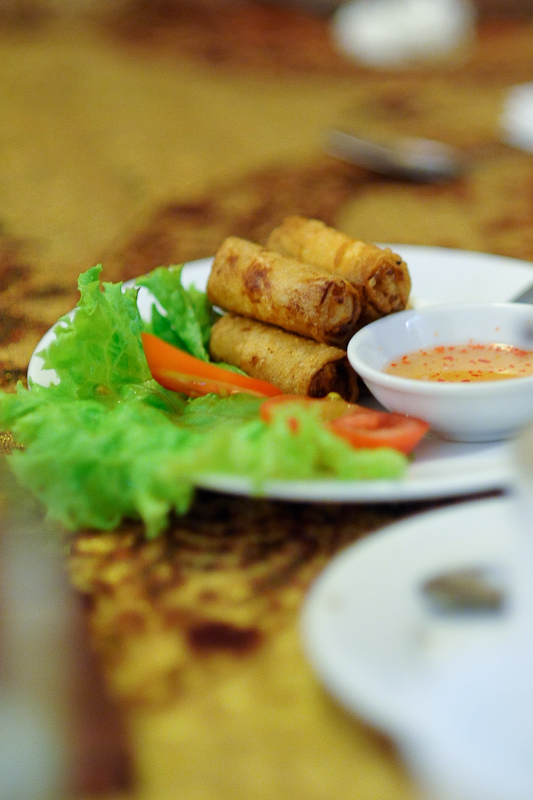
Cha gio are Vietnam’s crispy fried spring rolls, and they are a highlight of any table: rice paper wrapped tightly around a savory filling of pork, glass noodles, wood ear mushrooms, and vegetables, then deep-fried until the wrappers blister into shattering, golden crunch. You eat them the Vietnamese way, wrapped in a lettuce leaf with a tangle of fresh herbs and dipped in bright nuoc cham, so each bite is hot and crisp against cool and fresh. They take some rolling, but they are a beloved party and festival food for good reason.
Fried, Not Fresh
Vietnamese spring rolls come in two very different forms, and cha gio is the fried kind, not to be confused with goi cuon, the soft fresh summer rolls served cool and unfried. Cha gio are crisp, hot, and golden, a festive dish that appears at celebrations, holidays, and family gatherings across Vietnam. There is a regional split in the wrappers: in the south, cha gio are typically rolled in rice paper, while in the north, where the dish is often called nem ran, wheat-based wrappers are more common. Both are correct and traditional. Whatever the wrapper, the crackling shell around a juicy, savory filling is the point.
The Filling
The classic filling is ground pork bound with a mix of textures: glass noodles (bean thread noodles), soaked and cut, for slip and body; wood ear mushrooms, soaked and chopped, for a gentle crunch; and grated carrot for sweetness and color. Minced onion and garlic, an egg to bind, and fish sauce for seasoning bring it together. Some versions add shrimp, crab, or taro. Mix everything well and do not overfill the rolls, since a modest amount of filling seals and fries better than a bulging one. The variety of textures inside, meaty, springy, crunchy, is part of what makes cha gio so satisfying, so include the mushrooms and noodles rather than skipping them.
Rolling Tight
Rolling is the skill, and a tight roll is the goal. If using rice paper, soften a sheet briefly so it turns pliable, then lay a line of filling near one edge, fold the sides in over the filling, and roll it up snugly into a firm cylinder, sealing the end. The rolls must be tight and well sealed, because loose rolls unravel in the oil, let filling escape, and soak up grease, while tight ones hold together and fry crisp. Keep the finished rolls from touching each other, since rice paper sticks to itself. Work steadily; the rolling becomes quick with a little practice, and a batch goes fast once you find the rhythm.
Frying to Crisp
Fry the rolls in oil at a moderate temperature, not too hot, so the pork inside cooks through before the wrapper burns and the shell turns evenly deep golden and crisp. Too-hot oil browns the outside while the filling stays raw; too-cool oil makes the rolls greasy and pale. Fry them in batches so the oil stays hot and the pan is not crowded, turning them for even color. Rice paper rolls can be fried once, or fried twice for extra crunch, a common technique for a shatteringly crisp shell. Drain them on a rack or paper. The reward is a roll that crackles loudly at the first bite.
Wrap and Dip
Cha gio are not eaten plain. The traditional way is to take a hot roll, wrap it in a soft lettuce leaf with sprigs of fresh herbs like mint, cilantro, and perilla, and dip the bundle in nuoc cham, the sweet-sour fish sauce dip with garlic and chili. The cool, crisp lettuce and cold herbs against the hot, crunchy roll, all pulled through the tangy sauce, is the whole experience and keeps the rich fried rolls feeling fresh. Set out a big platter of lettuce and herbs and bowls of nuoc cham, and let everyone wrap their own. Cha gio are also served sliced over rice vermicelli as bun cha gio.
Serving Cha Gio
Serve cha gio hot and fresh from the oil, while the shells are at their crispest, with the lettuce, herbs, and nuoc cham alongside. They are a favorite starter and party food, and they disappear quickly, so make plenty. The rolls can be assembled ahead and even frozen raw, then fried straight from frozen, which makes them convenient for entertaining. Fried rolls lose their crunch as they sit, so fry them close to serving and eat them promptly. Whether as an appetizer, a party platter, or piled over noodles, cha gio bring a crowd to the table.
Common Questions
Rice paper or wheat wrappers?
Both are traditional: rice paper is common in the south, wheat spring roll wrappers in the north (where the dish is often called nem ran). Rice paper gives a distinctive bubbly, glassy crunch; wheat wrappers are easier to handle. Either makes proper cha gio.
Can I freeze cha gio?
Yes. Freeze the rolled, unfried rolls in a single layer, then bag them. Fry straight from frozen at a moderate temperature so they cook through. This makes them ideal for parties, since the rolling can be done well ahead of time.
Why do my rolls turn out greasy?
The oil was too cool, or the rolls were loose and unsealed. Fry at a steady moderate temperature so they crisp rather than absorb oil, and roll them tight with a good seal. Draining on a rack rather than flat paper also helps them stay crisp.
Cha gio are Vietnamese fried spring rolls filled with pork, glass noodles, and vegetables, wrapped in rice paper in the south or wheat wrappers in the north, and deep-fried until crisp.