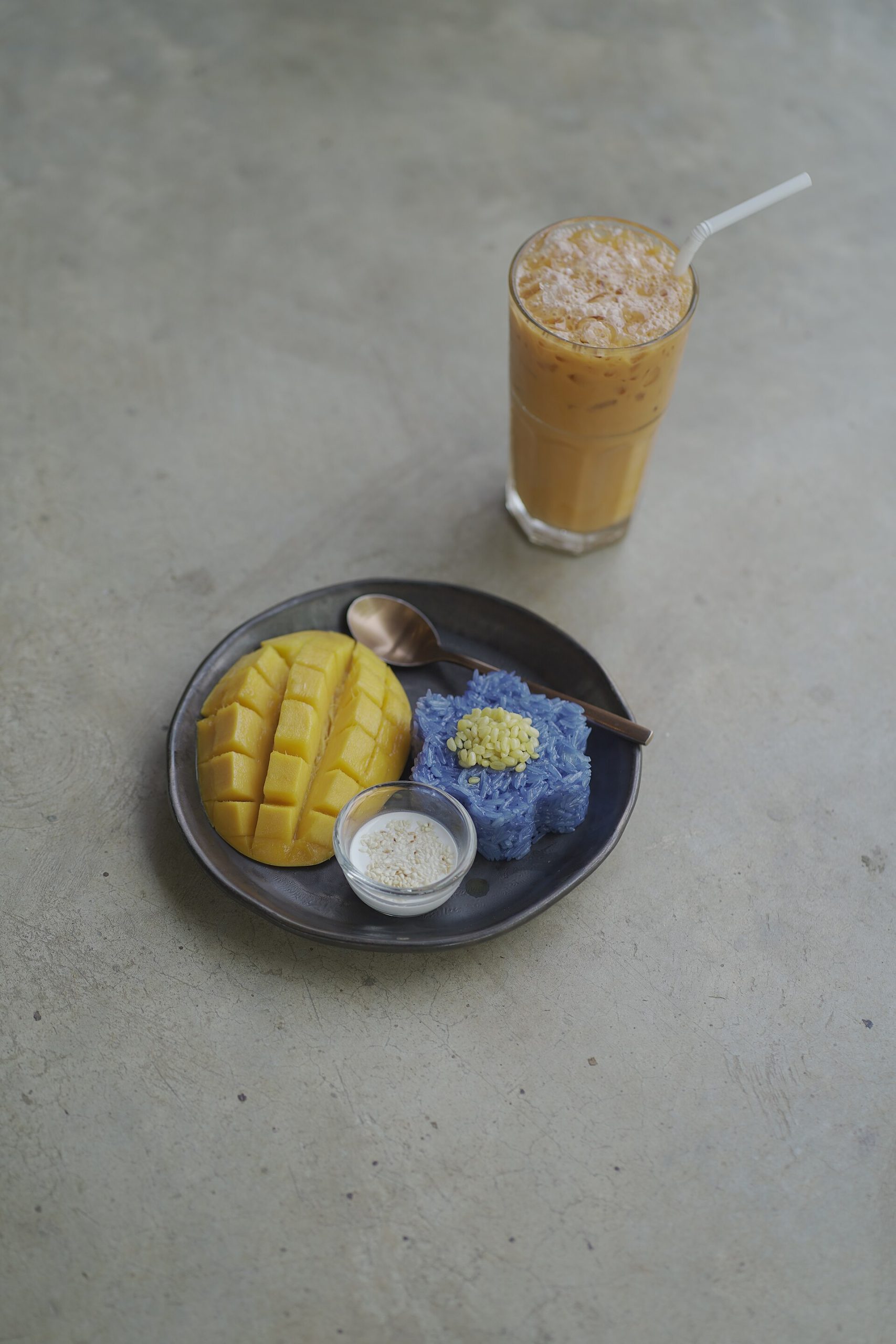
Mango sticky rice is proof that a great dessert needs only a few things done right. Warm, chewy glutinous rice is soaked in sweet coconut milk, then served with slices of perfectly ripe mango and a final pour of salty-sweet coconut sauce. That is it. The contrast of the sweet rice, the fragrant fruit, and the salty coconut sauce is what makes it so hard to stop eating. It is Thailand’s most beloved dessert, a fixture of mango season, and it comes together easily once you have the right rice.
A Thai Classic
Mango sticky rice, known in Thai as khao niao mamuang, is one of the country’s most famous desserts, sold everywhere from street stalls to restaurants, especially in the hot season when mangoes are at their best. It belongs to a broad tradition of Thai sweets built on glutinous rice and coconut milk. Simple as it is, it is deeply satisfying and beloved across Thailand and far beyond. The dish depends on just three elements done well: the sticky rice, the coconut, and the mango, so each one has to be right.
The Sticky Rice
The foundation is glutinous rice, also called sticky rice or sweet rice, a short-grain rice that turns chewy and sticky when cooked. Regular rice will not work; only glutinous rice gives the right texture. Soak it for at least a couple of hours, or overnight, then steam it rather than boiling it, which keeps the grains distinct and chewy rather than mushy. Traditionally it is steamed in a bamboo basket, but any steamer lined so the grains do not fall through works. Properly cooked sticky rice is tender and translucent, holding together without being gummy. This is the base everything else builds on.
The Coconut, Twice
Coconut milk does double duty. First, warm coconut milk sweetened with sugar and a little salt is poured over the hot cooked rice, which drinks it up as it rests, turning the rice rich, sweet, and creamy. Then a second portion of coconut milk, thickened and seasoned with a bit more salt, is held back as a pouring sauce for serving. This sauce is the detail that makes the dish: it is noticeably salty as well as sweet, and that salt against the sweet rice and fruit is the whole point. Do not skip the salt in the coconut, since it is what balances the dessert.
The Mango
The mango has to be ripe, fragrant, and at its peak, since the dessert is only as good as the fruit. Look for a soft, sweet, aromatic mango; a hard, sour, or bland one drags the whole plate down. In Thailand specific sweet varieties are used, but any ripe, flavorful mango works. Slice it just before serving so it stays fresh and juicy. The cool, soft, perfumed fruit against the warm, chewy rice is the contrast that defines the dish. This is a seasonal dessert for good reason: it is at its best when mangoes are at their best, so wait for good ones.
Putting It Together
Assembly is simple and done just before serving. Mound the warm coconut sticky rice on each plate, arrange slices of ripe mango alongside, and pour the salty coconut sauce generously over the rice. A sprinkle of toasted sesame seeds or crisp toasted split mung beans on top adds a little crunch and is the traditional finish. Serve it while the rice is still warm or at room temperature, with the cool mango. The plate should have all three elements in balance: sweet rice, salty sauce, ripe fruit. Eat a little of each together for the full effect.
Serving and Notes
Mango sticky rice is best fresh, when the rice is still soft and warm, since sticky rice hardens as it cools and refrigerates poorly, turning firm and dry. Make it the day you plan to eat it. If you have leftover coconut rice, a brief steam softens it again. The rice can be cooked and dressed a few hours ahead and kept covered at room temperature, with the mango sliced and the sauce poured at the last minute. It needs no accompaniment; it is a complete dessert on its own, sweet, rich, and refreshing all at once.
Common Questions
Can I use regular rice?
No. Only glutinous rice, also sold as sticky or sweet rice, gives the chewy, sticky texture the dish needs. Regular long-grain or jasmine rice will not work. Glutinous rice is sold at Asian groceries.
Why is the coconut sauce salty?
The salt is deliberate and essential. The salty-sweet coconut sauce against the sweet rice and ripe mango is what gives the dessert its balance and keeps it from being one-note sweet. Do not leave the salt out.
How do I pick a good mango?
Choose one that is soft to gentle pressure, fragrant at the stem, and heavy for its size. A ripe, sweet, aromatic mango makes the dish; a hard or sour one ruins it. Let firm mangoes ripen at room temperature before using.
Mango sticky rice, khao niao mamuang, is a classic Thai dessert of glutinous rice sweetened with coconut milk and served with ripe mango and a pour of salty-sweet coconut sauce.