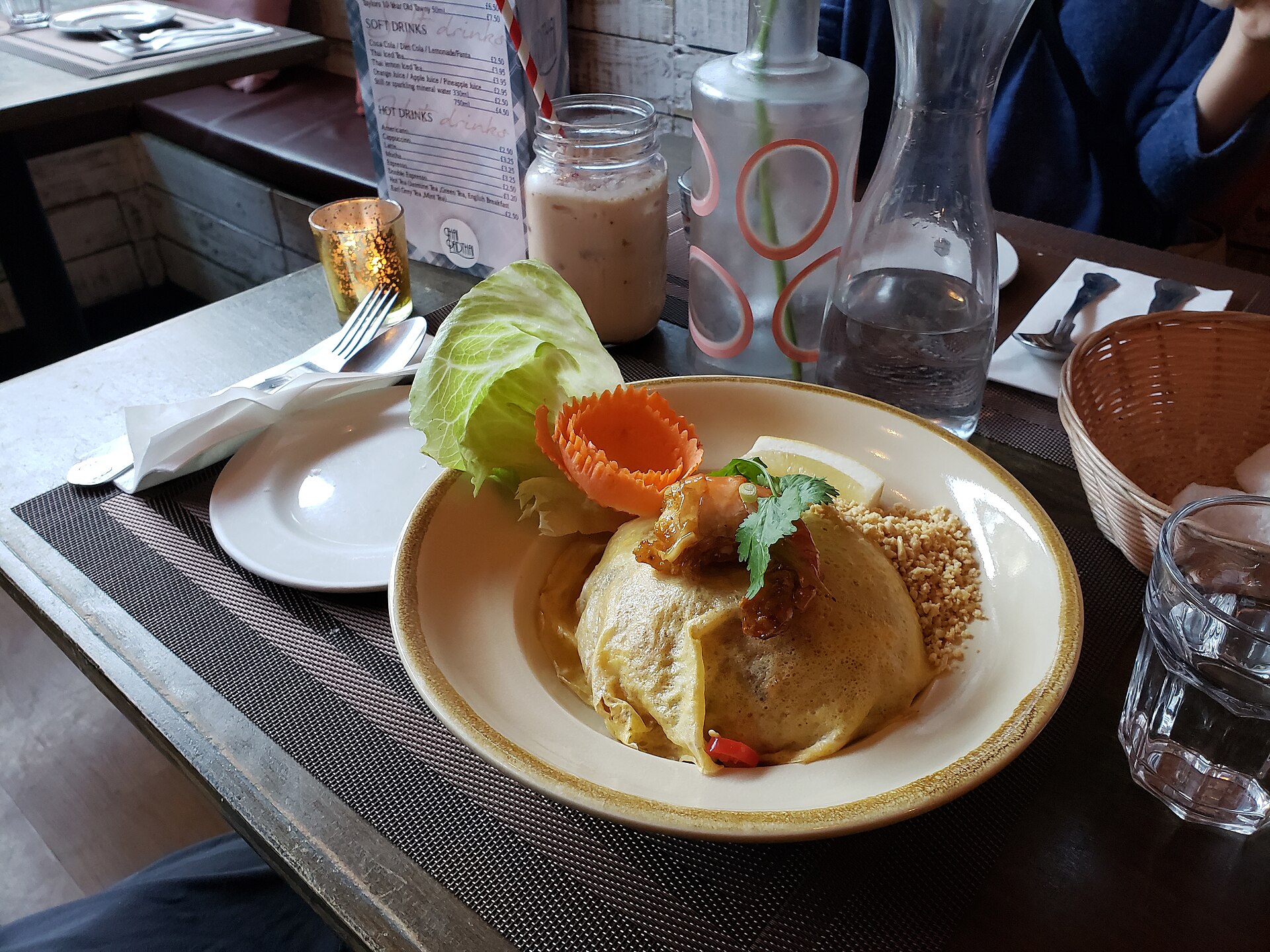
Pad thai is the noodle dish that introduced much of the world to Thai food: flat rice noodles tossed in a wok with shrimp, tofu, and egg, coated in a sauce that hits sweet, sour, and salty all at once, then finished with crunchy peanuts, fresh bean sprouts, and a squeeze of lime. Done right it is light and balanced, the noodles chewy and separate, not the gloopy sweet version served at bad restaurants. It comes together fast once everything is prepped, which is the real secret to any good stir-fry.
A Modern National Dish
Pad thai is younger than its fame suggests. It was invented in Thailand in the mid-twentieth century, promoted by the government under Prime Minister Plaek Phibunsongkhram during a wartime rice shortage as part of a push to build national identity and get people eating noodles instead of rice. The name means Thai-style stir-fry, and the dish itself draws on Chinese stir-fried noodle techniques, reflecting Thailand’s Chinese culinary influence. From that campaign it grew into one of the country’s signature street foods, sold from carts and stalls across Thailand and known around the world.
The Noodles
Pad thai uses flat, thin dried rice noodles, and how you handle them decides the whole dish. Do not boil them like pasta. Instead soak them in warm water until they are pliable but still firm, then drain; they finish cooking in the wok by absorbing the sauce. This keeps them chewy and separate rather than soft and clumped. If they take all the sauce and still need softening, add a splash of water, not more sauce, so the flavor does not get too strong. Overcooked, mushy noodles are the most common pad thai failure, and soaking rather than boiling prevents it.
The Sauce
The sauce is what makes pad thai, and it rests on three ingredients in balance: tamarind paste for sourness, fish sauce for salt and savor, and palm sugar for sweetness. That sweet-sour-salty balance is the signature, and no single note should dominate; a pad thai that is only sweet has lost its way. Mix the sauce before you start cooking, since the stir-fry moves fast. Taste and adjust it, because tamarind brands vary in sourness. Dried shrimp and a little chili are traditional additions. Get this balance right and the dish sings; get it wrong and no amount of garnish saves it.
Stir-Frying
Like all stir-fries, pad thai cooks fast and hot, so prep everything before the pan gets hot. Cook the tofu and shrimp first, then push them to the side and scramble the eggs in the same pan. Add the drained noodles and the sauce, tossing over high heat so the noodles soak up the sauce and soften. Work quickly and keep things moving. The traditional protein is shrimp, often with firm tofu, though chicken is common and a vegetarian version uses soy sauce in place of fish sauce and skips the shrimp. Add the bean sprouts and chives at the very end so they stay crisp.
The Garnishes
The toppings are not optional; they complete the dish. Crushed roasted peanuts add crunch and richness, a wedge of lime squeezed over brings a final hit of fresh sourness, and extra bean sprouts and garlic chives add freshness. In Thailand pad thai comes with a little caddy of condiments so each person adjusts their own bowl: fish sauce, sugar, crushed peanuts, dried chili flakes, and lime. This is part of how it is eaten, letting everyone tune the balance to their taste. Set these out on the side rather than pre-seasoning the dish heavily, the way a Thai cook would.
Serving Pad Thai
Serve pad thai hot from the wok, piled on plates with the peanuts, lime, and fresh vegetables, and the condiment caddy nearby. It is a meal on its own, quick enough for a weeknight and impressive enough for guests. It is best eaten right away, since the noodles firm up and lose their texture as they sit; it does not reheat especially well, so make what you will eat. Cook it in batches rather than crowding the pan if you are feeding several people, since a wok can only stir-fry so much at once without steaming.
Common Questions
Why are my noodles mushy?
They were boiled or soaked too long. Soak the dried rice noodles in warm water only until pliable but still firm, then let them finish cooking in the wok by absorbing the sauce. This keeps them chewy and separate.
What is tamarind and can I substitute it?
Tamarind paste gives pad thai its signature sourness. It is sold at Asian groceries. There is no exact substitute, though a mix of lime juice and a little brown sugar approximates the sweet-sour note in a pinch, at some cost to authenticity.
Can I make it vegetarian?
Yes. Use firm tofu, skip the shrimp and dried shrimp, and replace the fish sauce with soy sauce or a vegetarian fish sauce. The tamarind, sugar, egg, peanuts, and vegetables carry the dish. Leave out the egg for a vegan version.
Pad thai is a stir-fried rice noodle dish invented in Thailand in the mid-twentieth century, its name meaning Thai-style stir-fry, now one of the country's best-known street foods.