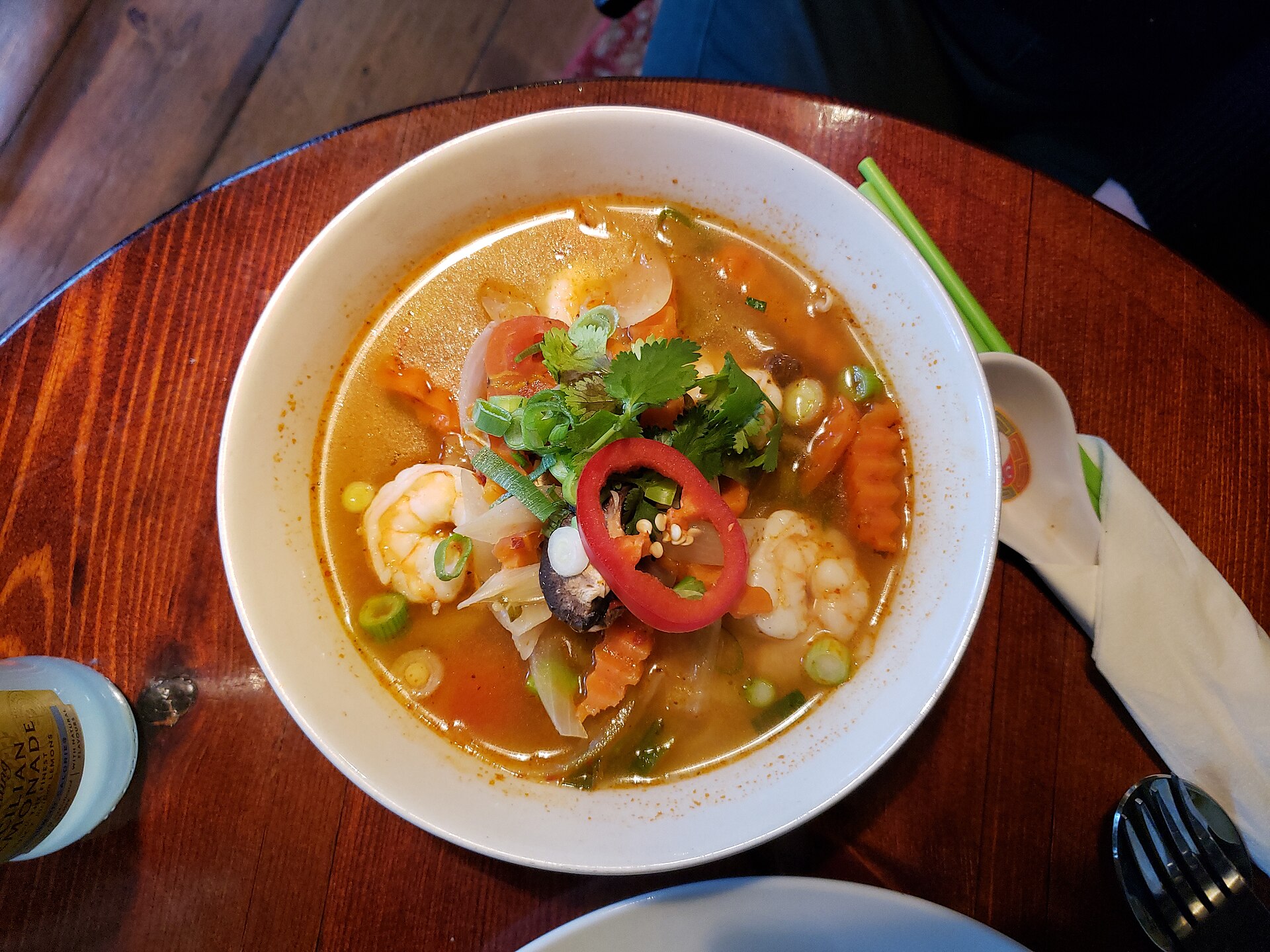
Tom yum goong is the soup that captures Thai cooking in one bowl: hot, sour, salty, and fragrant all at once. A clear, intense broth is perfumed with lemongrass, galangal, and kaffir lime, loaded with plump shrimp and mushrooms, and finished with lime juice and chili that make it sing. It is quick to make, light yet bursting with flavor, and endlessly restorative. The aromatics do most of the work, and the final balance of sour and salty and spicy, adjusted off the heat, is what turns good ingredients into a great soup.
Thailand’s Iconic Soup
Tom yum is a family of hot and sour Thai soups; tom means to boil and yum refers to the sour and spicy dressing. The version made with shrimp, tom yum goong, is the most famous and is counted among Thailand’s national dishes. Goong means shrimp. There are two main styles: the clear version, tom yum nam sai, and the creamier tom yum nam khon, enriched with evaporated milk or coconut milk and chili paste. Both share the same aromatic, hot-sour base. This recipe leans on the clear style, with an option to enrich it.
The Aromatics
Three ingredients give tom yum its unmistakable fragrance: lemongrass, galangal, and kaffir lime leaves. These are not garnishes but the soul of the soup. Lemongrass is bruised to release its citrusy oils, galangal brings a sharp, piney, ginger-like note, and kaffir lime leaves add a floral citrus perfume. They are sold fresh or frozen at Asian groceries and are worth seeking out, since no substitute quite matches them. Note that these aromatics flavor the broth but are left in as whole pieces and not eaten, so warn your guests to eat around the tough lemongrass and galangal.
A Quick Shrimp Stock
The best tom yum starts with a stock made from the shrimp shells. When you peel the shrimp, save the shells and simmer them in the water for fifteen minutes, then strain them out. This costs nothing, uses what you would throw away, and gives the broth a deep, savory shrimp flavor that plain water cannot. It is a small step that noticeably improves the soup. Then the aromatics go into this flavorful stock to infuse it. If you skip the shells, use a light chicken or vegetable stock rather than plain water for more depth.
Balancing Hot and Sour
The defining act of making tom yum is balancing its flavors at the end. Fish sauce brings the salt and savor, lime juice brings the sour, and Thai chilies bring the heat. The key is to add the fish sauce and especially the lime juice off the heat, after the soup is done, because boiling lime juice turns it bitter and dull. Add them, taste, and adjust: more lime for sour, more fish sauce for salt, more chili for heat. This tasting and tuning is the whole skill. Aim for bracingly sour, clearly salty, and as spicy as you like.
Clear or Creamy
For the clear version, the soup is done once balanced. For the popular creamy tom yum nam khon, stir in a spoonful of nam prik pao, Thai roasted chili paste, and a splash of evaporated milk or coconut milk at the end, which turns the broth richer, slightly sweet, and orange-tinted. Both are authentic and beloved; the creamy version is common in restaurants abroad while the clear version is lighter and more bracing. The chili paste also adds a deep, roasted flavor even to the clear version. Try it both ways and decide which you prefer, since the base is the same.
Serving Tom Yum
Serve tom yum goong hot, finished with fresh cilantro, alongside steamed jasmine rice, which tempers the heat and turns the soup into a meal. It is eaten as part of a shared Thai meal rather than as a separate starter course. The soup is best fresh, since the shrimp toughen if overcooked or reheated, so cook the shrimp just until pink and serve promptly. The aromatic broth can be made ahead and the shrimp added at the last minute. Remind everyone the lemongrass and galangal are for flavor, not eating.
Common Questions
Where do I find galangal and kaffir lime?
Asian and Thai groceries sell them fresh or frozen, along with lemongrass. Frozen works well. Ginger is not a good substitute for galangal, since the flavor is quite different, so it is worth sourcing the real thing.
Clear or creamy tom yum?
Both are traditional. The clear version (nam sai) is lighter and more bracing; the creamy version (nam khon) adds chili paste and evaporated or coconut milk. The aromatic hot-sour base is the same. Choose by preference.
Why add lime juice at the end?
Boiling lime juice makes it bitter and dulls its brightness. Stir it in off the heat, after cooking, so the sour note stays fresh and sharp. The same goes for the final balance of fish sauce and chili.
Tom yum is a hot and sour Thai soup, and the version made with shrimp, tom yum goong, is among Thailand's most iconic dishes, built on the fragrance of lemongrass, galangal, and kaffir lime.