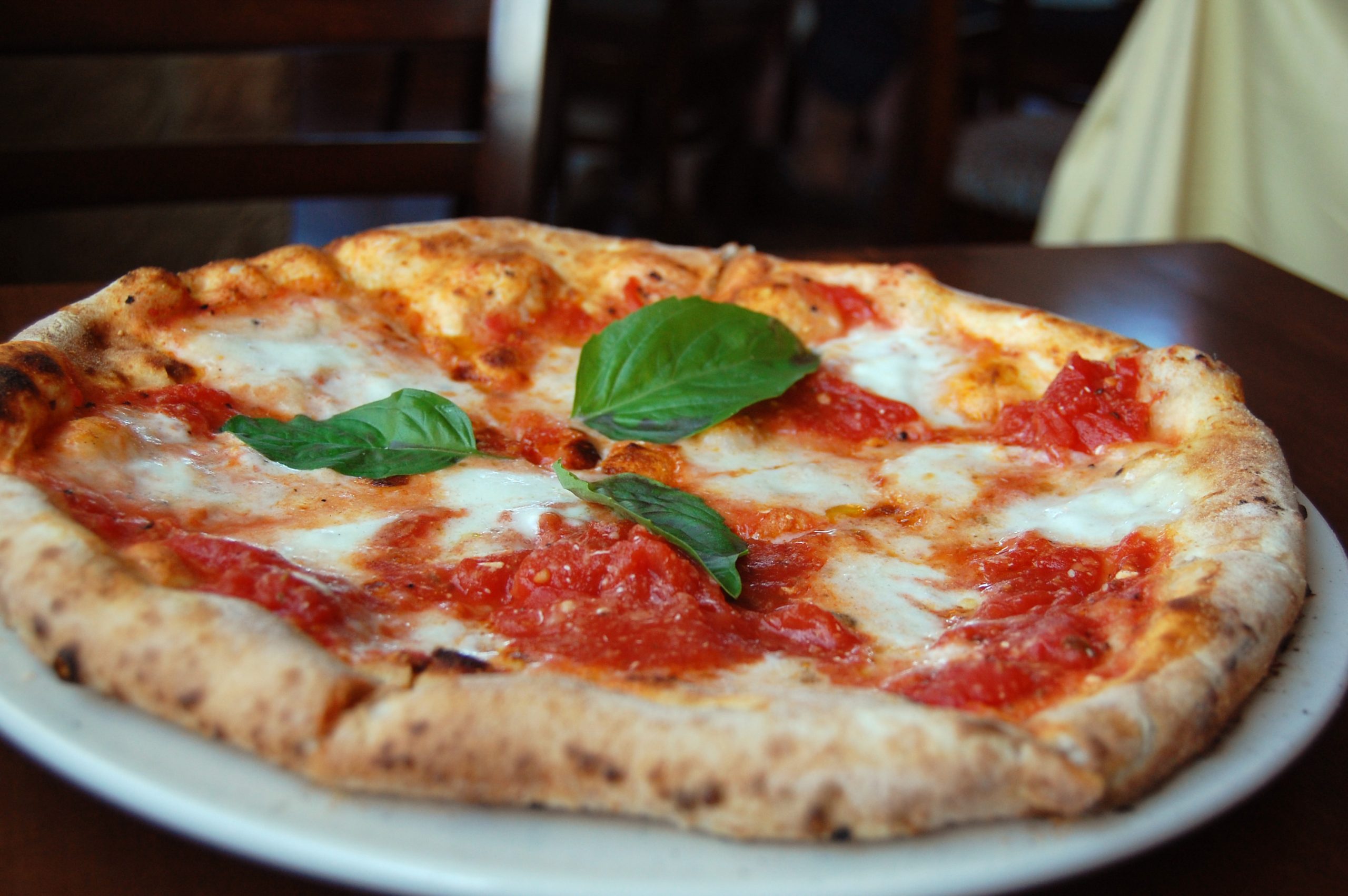
Margherita pizza is proof that the simplest things are often the best: a thin, blistered crust, a bright layer of tomato, milky fresh mozzarella, and a few leaves of basil. That is all. No pile of toppings, no heavy cheese, just three ingredients over great dough, baked in a blazing oven. It is the original and, to many, still the finest pizza. Making a true Neapolitan Margherita at home comes down to the dough and the heat, and while a home oven is not a wood-fired one, you can get remarkably close.
The Colors of Italy
Pizza was born in Naples, and the Margherita is its most storied version. By tradition, it was created in 1889 when a Neapolitan pizzaiolo made a pizza for Queen Margherita topped with tomato, mozzarella, and basil, the red, white, and green of the Italian flag, and named it in her honor. Whether the tale is exact or embellished, the Margherita has become the definitive Neapolitan pizza, and true Neapolitan pizza is now a protected tradition with strict rules about ingredients and method. It represents the Italian ideal of a few perfect ingredients over technique-driven simplicity.
The Dough
Everything begins with the dough, and good pizza dough needs time more than skill. A simple mix of flour, water, yeast, and salt becomes great through a long, slow rise, several hours or overnight, which develops flavor and the light, airy, chewy texture that defines a good crust. Italian 00 flour, finely milled, is traditional and gives a tender crust, though bread flour works. Use a small amount of yeast and let time do the work. A rushed dough makes a bland, dense crust; a slow-fermented one makes a fragrant, blistered, digestible one. Let the divided dough balls proof until puffy before shaping.
Stretching by Hand
Neapolitan pizza is stretched by hand, never rolled with a pin, which would crush out the air. Gently press and stretch each dough ball from the center outward, leaving a thicker rim, the cornicione, around the edge that will puff up in the oven. Work it into a thin round, letting the edges stay a little thick. It takes a little practice to stretch it evenly without tearing, but a rustic, uneven round is exactly right; pizza is not meant to be a perfect circle. Keep the center thin so it cooks through while the rim rises into airy, charred bubbles.
Keep the Toppings Simple
The whole point of a Margherita is restraint. Use a thin layer of good crushed tomatoes, ideally San Marzano, uncooked, spread lightly and not too heavily, or the pizza turns soggy. Add torn fresh mozzarella, well-drained so it does not flood the pie with liquid, and a drizzle of olive oil. That is the entire topping. Do not overload it; too much cheese or sauce weighs it down and stops it cooking properly. The basil goes on after baking, not before, since fresh basil leaves scorch and turn bitter in the fierce heat. Salt the tomato lightly. Simplicity is the recipe.
The Heat
The other secret is heat, and lots of it. A traditional Neapolitan pizza bakes in a wood-fired oven at extreme temperature for around a minute, which is what gives it a puffed, charred, tender crust. A home oven cannot match that, but you can get close by cranking it as hot as it goes and using a preheated pizza stone or steel, which stores intense heat and cooks the base fast. Preheat it thoroughly. The hotter the oven and the surface, the better the crust, with blistered, leopard-spotted char and a soft, airy rim. A cool oven gives pale, tough, bready pizza.
Serving Pizza
Margherita pizza is best the instant it comes out of the oven, when the crust is crisp and blistered, the cheese molten, and the basil fragrant. Scatter the fresh basil, add a final drizzle of good olive oil, and serve it immediately; pizza waits for no one and softens as it sits. In Naples a pizza is a personal size, eaten by one person, folded or cut into wedges. Make the dough ahead, since it needs its long rise anyway, then top and bake pizzas one at a time as people are ready to eat, serving each one hot.
Common Questions
What flour should I use?
Italian 00 flour, finely milled, is traditional and gives a tender, classic Neapolitan crust. Bread flour works well too and is easier to find. Both make good pizza; the long, slow rise matters more than the exact flour.
Why add basil after baking?
Fresh basil leaves scorch and turn bitter in the intense heat of the oven. Adding them the moment the pizza comes out keeps them fresh, green, and fragrant. Tomato, mozzarella, and oil go on before baking; basil goes on after.
How do I get a good crust without a pizza oven?
Heat your oven as hot as it goes and use a preheated pizza stone or steel, which holds intense heat and crisps the base. Give it a long preheat. It will not match a wood-fired oven, but it gets impressively close.
Pizza Margherita is a Neapolitan pizza topped with tomato, mozzarella, and basil; by tradition it was named for Queen Margherita in 1889, its toppings echoing the colors of the Italian flag.