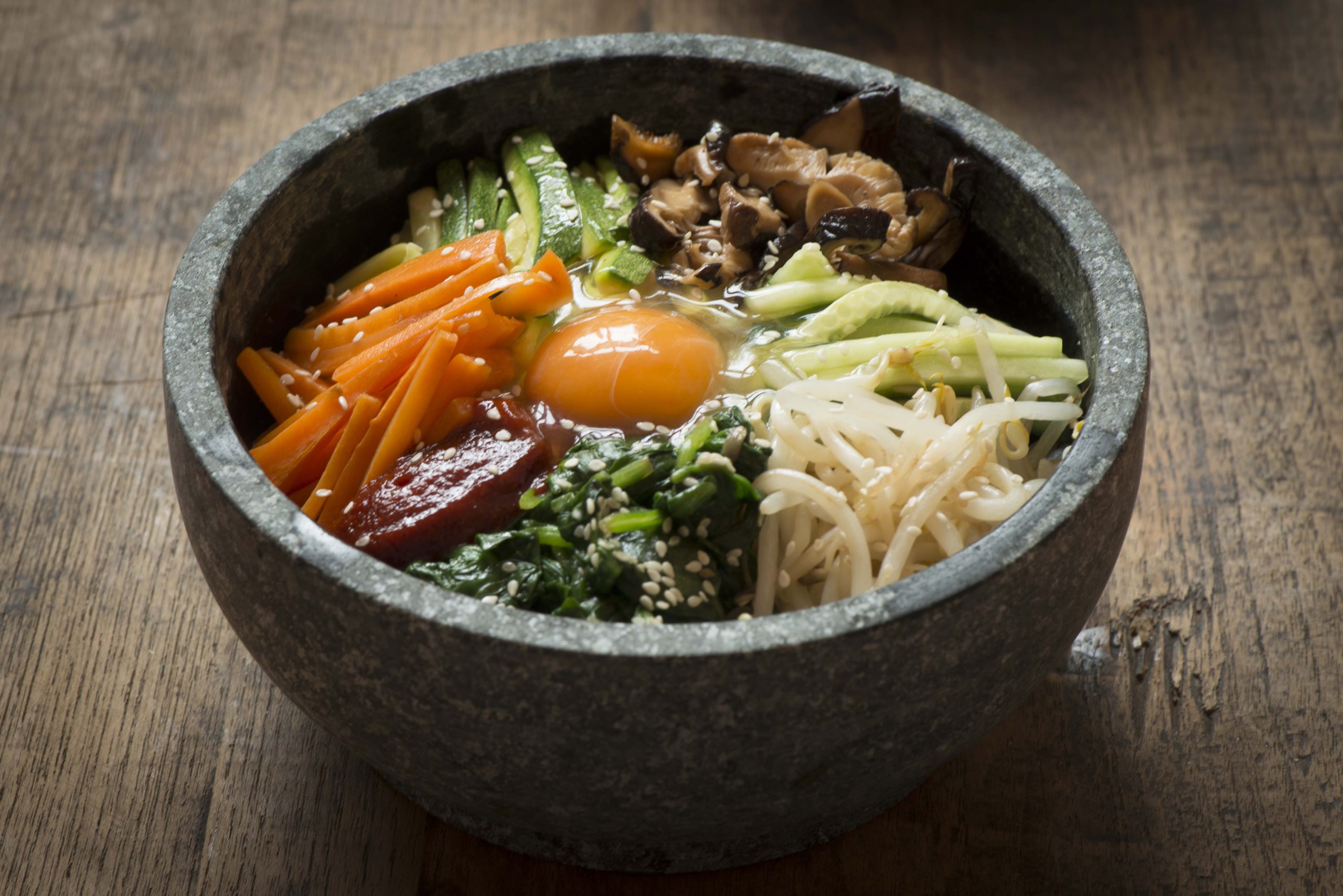
Bibimbap is a bowl of warm rice crowned with a ring of seasoned vegetables, savory beef, and a fried egg, with a spoon of gochujang to bring the heat. The name means mixed rice, and that is the instruction: you stir it all together into one glorious mess just before eating. It is colorful, balanced, and endlessly adaptable, a way to turn a few vegetables and some rice into a full meal. The work is in preparing each component well; the assembly and the mixing are the easy, satisfying part.
Mixed Rice
Bibim means mixed and bap means cooked rice, so bibimbap is literally mixed rice, and it is eaten exactly that way, stirred thoroughly so every grain picks up the vegetables, sauce, and egg. Its exact origins are debated, with theories ranging from using up leftovers before the lunar new year to feeding farmers at harvest to ancestral ceremony food. It was first recorded during the Joseon dynasty. However it began, it became one of Korea’s most recognized dishes, valued for its balance of colors, textures, and flavors in a single bowl.
Namul: The Seasoned Vegetables
The heart of bibimbap is the namul, the array of individually seasoned vegetables, and this is where the dish is made. Each vegetable is prepared and seasoned on its own rather than tossed together: spinach blanched and dressed with sesame oil and garlic, soybean sprouts blanched and seasoned, carrots and zucchini sauteed, mushrooms cooked down. Seasoning each one separately is what gives bibimbap its layered, distinct flavors instead of a uniform mush. It is more work and more small bowls, but it is the difference between a real bibimbap and rice with a pile of plain vegetables on top.
The Beef and Egg
Thinly sliced beef, marinated in soy sauce, sesame oil, and garlic much like bulgogi, then quickly stir-fried, is the common protein, though tofu makes a good vegetarian version and some bowls use raw beef. The egg goes on top, usually fried sunny side up with a runny yolk. That runny yolk matters: when you mix the bowl, it coats the rice and binds the vegetables and sauce into a cohesive whole. A firm, fully cooked yolk does not do the same job. Set the egg in the center as the crown of the arranged bowl.
Gochujang, the Essential Sauce
Along with the namul, gochujang is the other indispensable element of bibimbap. This thick, fermented Korean chili paste, made from red chili, glutinous rice, and fermented soybeans, brings the heat, savoriness, and slight sweetness that ties the bowl together. Many cooks mix the gochujang with a little sesame oil, sugar, and vinegar into a smoother sauce before adding it. Add it to taste, since it is potent, and mix it through thoroughly. Without gochujang, bibimbap is missing its defining flavor; it is the element that makes the mixed bowl unmistakably Korean.
Dolsot: The Stone Bowl
The restaurant version many people love is dolsot bibimbap, served in a screaming-hot stone bowl. The heated stone crisps the rice at the bottom into a golden, crunchy crust called nurungji while keeping the top hot, and it cooks the egg if you add it raw. At home you can approximate this with a heated stone or ceramic bowl, or a cast-iron pan, brushed with sesame oil and preheated. The contrast of the crisp bottom rice against the soft vegetables and rice above is the appeal. The regular metal-bowl version is served without the crust and is just as traditional.
Assembling and Eating
To serve, put warm rice in each bowl and arrange the namul, beef, and egg in separate sections on top, which looks generous and colorful. That arrangement is for presentation only, since the whole thing gets mixed. At the table, add gochujang to taste and stir everything together thoroughly, breaking the yolk and coating the rice, until it is one combined bowl. Then eat. Prepare all the components ahead and the final bowls come together in minutes, which makes bibimbap good for feeding several people, each mixing their own bowl to their own taste.
Common Questions
Can I make it vegetarian?
Yes, easily. Skip the beef or replace it with seasoned tofu or extra mushrooms. The namul vegetables and gochujang carry the bowl, so a vegetable-only bibimbap is common and satisfying. Check that your gochujang has no fish additives if strict.
Do I really have to season each vegetable separately?
For a proper bibimbap, yes. Seasoning each namul on its own gives the layered flavors that define the dish. It is the main effort in the recipe and the thing that separates it from plain rice and vegetables.
What rice is best?
Short-grain white rice, slightly sticky, holds the toppings and sauce well. It is the standard for bibimbap. Brown rice works for a heartier version. Serve the rice hot, since warm rice mixes best with the sauce and egg.
Bibimbap means mixed rice, a Korean bowl of warm rice topped with seasoned vegetables called namul and gochujang chili paste, stirred together just before eating.