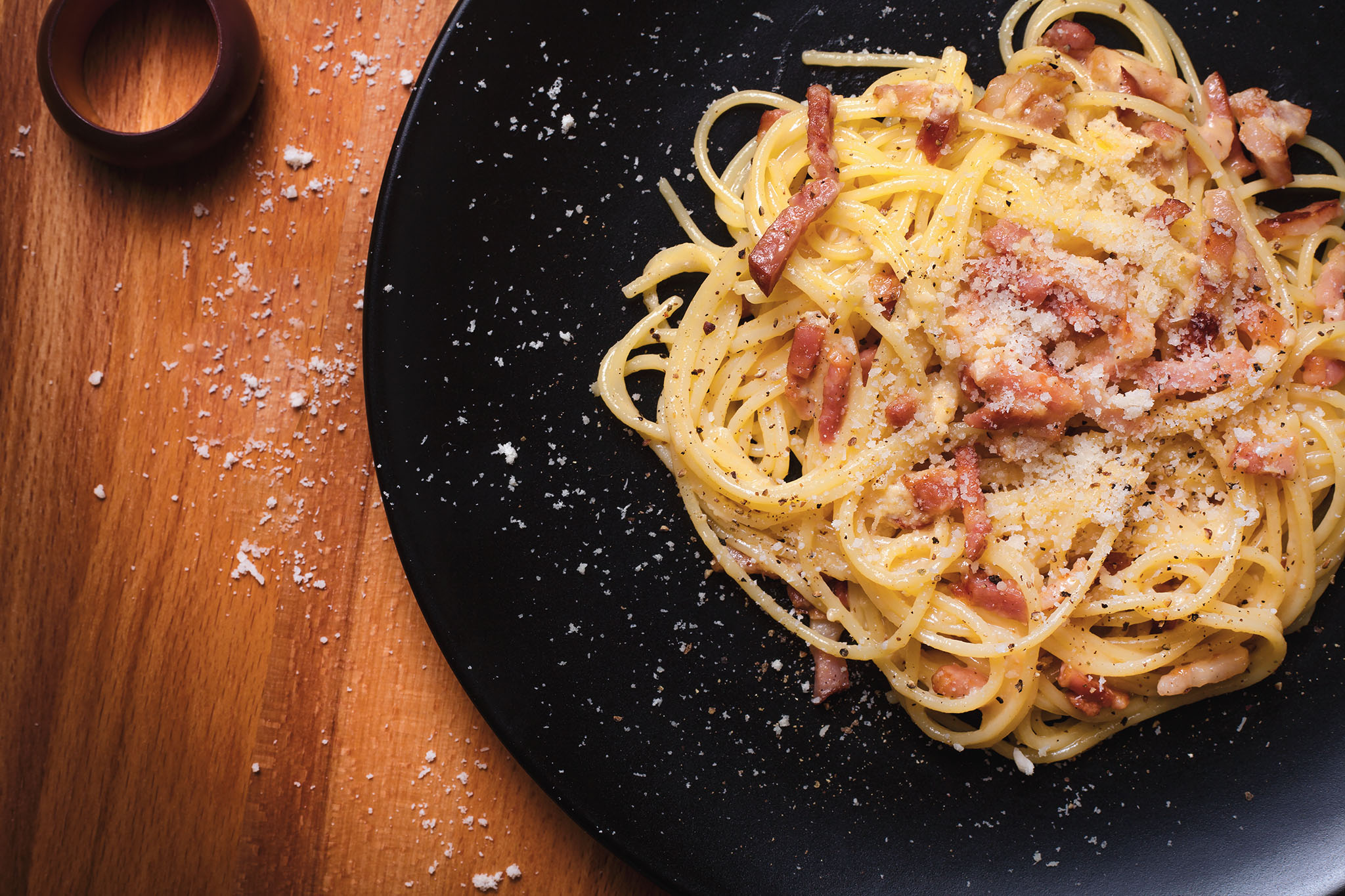
Carbonara is proof that four humble ingredients, done right, beat any amount of cream. Hot spaghetti is tossed with egg, sharp pecorino, crisp guanciale, and a heavy hit of black pepper until the eggs and cheese emulsify into a glossy, silky sauce that coats every strand. There is no cream in a real carbonara, and there does not need to be. The dish is quick, but it demands attention at one critical moment: the eggs must turn creamy, not scramble. Get the timing and the heat right and it is unbeatable.
A Roman Classic
Carbonara comes from Lazio, the region around Rome, and it took its modern form and name in the middle of the twentieth century, with a post-war origin widely supported by food historians. It is one of the pillars of Roman pasta cooking, alongside cacio e pepe, amatriciana, and gricia, all built on a similar small set of ingredients. The name has several disputed explanations and its exact birth is debated, but the dish itself is clear and codified: pasta, egg, pecorino, guanciale, and pepper. Early recipes even included cream, which was widely dropped only in the 1990s.
The Real Ingredients
Tradition is specific here. The cured pork is guanciale, cured pork jowl, richer and more delicate than bacon; pancetta is the common substitute, and smoked bacon stands in outside Italy though it changes the flavor. The cheese is pecorino romano, a hard, salty sheep’s-milk cheese, sometimes cut with a little Parmesan. The pasta is usually spaghetti, though rigatoni and bucatini are also used. And the eggs bind it all. That is the entire list. No garlic, no onion, no cream, no peas; the Roman version is deliberately spare, and its quality rests on each ingredient being good.
Rendering the Guanciale
Start the guanciale in a cold, dry pan and cook it slowly over medium heat so its fat renders out and the meat turns crisp and golden. That rendered fat is not waste; it is a key part of the sauce, coating the pasta with savory richness. Do not add oil, since the guanciale provides plenty of fat, and do not rush it, or you get chewy, pale pieces sitting in unrendered fat. Once it is crisp, take the pan off the heat. The residual fat and the crisp pork wait in the pan for the pasta and the egg mixture.
The Egg and Cheese
The sauce is raw egg and grated pecorino whisked into a thick paste with a lot of black pepper, and it cooks only from the heat of the pasta, never on the stove. Using mostly yolks with one whole egg gives a richer, more stable sauce that resists scrambling better than all whole eggs. Grate the pecorino fine so it melts smoothly. Whisk it into the eggs before the pasta is done so it is ready to go the instant you need it, since carbonara comes together fast and there is no time to fuss once the pasta is drained.
The Critical Toss
This is the moment the dish is won or lost. Drain the hot pasta, saving a cup of the starchy water, and add the pasta to the pan of guanciale off the heat. Toss to coat, then pour in the egg and cheese mixture and toss hard and fast. The heat of the pasta gently cooks the eggs into a creamy sauce, while splashes of the reserved pasta water loosen it and the starch helps it emulsify into silk. Keep the pan off direct heat; too much heat scrambles the eggs into a grainy mess. Work quickly and the sauce turns glossy.
Serving Carbonara
Carbonara waits for no one, so serve it the instant it is tossed, while the sauce is loose and glossy; it thickens and dulls as it sits. Finish each plate with extra grated pecorino and another grind of black pepper. It needs nothing else, no side, no garnish, no parsley. A simple green salad afterward suits it if you want one. There are no good leftovers of carbonara, since reheating scrambles the egg sauce and ruins the texture, so make only what you will eat and eat it right away, hot from the pan.
Common Questions
Is there cream in carbonara?
Not in the modern Roman version. The creamy texture comes from egg and pecorino emulsified with starchy pasta water. Some older recipes did include cream, but it was largely dropped by the 1990s and is not used in the classic dish today.
What can I use instead of guanciale?
Pancetta is the closest common substitute. Smoked bacon works outside Italy but adds a smoky flavor that changes the dish. Guanciale, cured pork jowl, gives the most authentic result and is sold at Italian delis.
How do I stop the eggs scrambling?
Make the sauce off the heat. Take the pan off the burner before adding the egg mixture, toss quickly, and use splashes of pasta water to control the texture. The residual heat cooks the eggs gently into a sauce without scrambling them.
Carbonara is a pasta dish from Lazio, the region around Rome, that took its modern form and name in the middle of the twentieth century, built on egg, hard cheese, cured pork, and black pepper.