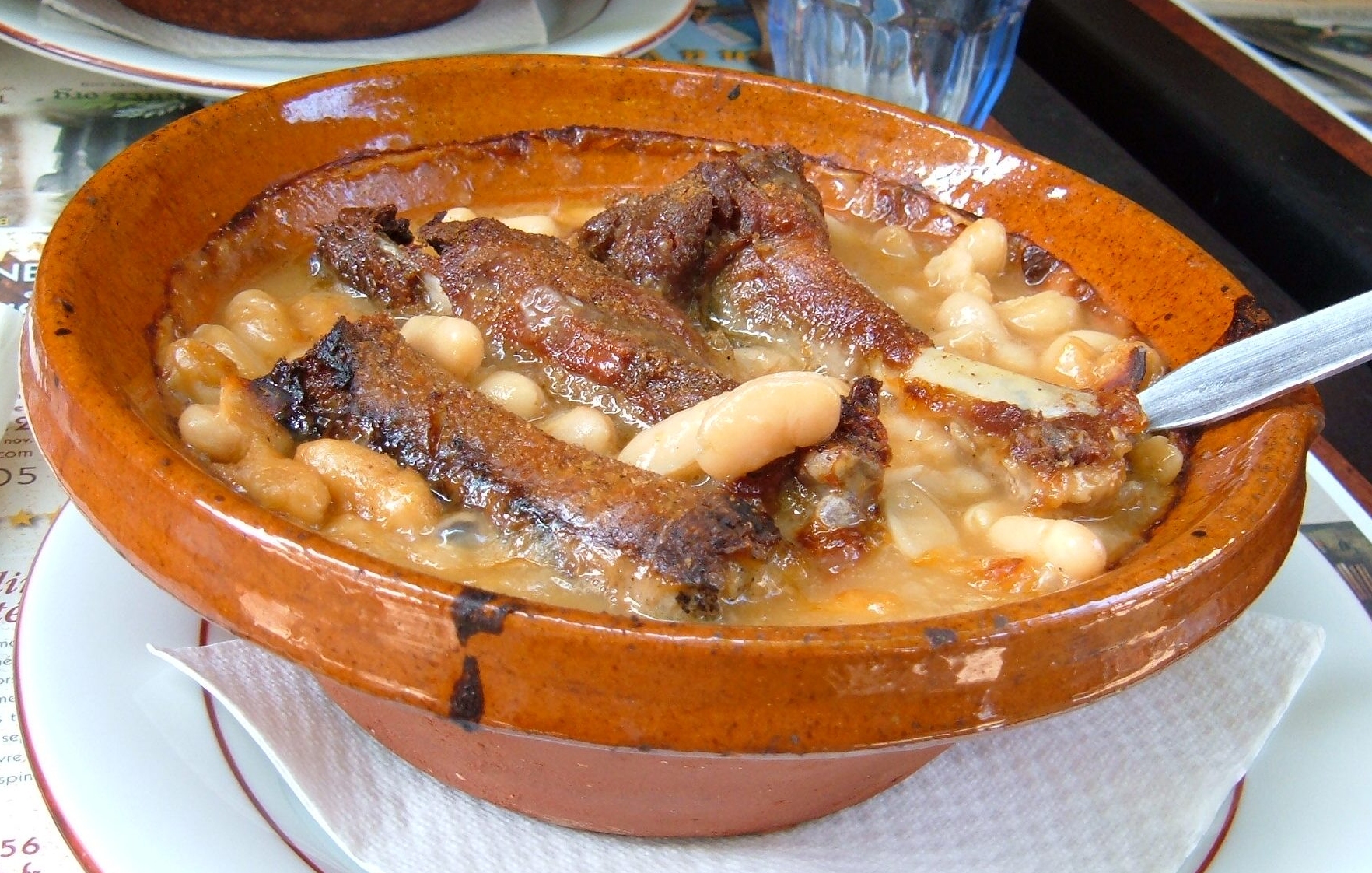
Cassoulet is the grand cold-weather casserole of southwest France: white beans baked for hours with sausage, pork, and confit duck until the whole thing turns into a deep, rich, savory whole with a burnished crust on top. It is a project, no way around it, the kind of dish you make on a free winter weekend to feed a table of people who will remember it. Nothing about cassoulet is quick or light, and that is the entire point. It is comfort food raised to a monument.
A Dish From the Languedoc
Cassoulet comes from the Languedoc region in France’s southwest, and it takes its name from the cassole, the wide earthenware dish it bakes in. Three towns, Castelnaudary, Carcassonne, and Toulouse, each claim their own version and argue over which is the true one, differing in the meats they include. What they share is the foundation: dried white beans and an assortment of rich pork and poultry, slow-baked together for hours. It is peasant food in origin and celebration food in practice, a dish that turns cheap beans into something magnificent through time and fat.
The Beans
Beans are the body of cassoulet, not a side note, so they deserve care. Use dried white beans, traditionally a large regional variety, soaked overnight and then simmered gently with bacon, aromatics, and herbs until just tender but not falling apart, since they will cook further in the oven. Save the bean cooking liquid, because it becomes the flavorful base that binds the whole casserole; plain water would waste all that flavor. Canned beans can work in a rushed version, but the dish is built around beans cooked from dry in a well-seasoned broth.
The Meats
Cassoulet is a celebration of preserved and rich pork and poultry. Confit duck legs, duck cooked slowly and stored in its own fat, are the classic centerpiece and worth seeking out at a good grocery or making ahead; a slow-braised duck leg substitutes if confit is out of reach. Garlic sausage, often Toulouse sausage, and cubes of pork belly or shoulder round out the meats, with bacon lending its smoke to the beans. The exact lineup varies by town and cook, but the theme is constant: several kinds of fatty, savory meat melting into the beans.
Layering and the Long Bake
Assembly is a matter of layering the tender beans with the browned meats and softened vegetables in a deep dish, then adding enough bean liquid and stock to nearly cover. Then it bakes, uncovered, low and slow, for two to three hours. During that time a skin forms on top as the liquid reduces, and the traditional technique is to break that crust back down into the beans several times as it bakes. Each time a new crust forms and gets folded in, the dish gains another layer of flavor and the beans grow richer and more unified.
The Crust
The finish is a crust, and cooks disagree about it as passionately as about everything else in cassoulet. Some rely only on the natural skin the beans form; others scatter breadcrumbs over the top toward the end to build a crisp golden lid. Either way, the last stretch in the oven sets a browned surface over the soft beans beneath, and that contrast of crisp top and creamy interior is one of the dish’s great pleasures. Do not stir the final crust in; let it brown and stay, then break through it with a spoon to serve.
Serving a Cassoulet
Cassoulet is a meal in itself, needing only a sharp green salad to cut its richness and a full-bodied red wine from the same southwest region to drink with it. It serves a crowd, which suits its effort, and like most bean dishes it is even better the next day once the flavors have settled, reheating gently in the oven. It keeps several days refrigerated and freezes well. This is not a dish to make small or make often; it is a dish to make fully, for people you want to feed generously on a cold day.
Common Questions
Can I make cassoulet without duck confit?
Yes. Slow-braise duck legs until tender as a stand-in, or lean more heavily on sausage and pork. It departs from the most traditional versions, but a cassoulet built on good sausage and pork belly is still deeply satisfying.
Do I have to soak the beans overnight?
Overnight soaking gives the most even cooking and the best texture. A quick hot soak works in a pinch: boil the beans briefly, then let them sit an hour off the heat before cooking. Cooking from dry with no soak takes much longer and cooks unevenly.
Why break the crust into the beans?
Folding the skin that forms back into the dish several times builds flavor and richness, as each new crust caramelizes and dissolves in. It is a traditional technique that deepens the cassoulet, though the final crust is left to brown and stay.
Cassoulet comes from the Languedoc region of southwest France, a rich bean-and-meat casserole named for the cassole, the earthenware dish it traditionally bakes in.