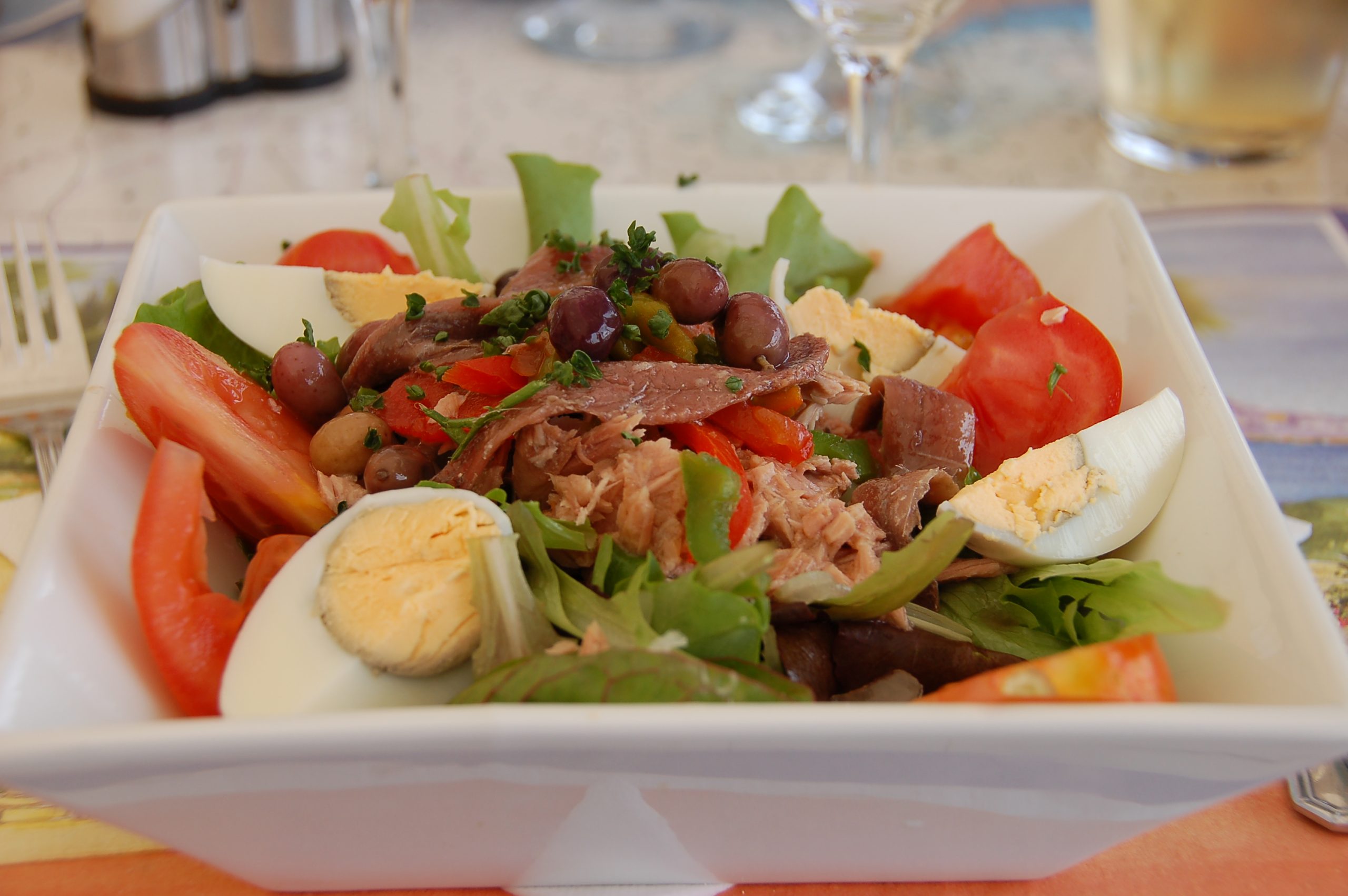
Salade nicoise is summer served on a platter: good tuna, boiled eggs, tender potatoes, crisp green beans, ripe tomatoes, and briny olives, arranged in groups and dressed with a sharp vinaigrette. It is a composed salad, meaning the parts are laid out rather than tossed together, so each bite can be built to taste. Fresh, colorful, and substantial enough for a full meal, it is one of the great dishes of the French Mediterranean and needs no cooking beyond boiling a few things.
A Salad From Nice
The dish comes from Nice, on the French Riviera, and it carries the produce of that sun-drenched coast: tomatoes, olives, and the olive oil that defines the region’s cooking. What exactly belongs in a true nicoise is a subject of genuine local passion. Purists from Nice argue about whether cooked vegetables like potatoes and green beans belong at all, whether it should feature tuna or anchovies, and what may be added. This recipe follows the widely known composed version with both cooked and raw vegetables, the one served in bistros around the world.
The Composed Salad Idea
Salade nicoise is a composed salad, and that distinction matters. Rather than tossing everything in a bowl, you arrange each component in its own group on a platter, tuna here, eggs there, potatoes and beans in their own piles. This lets the ingredients keep their identity and lets each person combine them as they like on the plate. It also looks generous and beautiful, which is part of the point. Dumping and tossing a nicoise turns it into an ordinary mixed salad and loses both the visual appeal and the built-to-taste eating.
The Tuna Question
Tuna anchors the plate, so its quality is felt in every bite. Good jarred or canned tuna packed in olive oil, the kind with real texture and flavor, is traditional and entirely proper; the cheap watery kind is not worth the salad. Alternatively, sear fresh tuna and slice it, a more modern restaurant approach that makes a luxurious version. Anchovies are the other classic protein, added for their salty punch, and in Nice the debate over tuna versus anchovies runs hot. Use one, the other, or both, but do not skimp on whichever you choose.
The Vegetables
The cooked vegetables need care so they stay bright. Boil small potatoes until just tender and blanch green beans until crisp-tender, then cool them so they do not go soft or dull. Ripe tomatoes in wedges, halved radishes, and sometimes cucumber or bell pepper add raw crunch and freshness. Nicoise olives, the small dark ones from the region, bring the briny note; another good black olive stands in. Everything wants to be at its peak, since a composed salad hides nothing. This is a dish for the height of summer, when tomatoes and beans are actually good.
The Vinaigrette
The dressing is a simple, sharp vinaigrette: good olive oil, red wine vinegar, and a little Dijon mustard to emulsify it, whisked together and seasoned well. It should taste bright and assertive, since it has to carry a lot of plain boiled vegetables and rich tuna and egg. Dress the salad just before serving, spooning the vinaigrette over the arranged components rather than tossing, so the vegetables stay crisp and the eggs and tuna are not smashed. Dressed too early, the salad weeps and the potatoes go gluey, so this is a last-minute step.
Serving It as a Meal
Salade nicoise is a full lunch or a light dinner on its own, needing only bread and perhaps a glass of chilled rose to complete it. It is best assembled close to serving, though the components can all be prepared ahead, potatoes boiled, beans blanched, eggs cooked, and kept separately in the fridge, then arranged and dressed at the last minute. That make-ahead flexibility makes it ideal for a warm-weather gathering. Leftovers do not keep well once dressed, since the vegetables soften, so dress only what you will eat.
Building It on the Plate
Part of the pleasure of a composed salad is that each person assembles their own bites, so how you arrange it shapes how it eats. Set the tuna in the center or off to one side as the anchor, then ring it with the vegetables in tidy groups, the eggs halved and cut side up, the olives and anchovies scattered where they catch the eye. Leave a little space between the components rather than packing them; the salad should look generous and orderly, not crowded. Present the vinaigrette on the side or spoon it over at the table, and let everyone take what they want in the proportions they like.
Common Questions
Do potatoes and green beans really belong?
It depends who you ask. Some purists in Nice argue the original had no cooked vegetables at all. The internationally known version includes them, and that is what most people mean by salade nicoise today. Both camps have a point.
Canned tuna or fresh?
Good tuna packed in olive oil is traditional and excellent. Seared fresh tuna is a fine modern alternative. Either works; the key is quality, since the tuna is a lead ingredient, not an afterthought.
How hard should the eggs be?
Traditionally hard boiled, but jammy soft-boiled eggs with a slightly runny center are a popular modern choice and add richness. Cook them to your preference; both are common on nicoise plates today.
Salade nicoise comes from Nice on the French Riviera, a composed salad whose exact contents are argued over fiercely by locals but which always celebrates the produce of the Mediterranean coast.