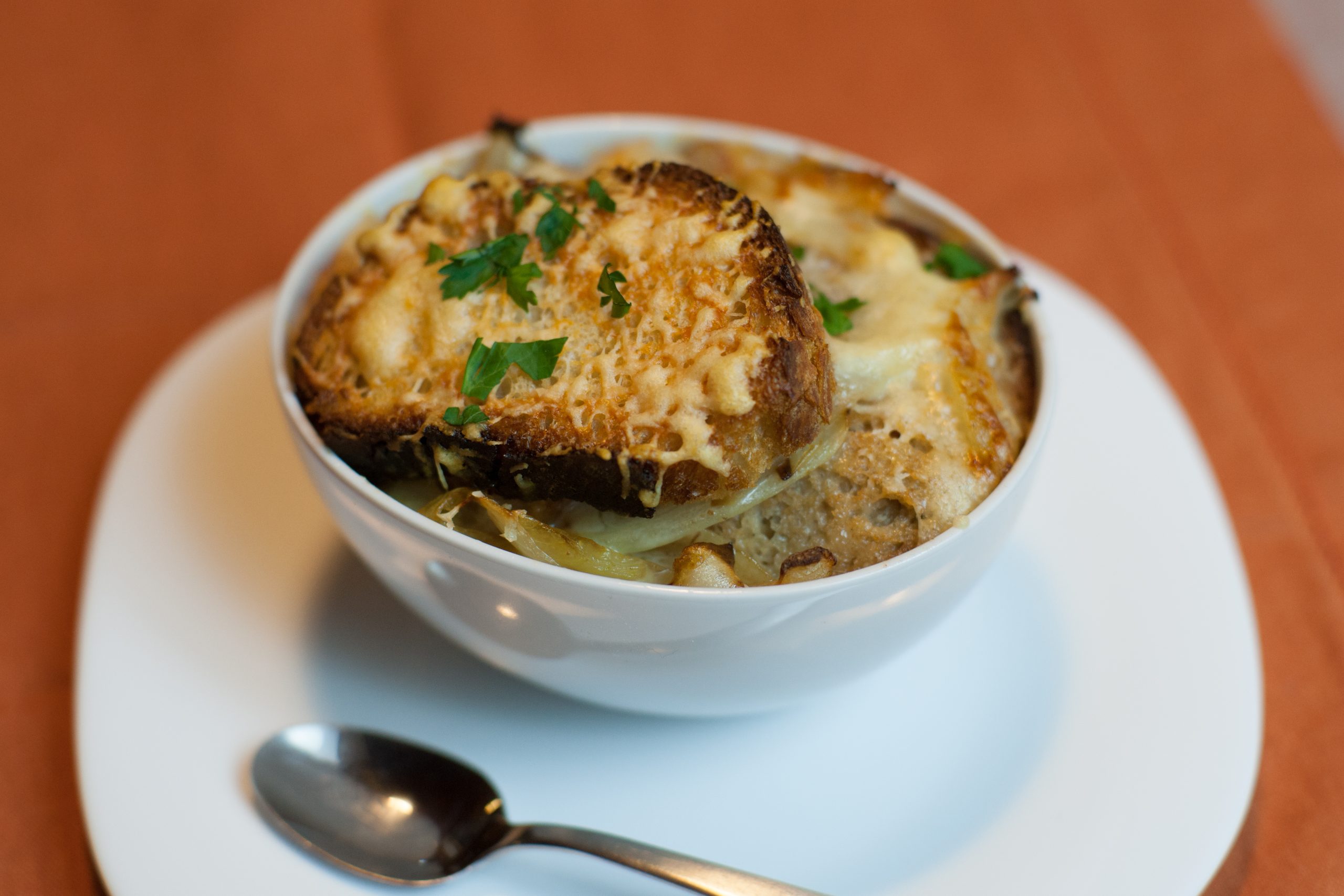
French onion soup is proof that patience is an ingredient. Onions, butter, and stock become something rich and deeply savory, but only if you give the onions the long, slow cooking they need to caramelize into sweet, brown ribbons. Topped with toasted baguette and a thick cap of Gruyere broiled until it bubbles and browns, it is the definitive bistro comfort dish. The active work is small; the time is not. Rush the onions and you get thin, pale soup. Respect them and you get magic.
Humble Roots, Bistro Fame
Onion soups are ancient and were long considered poor people’s food, since onions and stale bread were always cheap and available. The modern French version, soupe a l’oignon gratinee, rose to fame in the bistros and markets of Paris, famously eaten by market workers and revelers late at night. It became a symbol of French comfort cooking abroad, the soup people order to feel warmed from the inside. Its genius is transformation: turning the most ordinary ingredients into something that tastes luxurious through technique alone.
Caramelizing Is the Whole Job
Everything depends on the onions, and caramelizing them properly takes forty-five minutes to an hour. There is no legitimate shortcut. Slice a generous pile of yellow onions thin, cook them in butter and a little oil over medium-low heat, and stir often as they slowly collapse, release their water, and finally brown into sweet, jammy strands. Rushing over high heat burns the edges while leaving the rest raw and gives a bitter, thin soup. A pinch of sugar near the end helps them color, and a little patience does the rest. This step is the soup.
Deglaze and Build the Broth
Once the onions are deeply brown, the bottom of the pot holds a layer of caramelized fond packed with flavor. Deglaze it with dry white wine or a splash of sherry, scraping up every bit as the liquid bubbles, then add the stock. Beef stock is traditional and gives the richest result, though a good vegetable stock makes a fine meatless version. Thyme and bay leaf simmer in for twenty minutes to round it out. Season carefully at the end, since the stock and the coming cheese both bring salt.
The Gratinee
The cap of bread and melted cheese is what turns soup into soupe gratinee. Slice a baguette and toast the pieces hard, so they can float on the broth and hold up under the cheese without dissolving into mush. Ladle the soup into oven-safe bowls, float the toast on top, and pile on a generous amount of grated Gruyere, letting some spill over the rim where it will brown against the bowl into a prized crust. Nutty, melting Gruyere is the classic choice; Comte or Emmental also work. Grate it yourself for the best melt.
Under the Broiler
Set the filled bowls under a hot broiler until the cheese melts, bubbles, and browns in spots, a few minutes of watching closely so it colors without burning. This final blast is what fuses bread, cheese, and soup into one dish and gives the pull of stringy melted Gruyere over hot broth. Use bowls that can take direct heat and set them on a tray for safe handling, since they come out screaming hot. Serve immediately, while the cheese still stretches and the broth is at its hottest.
Serving and Notes
French onion soup is a starter or a light meal on its own, warning your guests that the bowls are dangerously hot. The onions can be caramelized ahead and refrigerated for days, which splits the long work from the quick assembly, and the soup base keeps three days and freezes well; only the bread and cheese are added fresh at serving. That make-ahead flexibility makes a dish that seems like a project into something you can pull together on a weeknight once the onions are done.
The Right Onions
Yellow onions are the standard for this soup, striking the balance between sweetness and depth that the dish needs, and they are what most French cooks reach for. Sweet onions caramelize faster but can turn the soup cloying; red onions tint the broth an odd color. Slice them evenly and thin so they cook at the same rate, and use more than seems reasonable, because they shrink to a fraction of their raw volume. Six large onions sounds like a mountain in the raw pile and cooks down to the modest, jammy tangle that four bowls of soup actually require.
Common Questions
How long does caramelizing really take?
Forty-five minutes to an hour over medium-low heat, stirring often. Recipes promising caramelized onions in ten minutes are describing something else. The deep brown color and sweetness only come with real time.
Can I make it vegetarian?
Yes. Use a good rich vegetable stock in place of beef, and the deeply caramelized onions carry the soup. A splash of soy sauce or a little miso adds the savory depth that beef stock would otherwise provide.
What cheese is best?
Gruyere is the classic, prized for its nutty flavor and excellent melt. Comte and Emmental are good alternatives. Grate it fresh rather than using pre-shredded, which is coated to prevent clumping and melts less smoothly.
French onion soup turns the cheapest of ingredients, onions and stock, into a rich, restorative bowl, a Parisian bistro classic with roots in humble French home cooking.