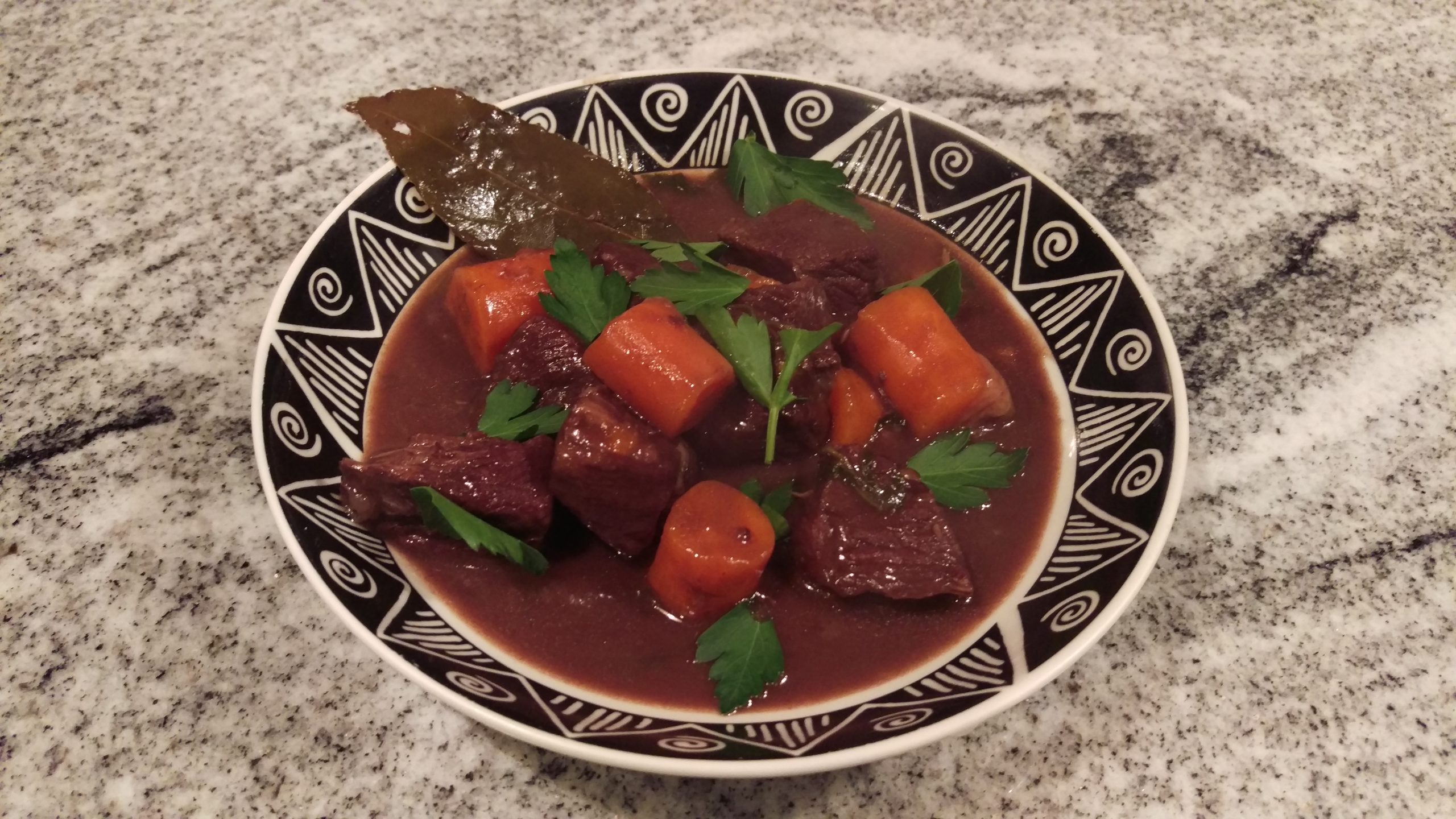
Beef bourguignon is French comfort cooking at its height: cubes of beef braised for hours in red wine until they turn silky, joined by mushrooms, glazed pearl onions, and crisp bacon in a sauce deep enough to stand a spoon in. It takes an afternoon and rewards every minute. Nothing about it is difficult, but the steps matter, and doing each one properly is the difference between a great stew and a gray one. Served over potatoes or noodles, it is a meal worth planning a day around.
A Dish From Burgundy
The name says where it comes from: boeuf bourguignon, beef in the style of Burgundy, the eastern French region famous for its red wine and its cattle. It began as country food, a way to make tough cuts tender through long cooking in the wine that was always at hand. Over time it climbed from farmhouse to bistro to the pages of Escoffier and later Julia Child, who introduced it to American home cooks. It remains a benchmark dish, the one by which a cook’s grasp of French braising is often judged.
The Cut and the Sear
Chuck is the cut to use. It is marbled with connective tissue that melts over hours into richness, where a lean cut would only turn dry and stringy. Cut it into large cubes, since they shrink as they cook, and dry them thoroughly before searing. The sear is not optional browning; it builds the foundation of the flavor through the fond, the browned residue left in the pot. Sear in batches with space between the cubes, because a crowded pot traps steam and the meat gray-boils instead of browning. This step takes patience and pays it back completely.
Wine Is the Whole Point
A full bottle of dry red goes into the pot, and the finished dish tastes of it, so the choice matters. A Burgundy or another Pinot Noir is traditional and true to the name, but any decent dry red you would happily drink will work. What will not work is cooking wine or a bottle so harsh you would pour it out; its flaws only concentrate as the sauce reduces. You do not need an expensive bottle, just an honest one. The alcohol cooks off over the long braise, leaving depth and a gentle acidity behind.
The Long, Low Braise
After the beef, bacon, and aromatics come together with wine and stock, the pot goes into a low oven, around 325 F, covered, for two and a half to three hours. Low and slow is the rule; a hard boil toughens the meat before the collagen has time to break down. The oven surrounds the pot with even heat, which beats a stovetop burner for a braise this long. It is done when a cube of beef surrenders to a fork with no resistance. Do not rush this by turning up the heat; there is no shortcut through the chemistry.
Mushrooms and Pearl Onions, Cooked Apart
The classic garnish is quartered mushrooms and small pearl onions, and both are cooked separately from the braise, then folded in near the end. This is deliberate. Sauteed on their own, the mushrooms brown and the onions take on a glaze and keep their shape; dropped into the stew from the start, they would collapse into anonymity. Peeling pearl onions is tedious, so a brief blanch to loosen the skins helps, or use frozen peeled ones. Add both to the pot for the last ten minutes so they warm through and drink a little sauce without falling apart.
Serving and the Second Day
Serve beef bourguignon over buttered egg noodles, mashed potatoes, or with crusty bread to catch the sauce, and scatter parsley on top. Like most braises, it is even better the next day, once the flavors have settled and married overnight. Many cooks make it a day ahead on purpose, chill it, lift off any set fat, and reheat gently. It keeps three days refrigerated and freezes well for months, so a big pot is never wasted. This is a dish that rewards making more than you need.
Common Questions
Can I make it without wine?
The wine defines the dish, so leaving it out makes a different stew. For an alcohol-free version, replace it with extra beef stock plus a splash of red wine vinegar and a little grape juice for depth, and accept that it will not be true bourguignon.
Do I have to use the oven?
No. You can braise it on the stovetop over very low heat, stirring now and then to prevent sticking, or in a slow cooker for 8 hours on low. The oven simply gives the most even heat with the least attention.
Why is my beef still tough?
It needed more time or ran too hot. Tough beef in a braise is almost always undercooked, not overcooked; give it another 30 to 45 minutes at a gentle simmer and it will turn tender as the collagen finally breaks down.
Beef bourguignon comes from Burgundy, where the region's red wine and cattle met in a peasant braise that rose to become one of the emblems of French cooking.