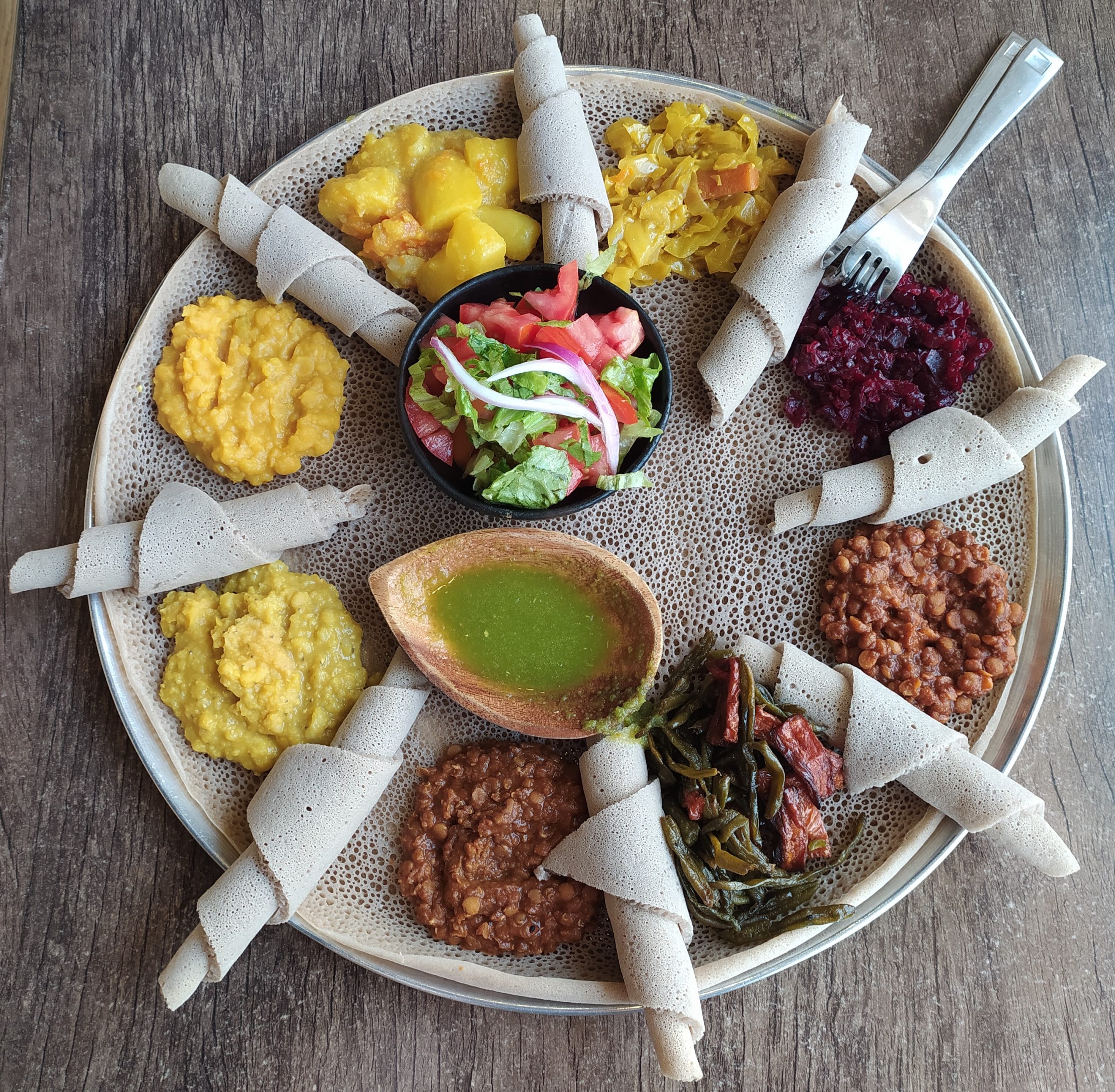
Injera is bread, plate, and fork in one. This spongy, slightly sour flatbread covers the communal tray at an Ethiopian meal, stews are ladled straight onto it, and everyone tears pieces from the edge to scoop up each bite. Its surface is covered in small holes, called eyes, that trap sauce the way a crumpet traps butter. Making it at home asks for one scarce ingredient, teff flour, and one abundant one, patience, because the batter ferments for two to three days before it ever meets a pan.
The Bread That Organizes the Meal
In Ethiopia and Eritrea, injera is not a side; it is the structure of eating itself. A large round of it lines the shared platter, stews and vegetables are arranged on top in mounds, and extra rolls of injera come alongside for tearing. Diners eat with their right hand, wrapping a scrap of the bread around a bite of food. By the end, the sauce-soaked base layer becomes the last and, many say, the best part of the meal. Learning injera means learning the delivery system for every Ethiopian recipe on this site.
Teff, the Grain Behind It
True injera is made from teff, a tiny grain grown in the Ethiopian highlands and ground whole into flour. Teff carries an earthy, faintly nutty flavor and no gluten of its own. Outside Ethiopia, teff flour is sold at health food stores, African groceries, and online, in ivory and brown varieties; either works, with brown giving a deeper color and flavor. Many home cooks abroad blend teff with some wheat or barley flour for a lighter, easier first batch. This recipe allows that blend, and going all-teff once you have the rhythm produces the fully traditional, gluten-free version.
Fermentation Does the Work
The batter is only flour and water. Left loosely covered at room temperature, wild yeasts and bacteria move in, bubble it, and sour it, exactly like a sourdough starter. Two to three days is typical in a moderate kitchen, longer in a cold one. A pinch of instant yeast in the first batch gives the wild fermentation a head start without changing the character. The batter is ready when it smells pleasantly sour, like yogurt with an edge, and shows bubbles when stirred. Dark liquid pooling on top is normal; pour it off. From then on, save a cup of each batch as a starter for the next, and the yeast packet retires for good.
Cooking Without Flipping
Injera cooks on one side only. In Ethiopia the pan is a wide clay or electric griddle called a mitad; at home, the biggest nonstick skillet you own does the job. Heat it over medium until a water drop dances, then pour the batter in a spiral from the rim toward the center and swirl the pan so it spreads thin. Within a minute, eyes open across the wet surface. That is the moment to cover the pan, trapping steam that cooks the top through. One to two minutes later the edges lift, the top is dry, and the injera slides out. No oil, no flip, ever.
Reading the Eyes
The holes are your diagnostic tool. A healthy batter at the right thickness produces a surface crowded with eyes edge to edge. Few or no eyes means the batter is too thick, so whisk in water a splash at a time, or the fermentation is short, so give it more hours. Batter that spreads like heavy cream is the target. The first injera of a session often disappoints, just like the first pancake; the pan settles into its temperature and the rest come out right. Cool each round on a clean cloth before stacking, or they steam each other gummy.
Serving and Storing
Serve injera at room temperature, which is traditional, with stews like doro wat, misir wat, shiro, or tibs ladled on top. A full spread on one shared tray, with two or three stews and a pile of gomen, is the classic presentation. Stacked and wrapped in a cloth inside a bag, injera keeps two to three days at room temperature; the fridge dries it out. Leftover rounds have their own destiny: torn and tossed in spiced sauce they become firfir, one of Ethiopia’s favorite breakfasts, covered elsewhere on this site.
Common Questions
Can I make injera with only all-purpose flour?
You can ferment a wheat batter and cook it the same way, and some restaurants abroad do. It looks similar but misses teff’s flavor and color, and it is no longer gluten free. Even a half-teff blend keeps the character.
My batter smells too sour. Is it ruined?
Strong sourness is a matter of taste, and Ethiopian injera runs tangier than most beginners expect. If it smells rotten rather than sour, or shows mold, discard it. Otherwise cook a test round; heat mellows the tang.
What pan replaces a mitad?
A 12-inch nonstick skillet with a lid is the standard substitute. Smaller injera than restaurant rounds, same texture. Electric mitads are sold in Ethiopian markets abroad if the bread becomes a habit.
Injera is the foundation of Ethiopian and Eritrean eating, a fermented teff flatbread that works as plate, bread, and utensil at once, with stews ladled directly onto it.