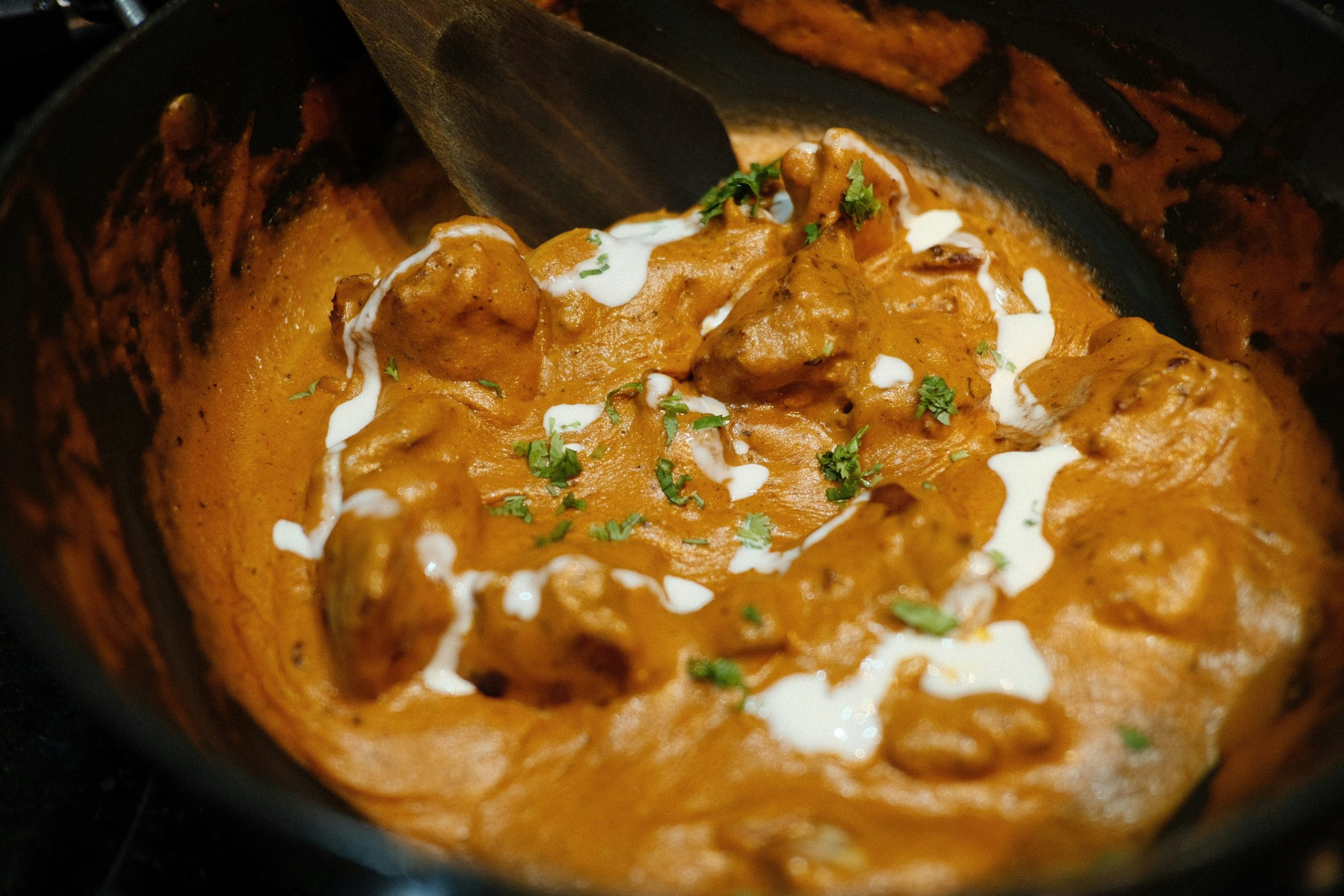
Butter chicken, murgh makhani, is the dish that introduced millions of people to Indian food, and it earns the job. Chunks of chicken marinated in yogurt and spices, charred, then folded into a silky tomato gravy finished with butter, cream, and dried fenugreek leaves: the flavors are deep but rounded, spiced but gentle, and the sauce begs to be mopped up with naan long after the chicken is gone. Restaurant versions often drown it in cream. Made at home, the tomatoes and the char stay in front, and the dish tastes alive rather than heavy.
Born in a Delhi Kitchen
Butter chicken is a young classic. It emerged in the mid-twentieth century at Moti Mahal, the famed Delhi restaurant credited with popularizing tandoori chicken, where cooks folded leftover tandoori chicken into a buttery tomato gravy so the meat would not dry out or go to waste. The invention traveled with Punjabi restaurateurs around the world and became, alongside its British cousin chicken tikka masala, one of the most ordered Indian dishes anywhere. The original logic still shapes the recipe: cook the chicken with real char first, then let a tomato-butter sauce bring it back to juiciness.
The Marinade Does Half the Work
Boneless thighs sit in yogurt, garam masala, and Kashmiri chili powder, ideally for several hours and at minimum for thirty minutes. Yogurt tenderizes the meat gently and helps the spices cling, and its lactic tang survives into the finished dish. Kashmiri chili powder deserves a spot in your pantry: it delivers the deep red color the dish is known for with only moderate heat. Paprika mixed with a pinch of cayenne approximates it. Thigh meat matters too; it stays juicy through two rounds of cooking where breast meat turns dry and stringy.
Char Before Sauce
In the restaurant original, the chicken comes out of a tandoor with smoky, blistered edges. At home, get as close as your kitchen allows: thread the marinated pieces under a screaming-hot broiler, sear them in a barely oiled cast-iron pan, or grill them. Cook to about ninety percent done with real browning on the surface, because those charred edges season the entire sauce once the chicken goes in. Pieces simmered from raw in the gravy make a decent curry but not butter chicken; the missing smoke is exactly what you would be tasting.
Building the Makhani Gravy
The sauce starts with butter, a finely chopped onion cooked soft, and ginger-garlic paste fried until its raw smell disappears. Tomato puree then cooks down over medium heat for a solid ten to fifteen minutes, until it darkens, thickens, and the fat starts separating at the edges. That reduction step is where most home versions fail; undercooked tomato tastes sour and thin. Many Indian restaurants blend the finished base smooth before adding cream, and an immersion blender gives you the same velvet texture in thirty seconds. Cream goes in off a hard boil, and the heat drops to a gentle simmer for the reunion with the chicken.
Kasuri Methi, the Signature
Dried fenugreek leaves, kasuri methi, are the quiet fingerprint of a proper murgh makhani. Crushed between your palms and stirred in during the last two minutes, they add a faintly bitter, maple-adjacent aroma that separates butter chicken from generic tomato-cream curries. A tablespoon is enough. The leaves keep for a year in a sealed jar and improve dal, paneer dishes, and flatbreads, so the purchase pays for itself. There is no real substitute; if you cannot find them, the dish will still be good, just less distinctly itself.
What Goes Alongside
Butter naan is the classic partner, its charred bubbles built for dragging through gravy. Steamed basmati rice is the everyday alternative, and jeera rice, basmati tossed with cumin fried in ghee, splits the difference. A sliced red onion with lemon and a cooling cucumber raita round out the plate the way a Delhi restaurant would serve it. Leftovers improve overnight as the fenugreek and spices settle in; refrigerate up to three days and reheat gently with a splash of water or cream.
Common Questions
Can I use chicken breast?
You can, with care. Cut the pieces slightly larger, marinate the full time, pull them from the broiler a touch early, and let the simmering sauce finish them gently. Thighs remain the safer route to juicy chicken, but a watched breast version turns out well.
Is butter chicken the same as chicken tikka masala?
They are close relatives, not twins. Butter chicken is a Delhi invention with a smoother, more buttery tomato gravy. Chicken tikka masala developed in Britain, typically runs more heavily spiced, and its sauce leans on onion as much as tomato.
How spicy is this recipe?
Mild to medium. Kashmiri chili contributes color more than fire, and cream softens what remains. Add cayenne with the chili powder if your table wants heat.
Can I freeze it?
Yes, for up to two months. Cream sauces sometimes look slightly separated after thawing; a gentle reheat and a fresh spoonful of cream bring the gravy back together.
Butter Chicken, or Murgh Makhani, was invented by accident in the 1950s at the Moti Mahal restaurant in Delhi. The chefs needed a way to use up leftover tandoori chicken before it dried out, so they simmered it in a rich gravy of tomatoes, butter, and cream. The result was a culinary masterpiece that became a global sensation. Unlike fiery curries, Butter Chicken is defined by its velvety texture and mild, slightly sweet flavor profile, heavily reliant on the tang of tomatoes, the richness of dairy, and the distinct earthy aroma of dried fenugreek leaves (kasuri methi).