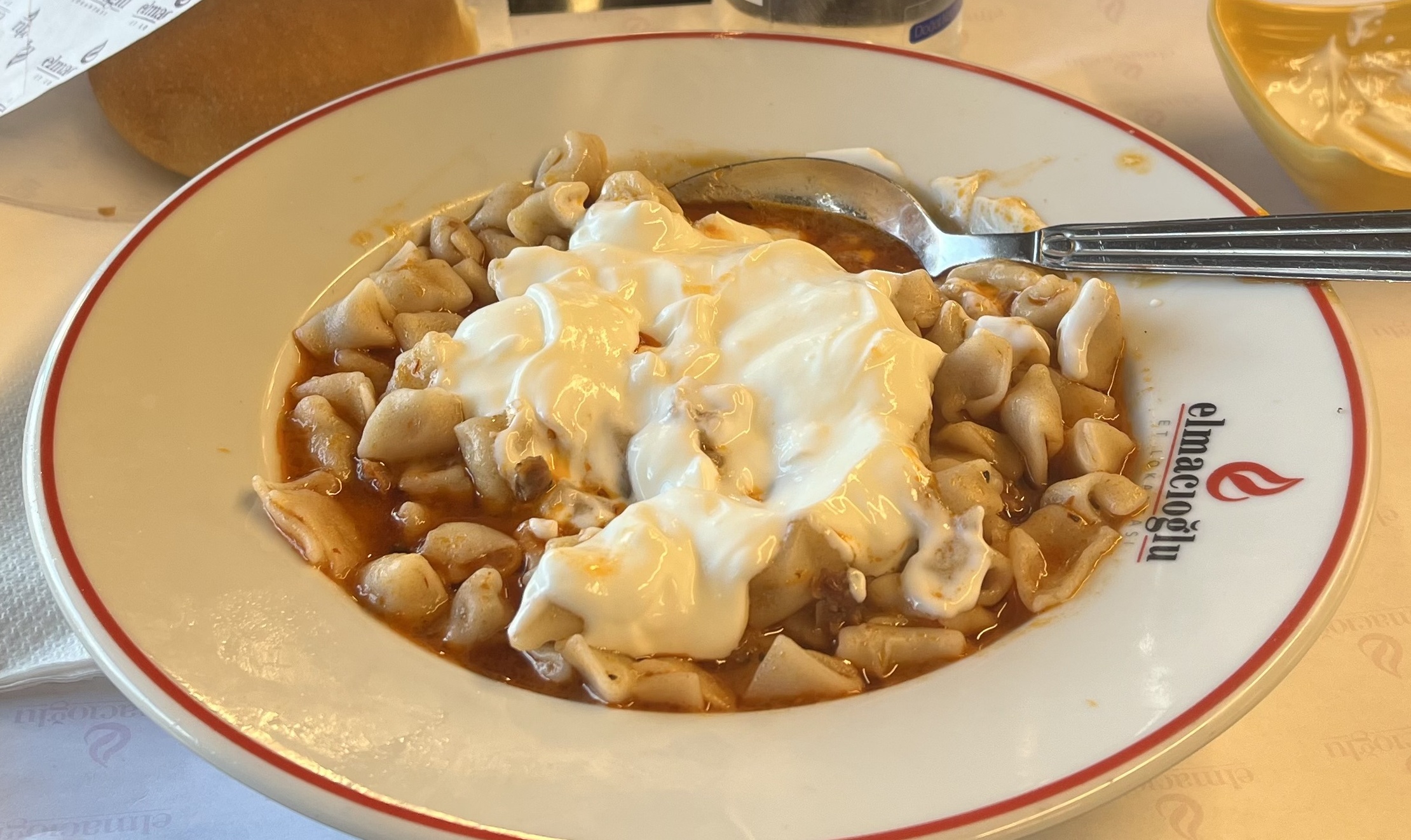
Manti are Turkey’s beloved dumplings, and they are a labor of love: tiny parcels of thin dough wrapped around spiced lamb, boiled, then served swimming in cool garlic yogurt with a drizzle of sizzling red pepper butter and a dusting of dried mint. The contrast of savory dumpling, tangy yogurt, and warm spiced butter is extraordinary. Making them, especially folding the traditionally tiny parcels, takes time and patience, which is why manti is a dish made in company and served with pride. The effort is repaid in every spoonful.
A Dish of Patience
Manti hold a special, prestigious place in Turkish cuisine, and the city of Kayseri in central Anatolia is the most famous home of the tiny version, where cooks pride themselves on manti so small that forty fit on a spoon. The dish’s roots reach back to Central Asian and Turkic cooking, carried westward over centuries; its name is cognate with the Chinese mantou, and its exact path is a matter of culinary history rather than settled fact. What is certain is that manti became distinctly Turkish, defined less by the dumpling alone than by its trio of toppings, garlic yogurt, pepper butter, and mint.
The Dough
Manti dough is a simple, firm dough of flour, egg, water, and salt, kneaded well and rested so it rolls out smoothly. The key is rolling it very thin, since manti dough needs to be delicate, almost translucent, so the finished dumplings are tender rather than doughy. Rest lets the gluten relax so you can roll it paper-thin without it springing back. Work with a portion at a time, keeping the rest covered so it does not dry out. A pasta machine can help roll it thin and even. Thin dough is one of the marks of well-made manti, so take the time to roll it out properly.
The Filling
The filling is modest and savory: ground lamb or beef mixed with grated onion, salt, and pepper, sometimes with a little parsley. Grated onion, rather than chopped, keeps the filling moist and fine-textured. The amount that goes into each dumpling is tiny, barely a pea, because manti are small and the balance of dough to meat leans toward the dough. Keep the filling well seasoned, since a little goes into each parcel. Do not overfill, which makes the dumplings hard to seal and clumsy to eat. The restraint is deliberate; manti are about many small, delicate dumplings rather than a few big meaty ones.
Folding the Parcels
This is the step that takes time and defines the dish. Cut the thin dough into small squares, place a tiny dab of filling in the center of each, then bring the four corners up and pinch them together to seal into a little bundle, leaving a small parcel that looks like a tiny purse. The smaller and neater the folds, the more prized the manti, and traditional cooks make them astonishingly small. It is slow, meditative work, which is why manti is often folded by several people around a table. Do not rush it; sealing each parcel well is what keeps the filling in during boiling.
The Three Toppings
Boil the manti in salted water until they float and the dough is tender, then drain them and dress them, because the toppings are what make the dish. First, a generous blanket of thick yogurt beaten with crushed garlic, cool and tangy. Then a drizzle of butter melted with Turkish red pepper flakes, which turns the butter red and infuses it with warmth and color. Finally a sprinkle of dried mint, and often a little sumac. This combination of garlic yogurt, spiced red butter, and mint over the hot dumplings is the soul of Turkish manti, so serve all three together and never plain.
Serving Manti
Serve manti hot, in shallow bowls, the yogurt spooned over, the red pepper butter drizzled on top, and mint scattered across. It is a satisfying main on its own, needing nothing more than the toppings. Because folding is the time-consuming part, many cooks make a big batch and freeze the shaped, unboiled manti spread on trays, then boil them straight from frozen whenever they like, which turns a long project into fast future meals. This make-ahead approach is how Turkish households keep manti on hand. Gather friends or family to fold, and the work becomes part of the pleasure.
Common Questions
Do manti have to be tiny?
Tiny manti are the traditional ideal, especially in the Kayseri style, and prized as a sign of skill. But larger ones are made across Turkey and taste just as good, and they are faster to fold. Make them as small as your patience allows.
Can I freeze manti?
Yes, and it is highly recommended given the folding time. Freeze the shaped, unboiled manti in a single layer on a tray, then bag them once solid. Boil straight from frozen, adding a minute or two, so a big folding session yields several quick meals.
Can I make them vegetarian?
Yes. Fill the dumplings with mashed spiced lentils, potato, or a mix of herbs and cheese instead of meat. The dough, boiling, and the garlic yogurt with pepper butter and mint stay the same, so the character of the dish carries through.
Manti are small Turkish dumplings filled with spiced minced meat, served with garlic yogurt and pepper butter; their roots trace to Central Asian and Turkic cooking, cognate with the Chinese mantou.