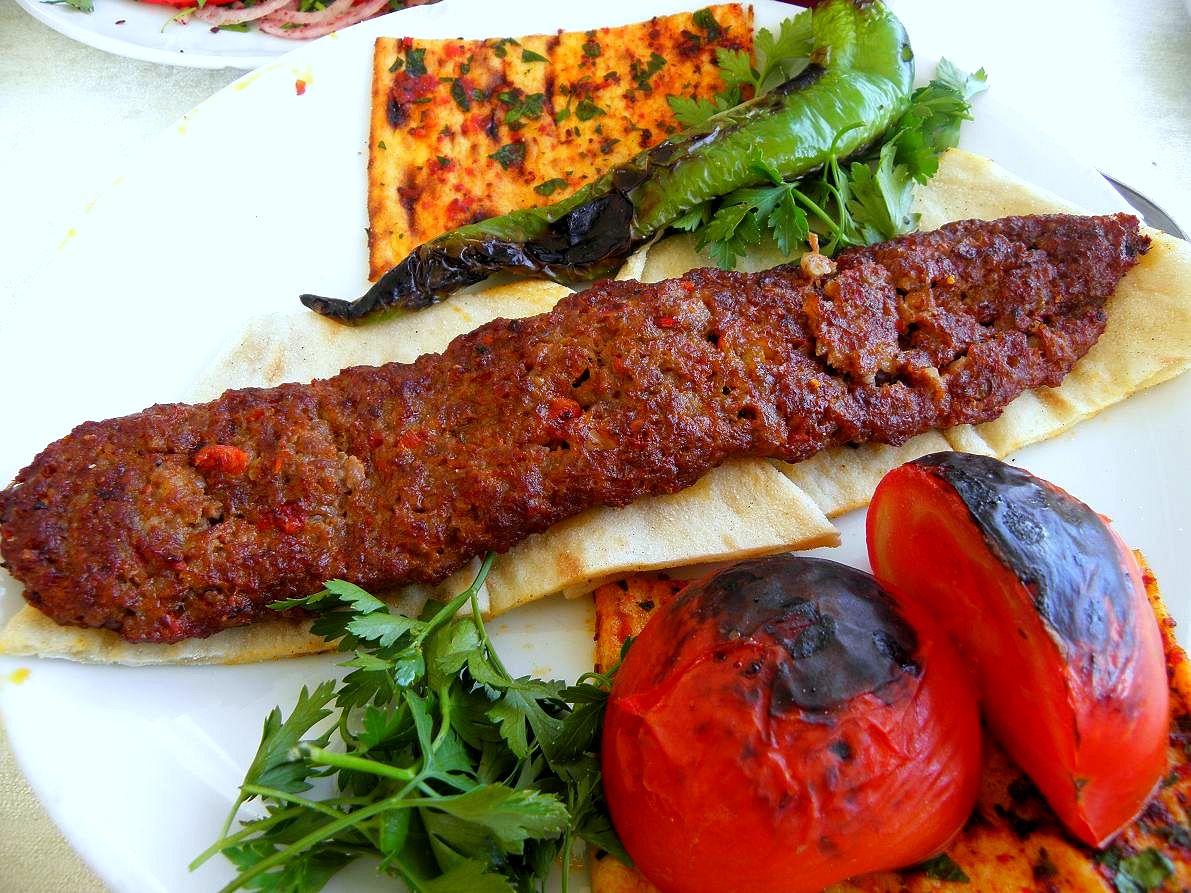
Adana kebab is the fiery pride of southern Turkey: hand-minced lamb blended with tail fat and plenty of red pepper, pressed by hand onto wide flat skewers, and grilled over charcoal until charred outside and juicy within. Served on lavash with grilled tomatoes and peppers and a heap of sumac onions, it is one of the great kebabs of the world. The method is simple, but the details matter, the fat, the hand-mincing, the flat skewers, and the fierce charcoal heat, and getting them right brings the ocakbaşı grill home.
The Kebab of Adana
Adana kebab is named for Adana, a city in southern Turkey known as the country’s kebab capital, and it is a protected regional specialty with a registered geographical indication. It was originally called kıyma kebabı, minced-meat kebab, and belongs to a broad kebab tradition stretching across southeastern Turkey and into Syria and Iraq. The essence is hand-minced lamb, mixed with tail fat and red pepper, formed on a wide flat skewer, and grilled over charcoal. It is deeply woven into Adana’s food culture, eaten at the ocakbaşı grill houses with grilled vegetables, sumac onions, and ayran, and it has spread to menus across Turkey and beyond.
The Meat and the Fat
Adana kebab is made from lamb, traditionally hand-minced with a zırh, the wide rocking blade that gives the meat its characteristic texture, coarser than machine mincing. Just as important is the fat: lamb tail fat, kuyruk yağı, is blended in generously, and it is what keeps the kebab juicy, tender, and rich. Do not try to make Adana kebab lean, since fat is the secret to its succulence, and lean meat grills up dry and tough. Aim for a good proportion of fat to meat. If tail fat is hard to find, use a fatty cut of lamb and add extra fat. The fat renders in the fire and bastes the meat.
The Seasoning
What distinguishes Adana kebab from its milder cousin, Urfa kebab, is heat: Turkish red pepper flakes, pul biber, and sometimes minced red bell pepper give it its warmth and color. The seasoning is deliberately restrained beyond that, salt, black pepper, and the red pepper. Traditionally, Adana kebab contains no onion, garlic, or parsley; adding them, as one Adana cook puts it, turns it into köfte rather than kebab. Knead the seasonings thoroughly into the meat and fat until the mixture is smooth, sticky, and well bound, which helps it grip the skewer. Then rest it in the fridge so it firms up and the flavors meld before shaping.
Shaping on Flat Skewers
Adana kebab needs wide, flat metal skewers, which are essential and worth buying, since round skewers let the meat spin and slide off. With wet hands to stop sticking, take a portion of the meat mixture and press and squeeze it firmly along the skewer into a long, even kebab, working it so it grips the flat blade and holds together. The meat must be well kneaded and cold for this to work; a loose or warm mixture falls off in the fire. Make the kebabs an even thickness so they cook uniformly. This hand-shaping onto the flat skewer is the technique that defines the kebab’s form.
Grilling Over Charcoal
Charcoal is not optional for real Adana kebab. The kebabs are grilled over a hot charcoal fire, ideally on an ocakbaşı-style grill where the flat skewers rest on the edges and the meat cooks above the coals without touching a grate. The fierce, direct heat and the smoke are what give the kebab its char and flavor, while the rendering tail fat drips and flares. Turn the skewers so the meat chars evenly and cooks through, but pull them while still juicy, since overcooking dries them out. Grill tomatoes and long green peppers alongside, letting their skins blister, to serve with the meat.
Serving Adana Kebab
Serve Adana kebab the traditional way: slide the kebabs off the skewers onto flatbread, lavash, which catches the juices, and pile on grilled tomatoes and peppers and a mound of sumac onions, sliced onion tossed with sumac and parsley. The sharp, tangy onions cut the richness of the fatty meat perfectly. Warm flatbread to wrap it and a glass of ayran to drink complete the meal. Adana kebab is grill food, best eaten hot off the fire, so cook and serve it in batches. Wrapped in lavash with the onions, it also makes the classic Adana dürüm.
Common Questions
Do I really need flat skewers?
For the traditional form, yes. Wide flat metal skewers grip the minced meat so it does not spin or slide off in the fire. Without them, you can shape the kebabs into logs and grill them on a grate, though the shape and cooking differ.
What can replace lamb tail fat?
Tail fat (kuyruk yağı) is traditional and gives the best flavor and juiciness. If you cannot find it, use a fatty cut of lamb shoulder and add extra lamb or beef fat. Do not go lean, since the fat is what keeps the kebab tender.
How is Adana different from Urfa kebab?
They are made the same way, but Adana kebab is spicy, seasoned with red pepper flakes, while Urfa kebab is mild, made without the heat. Both are hand-minced lamb on flat skewers grilled over charcoal, differing mainly in the chili.
Adana kebab, named for the Turkish city and a protected regional specialty, is hand-minced lamb mixed with tail fat and red pepper, pressed onto wide flat skewers and grilled over charcoal.