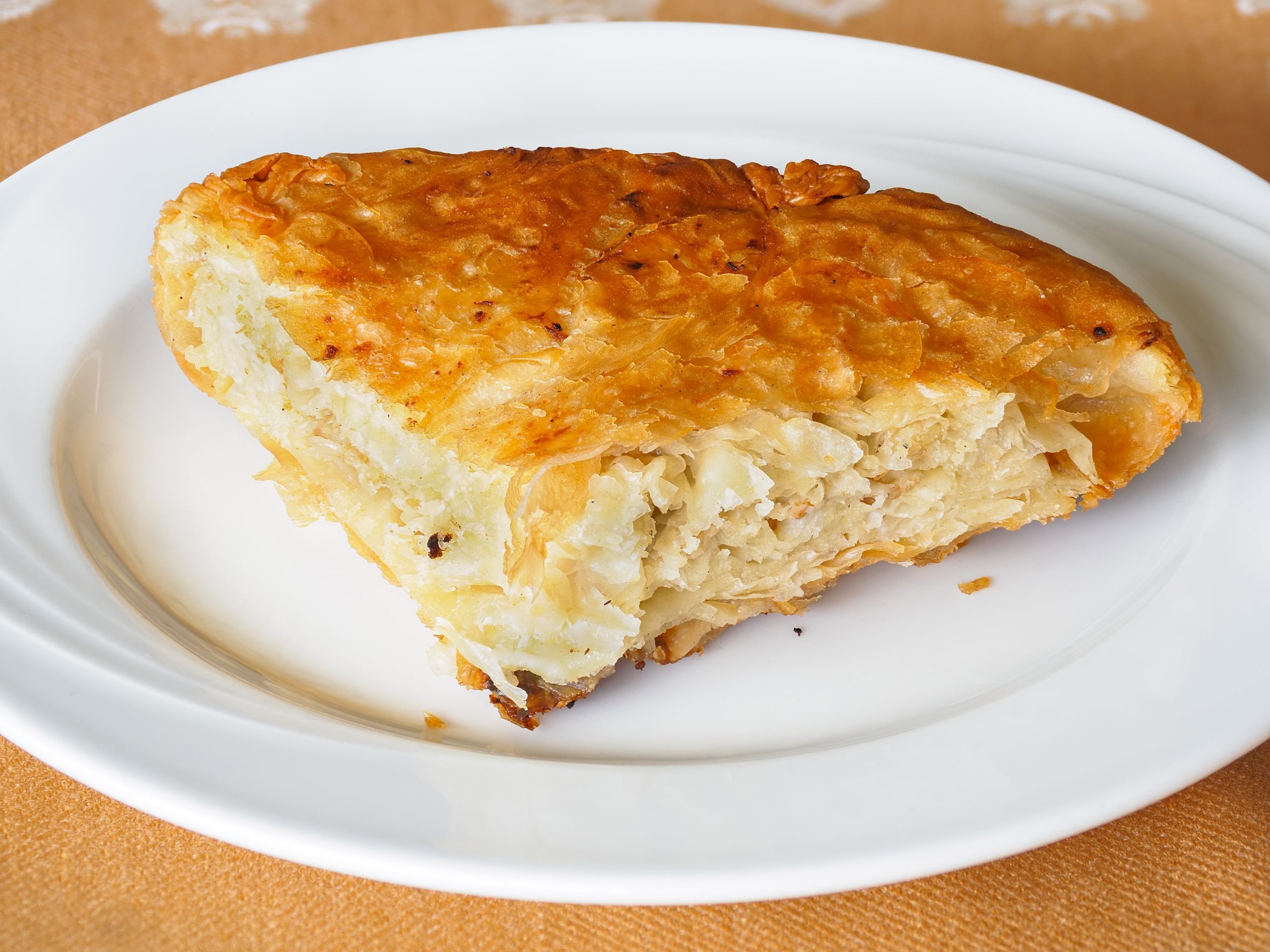
Börek is the savory pastry that runs through Turkish life, eaten at breakfast, with afternoon tea, as a snack, or alongside soup for supper: layers of thin yufka dough brushed with an egg-and-milk mixture, filled with salty white cheese and parsley, and baked until puffed, golden, and flaky. It is comforting, satisfying, and endlessly variable. This version, su böreği style with a moist, custardy interior and crisp top, is among the most beloved, and while it looks impressive, it is really just a matter of layering and brushing.
A Pastry With Ottoman Roots
Börek is not one dish but a whole family of savory pastries built on thin yufka dough, and it holds a central place in Turkish cuisine, developed and refined over centuries. Its tradition is deeply tied to Ottoman court cuisine, where dedicated pastry masters held the title of börekçibaşı in the Topkapı Palace kitchens, and it spread across the former Ottoman lands, leaving relatives throughout the Balkans and the Middle East. There are many forms: su böreği, the layered, boiled-then-baked classic; sigara böreği, thin fried cigars; kol böreği, rolled coils; and more. All share the thin dough and savory fillings that define börek.
The Yufka
The foundation of börek is yufka, the large, paper-thin Turkish flatbread-style pastry dough, similar to phyllo, which many home cooks buy ready-made rather than roll by hand. Making yufka from scratch is a real skill, so packaged yufka or phyllo sheets are a legitimate and common shortcut. The thinness of the dough is what gives börek its layers, so handle the sheets gently and keep them covered with a damp cloth while you work, since they dry and crack quickly when exposed to air. Layering many thin sheets is what builds the pastry’s structure, so work with a stack and do not rush.
The Brushing Mixture
The secret to a moist, tender börek that is still crisp on top is the liquid brushed between the layers: a mixture of egg, milk, oil or melted butter, and often yogurt, whisked together. Brush it generously over each sheet as you layer, so the dough soaks it up. This is what keeps the inside soft and almost custardy while the top bakes crisp and golden, the hallmark of a good su böreği style pastry. A dry börek, under-brushed, turns brittle and cracker-like throughout. Be generous with the mixture on every layer, especially the top, which crisps and browns. This step is what separates a great börek from a dry one.
The Filling
The most classic filling is peynirli, white cheese: Turkish beyaz peynir, or a good feta, crumbled and mixed with plenty of chopped parsley. The salty, tangy cheese against the rich pastry is the combination most people picture when they think of börek. Other traditional fillings are just as loved: ıspanaklı, spinach with cheese; kıymalı, spiced minced meat with onion; and potato. Whatever you choose, spread the filling in an even layer between the brushed sheets, not too thick, so the pastry holds together. Season it well. The cheese-and-parsley filling described here is the everyday favorite and the one to start with.
Layering and Baking
Build the börek in a brushed baking dish: lay down a sheet of yufka, brush it well, add more brushed sheets, then scatter the cheese filling, and continue layering brushed sheets with filling between them, finishing with several sheets on top. Brush the top generously and sprinkle with sesame or nigella seeds for crunch and looks. Score the top into portions before baking so it cuts cleanly later. Bake in a moderate oven until the börek is puffed, set through, and deep golden brown on top. Let it rest a few minutes before cutting so the layers settle, then slice along the scored lines into neat squares.
Serving Borek
Börek is eaten at any time of day in Turkey. It is a breakfast staple with tea, a mid-morning or afternoon snack, and a light supper with a bowl of soup or a glass of ayran alongside. Serve it warm for the best texture, when the top is crisp and the inside tender, though it is good at room temperature too and travels well for picnics and lunchboxes. It keeps a day or two and reheats in the oven to re-crisp. Cut into squares and piled on a plate, börek is generous, shareable food, the kind always welcome on a Turkish table.
Common Questions
Can I use phyllo instead of yufka?
Yes. Yufka is traditional, but phyllo sheets are a close and widely available substitute. Since phyllo is thinner, you may use a few extra layers. Keep the sheets covered with a damp cloth while you work so they do not dry out and crack.
Why did my borek turn out dry?
Not enough of the egg-milk mixture between the layers. Brush every sheet generously, especially in a su böreği style borek, so the dough soaks up the liquid and stays moist inside while the top crisps. Under-brushed borek bakes brittle throughout.
What other fillings can I use?
Spinach with cheese, spiced minced meat with onion, and mashed potato are all traditional Turkish fillings. Keep the filling well seasoned and spread in an even, not-too-thick layer. The layering, brushing, and baking method stays the same whatever the filling.
Börek is a family of Turkish savory pastries made from thin yufka dough with fillings like cheese, spinach, or minced meat, a tradition with deep roots in Ottoman court cuisine.