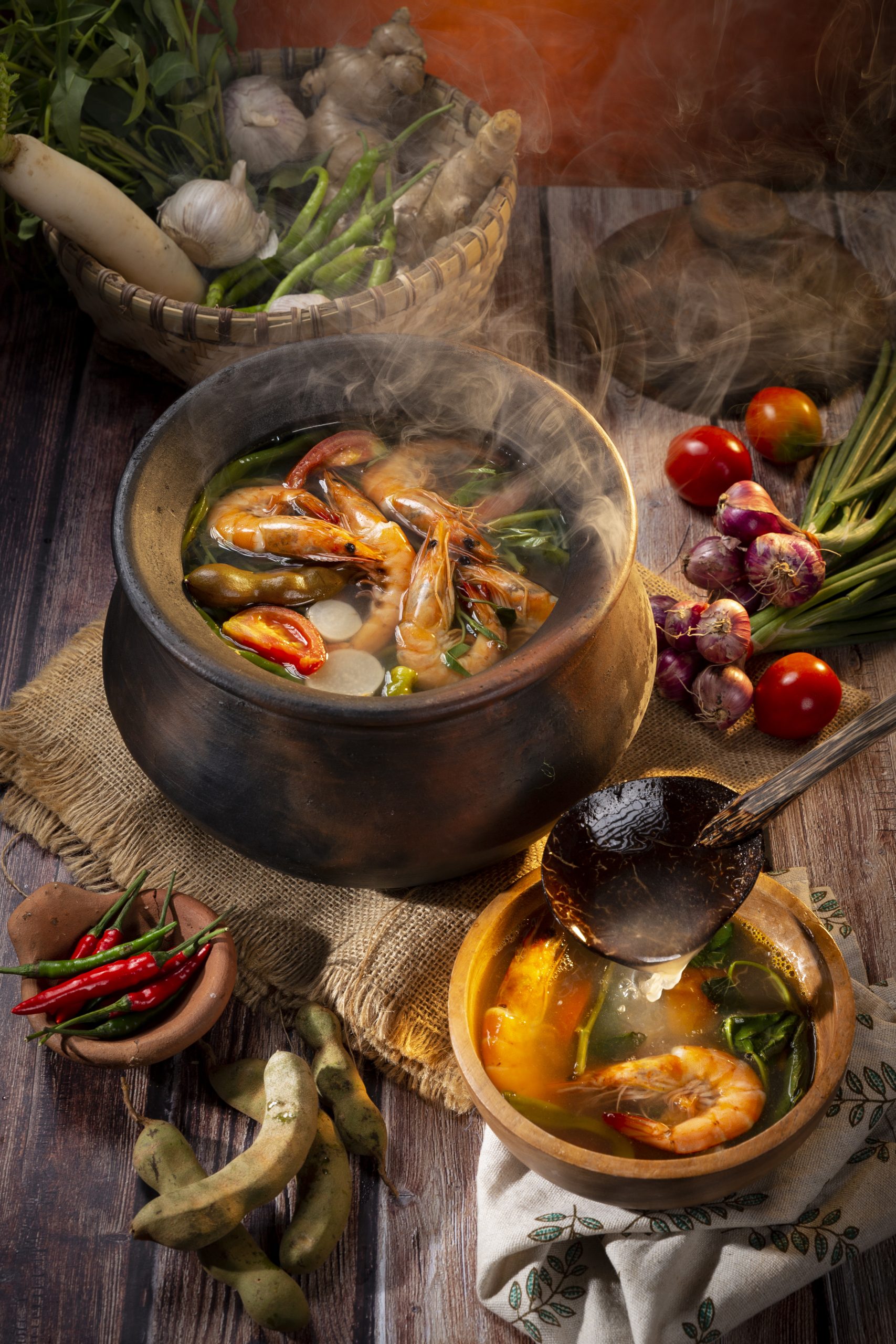
Sinigang is the soup Filipinos reach for when they want comfort, and its defining quality is sourness: a clean, bright tang, most often from tamarind, that cuts through rich pork and makes the whole bowl taste alive. Around that sour broth float tender meat and a changing cast of vegetables, all spooned over rice. It is humble, adjustable, and deeply loved, regularly named the country’s favorite dish in national polls. One pot, under an hour, and a table full of people happy.
A Soup Built on Sour
Most soups lead with salt or richness; sinigang leads with acid. That sourness is the point, not a background note, and Filipinos judge a bowl by whether the tang lands right. The classic souring agent is tamarind, sampalok, but the category is wide: green mango, calamansi, guava, kamias, and other fruits all sour their own regional versions. This flexibility is why sinigang is less a fixed recipe than a method, a sour meat-and-vegetable soup that every household tunes to its own market and mood.
Tamarind, Fresh or Packet
Fresh tamarind gives the roundest, most fragrant sourness. Boil the pods until soft, mash them, and strain the pulp into the broth. It is worth the effort once, to learn the flavor you are aiming for. In Filipino kitchens at home and abroad, though, the tamarind soup base in a packet is the honest everyday shortcut, and nobody apologizes for it; brands like the ubiquitous sinigang mix deliver a reliable, consistent tang. Whichever you use, add it gradually and taste, because you can always sour a bland pot but you cannot un-sour an aggressive one.
Meat and the Long Simmer
Pork is the most common protein, belly or ribs, cuts with enough fat and connective tissue to reward a long, gentle simmer. Start them in cold water with onion and tomato and skim the foam that rises in the first fifteen minutes, which keeps the broth clean. Beef shank, milkfish, shrimp, and salmon heads all make excellent sinigang too; shrimp and fish versions cook fast and skip the long simmer. The tomato is not garnish here, it melts into the broth and adds a second, gentler layer of acidity behind the tamarind.
The Vegetables, in Order
Sinigang carries a generous load of vegetables, added by cooking time so nothing overcooks. Daikon radish and string beans go in early and want a few minutes to soften. Long green chilies, added whole, lend aroma and a mild heat without turning the soup spicy. Water spinach, kangkong, is the traditional leafy green and goes in at the very end for a single minute, just to wilt; ordinary spinach substitutes fine. Okra, taro, and eggplant appear in many versions. The rule is simple: sturdy vegetables first, tender greens last.
Seasoning and Balance
Fish sauce, patis, provides the salt and a savory depth that plain salt cannot. Add it toward the end and taste alongside the tamarind, because sourness and saltiness balance each other and the pot needs both dialed in together. The target is a broth that is assertively sour, clearly savory, and clean, with the vegetables still holding their character. A small dish of fish sauce with a squeeze of calamansi or lime on the table lets each person adjust their own bowl, which is exactly how it is done at Filipino tables.
Serving It Right
Sinigang is a soup, but it eats as a full meal because it is always served with rice. The Filipino way is to spoon broth and a bit of everything over a mound of steamed rice, alternating bites of sour soup and plain grain. It is rainy-day food, sick-day food, and everyday dinner all at once. Leftovers keep three days and deepen overnight, though the greens fade; add a fresh handful when you reheat. The dish does not freeze well, since the vegetables suffer, so cook the amount your table will finish across two days.
Regional and Personal Versions
Ask ten Filipino families for their sinigang and you get ten answers. Some swear by guava for a sweeter sour, some add miso to a salmon version, some load in taro to thicken the broth slightly. Sinigang sa sampalok is the tamarind default, sinigang sa miso a northern favorite, sinigang na hipon the quick shrimp version. None is more correct than another. Learn the tamarind pork version here first, then treat it as a base you bend toward whatever souring fruit and vegetables your kitchen holds.
Common Questions
What can I use if I cannot find tamarind?
Sinigang mix packets are sold at most Asian groceries and many supermarkets. Failing that, lemon or lime juice with a little tomato approximates the tang, and green mango or unripe fruit sours it in the traditional spirit if you have them.
Can I make it with shrimp or fish?
Yes, and both are classic. Sinigang na hipon uses shrimp and cooks in minutes; salmon or milkfish heads make a rich version. Skip the long simmer and add the seafood near the end so it stays tender.
Why is my broth cloudy and dull?
Usually unskimmed foam from the meat, or an overcooked pot. Skim well in the first fifteen minutes, keep the simmer gentle, and add the tamarind and greens late so the broth stays bright and clean.
Sinigang is the sour soup at the center of Filipino home cooking, its tang traditionally drawn from tamarind and its exact vegetables shifting with the region and the market.