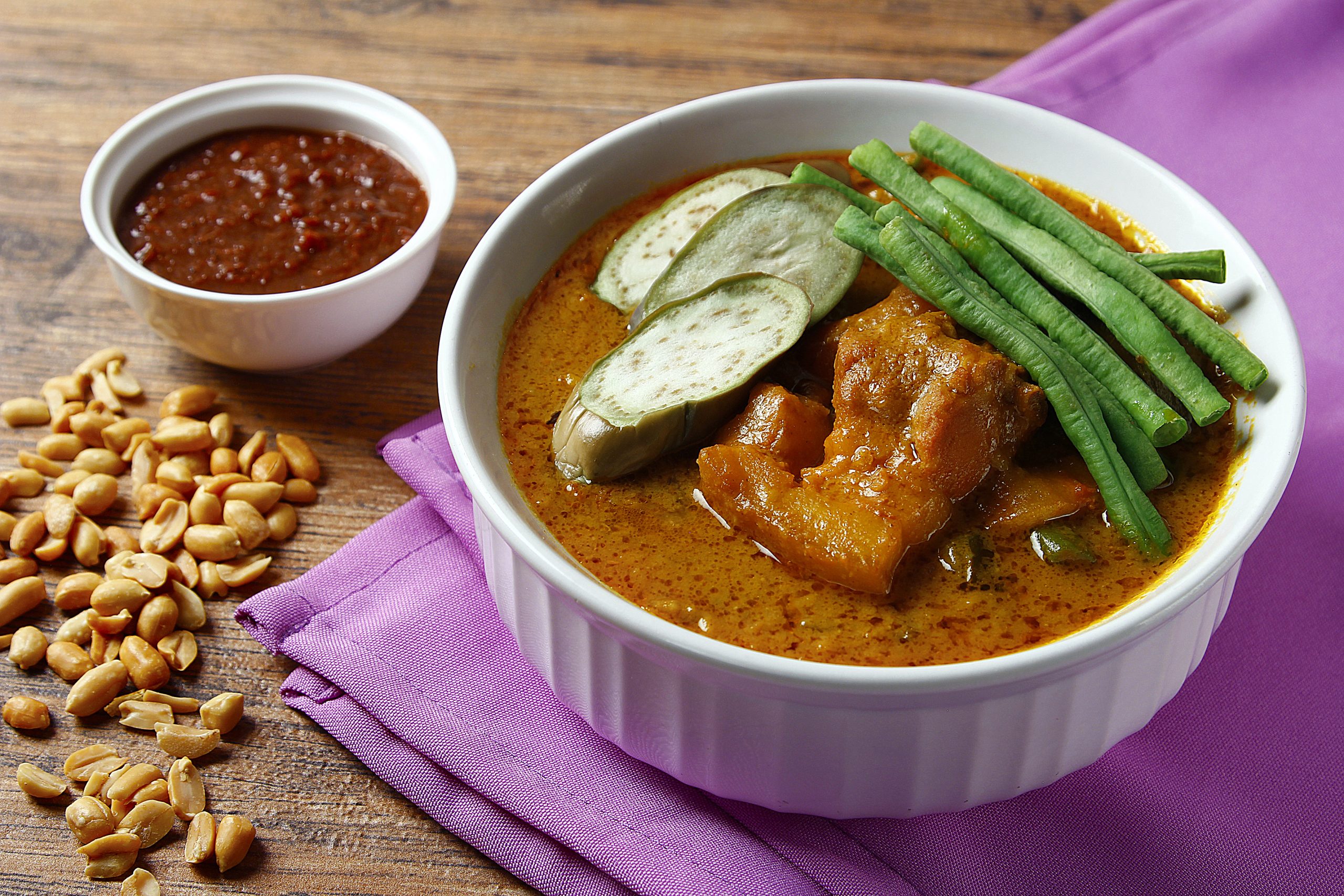
Kare-kare is a Filipino celebration in a pot: oxtail simmered for hours until it slides off the bone, bathed in a thick, glossy peanut sauce colored orange with annatto, and crowned with bright vegetables. The sauce itself is deliberately mild, almost plain, because the dish is finished at the table with bagoong, a pungent fermented shrimp paste that each person spoons on to taste. That interplay of rich, gentle stew and sharp, salty paste is the whole idea, and it is unlike anything else on a dinner table.
A Peanut Stew With a Salty Partner
Kare-kare stands among the Philippines’ festive dishes, the kind cooked for fiestas, family Sundays, and special occasions because oxtail and the long cooking it demands are not weeknight commitments. Its defining trick is the split between pot and table: the sauce is intentionally under-seasoned, and the bagoong served alongside carries the salt and funk. Eat a spoonful of the mild peanut stew, then a little of the shrimp paste, and the two complete each other. Season the pot itself heavily and you break the dish; the balance lives on the plate, not in the pot.
Oxtail and the Long Simmer
Oxtail is the classic cut, prized for the richness its collagen gives the broth and the sauce, though tripe and beef shank often join or replace it. It needs time, two and a half to three hours of gentle simmering, to turn tender and release its body. There is no shortcut worth taking; rushed oxtail stays chewy and the sauce tastes thin. Save the cooking broth, because it becomes the base of the peanut sauce, carrying all the flavor the meat gave up. A pressure cooker cuts the time to about an hour if you have one.
Building the Peanut Sauce
The sauce starts with garlic cooked in annatto oil, which lends the dish its warm orange color without much flavor. Peanut butter goes in next, thinned with the reserved oxtail broth into a smooth, rich base; natural, unsweetened peanut butter is closest to the ground peanuts traditionally used. The thickener and a second layer of nuttiness come from ground toasted rice, made by toasting raw rice in a dry pan until golden and grinding it fine. Whisk it in and simmer until the sauce turns glossy and coats a spoon. Season only lightly, remembering the bagoong to come.
The Vegetables
Kare-kare’s vegetables are traditional and specific: banana blossom, Chinese eggplant, string beans, and a leafy green like bok choy or water spinach. Cook each briefly and separately so they stay crisp-tender and keep their color, then arrange them over the stew rather than boiling them into it. Banana blossom, sold in cans or jars at Asian groceries, adds a distinctive slight tang; if you cannot find it, more eggplant and beans carry the dish. The vegetables are not an afterthought here, they lighten a heavy stew and make the platter look like the celebration it is.
Bagoong, the Essential Side
Bagoong alamang is fermented shrimp or krill paste, salty, funky, and deeply savory, and it is not optional to kare-kare, it is the seasoning. Some cooks saute it first with garlic and a little sugar to round its sharp edges; served straight, it is more assertive. Set a dish of it on the table and let each eater add small amounts to their own serving, tasting as they go. The paste is strong, so a little transforms a bland spoonful of stew into a complete bite. First-timers should start with less than they think.
Serving and Keeping
Serve kare-kare hot with steamed rice, the peanut sauce ladled over the oxtail and vegetables and the bagoong within everyone’s reach. It is rich, so a sour side or a plain vegetable balances a full plate. The stew keeps three days and deepens overnight, though the peanut sauce thickens as it sits; loosen it with a splash of broth or water when reheating over low heat. Cook the oxtail and sauce a day ahead if you like, then warm it and cook fresh vegetables to arrange on top just before serving.
Common Questions
Can I make kare-kare without oxtail?
Yes. Beef shank, tripe, or a mix are all traditional, and there are versions with seafood or purely vegetables. Any of them wants enough cooking time to turn tender and give the broth body.
Why is my sauce grainy or split?
The heat was too high or the peanut butter was added to a thin, hot broth too fast. Keep the simmer gentle, whisk the peanut butter in gradually, and let the ground rice thicken it into a smooth, glossy sauce.
Do I have to use bagoong?
It is the traditional and intended seasoning, since the sauce is left mild on purpose. Without it, salt the stew more heavily to compensate, but the classic contrast of gentle peanut sauce and sharp shrimp paste is lost.
Kare-kare is a Filipino peanut stew of oxtail and vegetables, mild and rich on purpose because it is meant to be seasoned bite by bite with salty bagoong at the table.