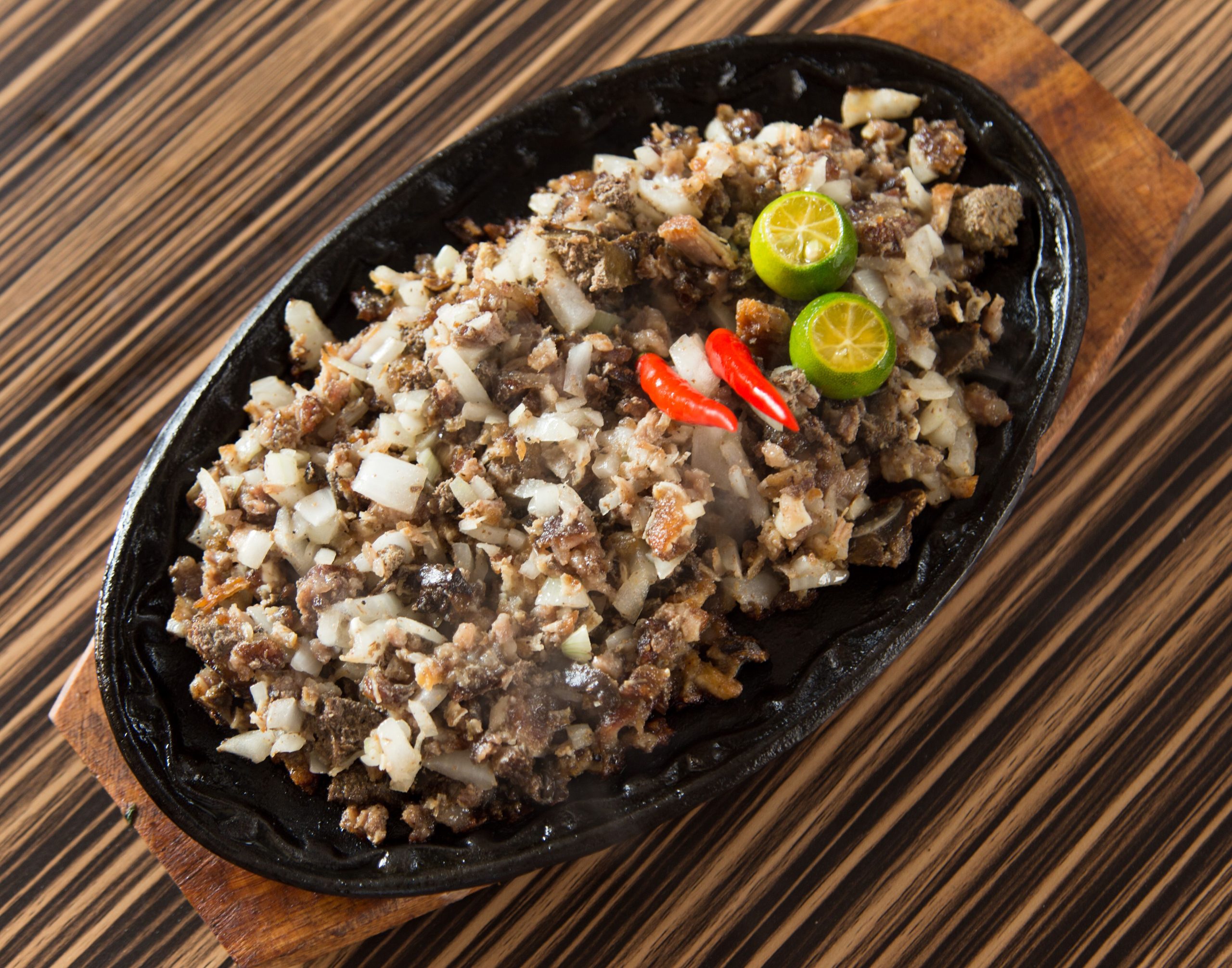
Sisig is the sizzling plate that rules Filipino bars: chopped pork, crisped at the edges and tender within, tossed hot with onion, chili, and a sharp squeeze of calamansi, often finished with an egg cracked over the top to cook in the heat. It is loud, rich, sour, and a little spicy, the ideal thing to eat with cold beer and share off one steel platter. Made well, it turns humble pork parts into a dish people order again the moment the first plate empties.
Born in Pampanga
Sisig comes from Pampanga, the province north of Manila long regarded as the culinary heart of the Philippines. It began as a way to use pig’s head and other parts, boiled, chopped, and dressed with something sour, and it was a cook named Lucia Cunanan, widely known as Aling Lucing, who is credited with popularizing the sizzling-plate version in Angeles City in the 1970s. From there it spread nationwide and abroad, becoming the definitive Filipino bar food, pulutan, the salty dish that pairs with drinking.
The Cuts
Traditional sisig uses pig’s head, especially the jowl, ears, and cheek, parts that turn silky when cooked and give the dish its characteristic mix of soft and chewy textures. Pig ears add a gelatinous bite that many consider essential. Home cooks abroad often build sisig from pork belly alone, which is entirely workable and delivers the crisp-and-rich result even without the offal. Chicken sisig and even tofu sisig exist as lighter or meatless versions. Whatever the cut, the goal is small dice with plenty of crisped edges.
Boil, Grill, Chop, Fry
Sisig gets its texture from multiple rounds of cooking. First the pork boils until tender, seasoned with salt and aromatics. Then it is grilled or broiled so the surface chars and picks up smoke. Then it is chopped small. Finally it is fried hard on high heat so the cut edges crisp. Each step does a job the others cannot, and skipping the grill or the final fry leaves the dish soft where it should crackle. It is more steps than a weeknight usually allows, which is part of why sisig feels like an occasion.
The Seasoning
Once the pork is crisp, the flavors go on fast. Soy sauce hits the hot pan and sizzles into the meat. Minced onion and chili go in for bite and heat. Then, off the heat, comes the sour element, calamansi juice, which must be added at the end because boiling it flattens its bright edge. A knob of butter or a spoon of mayonnaise, a common modern touch, adds richness and helps bind the chopped pork. Salt and pepper finish it. The balance you are after is crisp, savory, sour, and hot, all at once.
The Sizzling Plate and the Egg
Sisig earns its name at the table, served on a screaming-hot cast-iron plate so it arrives still cooking and crackling. If you have such a plate, heat it hard and turn the sisig out onto it. The classic finish is a raw egg cracked over the top, which cooks against the hot metal and gets stirred through the pork, adding richness and binding everything. It is theater with a purpose: the heat keeps the pork crisp longer and the egg turns the dish glossy. No sizzling plate is fine; the flavor is the same served hot from the pan.
How to Eat It
Sisig is bar food first, meant to be shared over drinks, but it doubles happily as a rice topper for a full meal, often served with a fried egg and called sisig silog at breakfast counters. A little more calamansi and chili at the table lets each person tune it. It does not keep its crisp texture well, so it is best eaten fresh off the plate; leftovers reheat as a softer but still tasty version, good folded into fried rice. Make it when people are gathered and hungry, and serve it the minute it sizzles.
Sisig Beyond Pork
The sisig idea, crisped protein chopped small and dressed sharp and hot, has spread far past its pork origins. Bangus sisig uses flaked milkfish, tofu sisig serves the vegetarian crowd, and chicken sisig is a leaner favorite that keeps the technique intact. Some restaurants now build sisig from squid, tuna, or even mushrooms, all following the same boil-or-cook, chop, crisp, and season rhythm. The lesson is that sisig is a method as much as a recipe. Learn the pork version here, then apply the crisp-sour-hot logic to whatever protein you like, and you will have a whole family of sizzling plates at your command.
Common Questions
Do I need pig ears and head?
They are traditional and add prized texture, but pork belly alone makes a very good sisig. Chicken and tofu versions exist too. The technique of boil, char, chop, and crisp matters more than the exact cut.
Is mayonnaise authentic?
It is a modern addition, common now but not in the earliest versions. It adds creaminess and binds the pork. Butter does a similar job. Leave both out for a leaner, more old-style plate.
What is calamansi and its substitute?
Calamansi is a small, fragrant Philippine citrus. Lemon or lime works as a substitute, used a little less since they run sharper. Add it off the heat so the sourness stays bright.
Sisig comes from Pampanga, the Philippines' culinary heartland, where it grew from a dish of chopped pork parts into the sizzling plate now served at bars across the country.