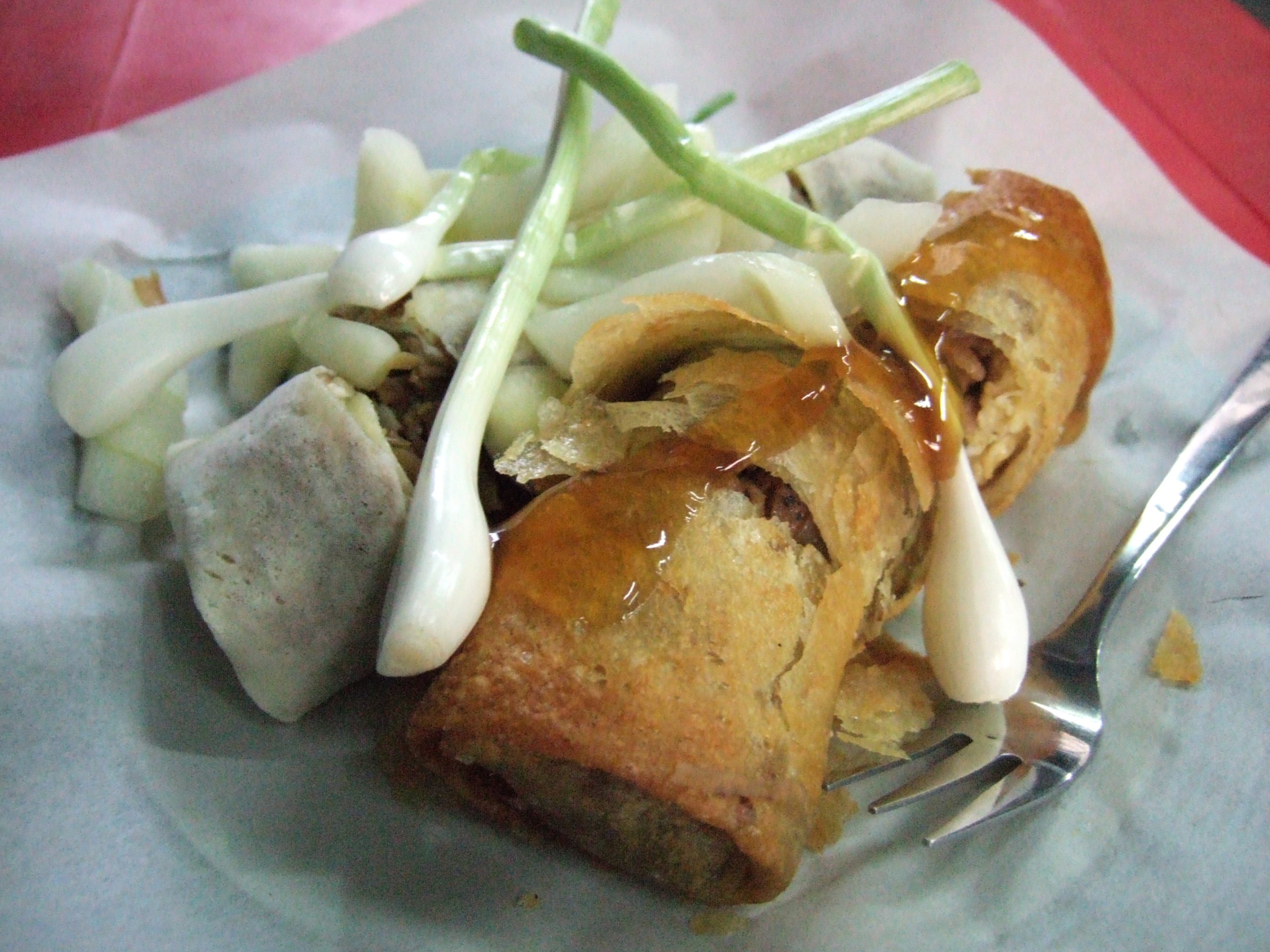
Lumpia Shanghai are the thin, crispy pork spring rolls that vanish first from any Filipino party table. Slender by design, they fry into shattering golden logs with a savory pork filling inside, and they are made by the hundred for birthdays, holidays, and any gathering worth the name. Rolled tight, fried hot, cut on the diagonal, and dipped in sweet chili sauce, they are finger food that turns a crowd cheerful. The rolling takes patience; everything after is fast.
From Spring Roll to Party Staple
Lumpia is the Filipino branch of the Chinese spring roll, brought over through centuries of trade and settlement and adapted into a whole family of dishes. There is fresh lumpia, lumpiang sariwa, wrapped in a soft crepe and served unfried, and there are various fried versions. Lumpiang Shanghai is the slim, meat-filled fried kind, named for the city though thoroughly Filipino in its party role. It is the version people mean when they simply say lumpia at a celebration, and the one worth learning first.
The Filling
The classic filling is ground pork bound with egg and seasoned simply: garlic, scallion, soy sauce, salt, and pepper, with finely grated carrot for color and a little sweetness. Minced water chestnut or jicama adds a subtle crunch that many families include. Keep the vegetables minced fine and the filling on the drier side, since a wet or chunky filling makes rolling difficult and can burst in the oil. Fry a small pinch of the mixture to taste it and adjust the seasoning before you roll forty of them.
Rolling Thin and Tight
The signature of lumpia Shanghai is how slim they are, and that shape is functional, not just pretty. A thin roll crisps evenly and cooks through in the time it takes the wrapper to brown; a fat one browns outside while the pork inside stays raw. Lay a pencil-thin line of filling near one edge of a wrapper, fold the sides in, and roll tightly, sealing the seam with a dab of water. Keep the stack of wrappers covered with a damp cloth, since they dry and crack in minutes once exposed.
Frying
Heat the oil to around 350 F in a deep pan and fry the rolls in uncrowded batches, turning them so they color evenly, until deep golden and crisp, about four minutes. Crowding the pot drops the temperature and steams the rolls soft, so give them room. Because the filling is thin, the pork cooks through by the time the wrapper is properly browned. Drain them on a rack rather than paper, which keeps the underside from going soggy, and let them sit a minute before cutting so the filling sets.
Make Ahead and Freeze
Lumpia is party food, and the smart cook rolls ahead. Arrange the raw rolls in a single layer on a tray, freeze until solid, then transfer them to bags, where they keep for months. Fry them straight from frozen, adding a minute or two and watching the oil temperature, and you have hot, fresh lumpia on demand whenever guests appear. This is exactly how Filipino households manage them for holidays: one long rolling session stocks the freezer for the whole season, and no party is ever caught without them.
Serving and Dipping
Cut each fried roll in half on a sharp diagonal, which shows the filling and makes them easy to grab, and pile them on a platter. The standard dip is sweet chili sauce, and banana ketchup, that sweet, red Filipino condiment, is another common partner; a simple spiced vinegar suits those who want something sharper. Lumpia are best hot and loud, straight from the oil, so fry them close to serving time. At a real Filipino party they never make it to a plate for long anyway.
Fresh Lumpia, the Other Kind
Not all lumpia is fried. Lumpiang sariwa, fresh lumpia, wraps cooked vegetables, sometimes with shrimp or heart of palm, in a soft egg crepe and serves them unfried under a sweet garlic-soy sauce with crushed peanuts. It is a gentler, lighter cousin to the crackling Shanghai rolls, common at gatherings that want a vegetable dish alongside the fried trays. Making the crepe takes practice, so most cooks meet fresh lumpia at a party before attempting it at home. Mention lumpia to a Filipino and either version might come to mind; both belong to the same beloved family.
Common Questions
What wrappers should I buy?
Look for spring roll wrappers labeled lumpia, sold frozen at Asian groceries; they are thinner than egg roll wrappers and crisp better. Thaw them fully and keep them covered while you work, since they dry out fast.
Can I bake or air-fry them?
An air fryer does a good job: brush the rolls with oil and cook at high heat until golden, turning once. Baking works too but crisps less evenly. Deep-frying still gives the most authentic shatter.
My lumpia burst open while frying. Why?
The seam was not sealed, the filling was too wet, or the rolls were overfilled. Seal the edge with water, keep the filling dry and thin, and roll tightly with no air pockets.
Lumpia descends from Chinese spring rolls and became a Filipino party essential, with the thin fried pork rolls called lumpiang Shanghai the most beloved of the family.