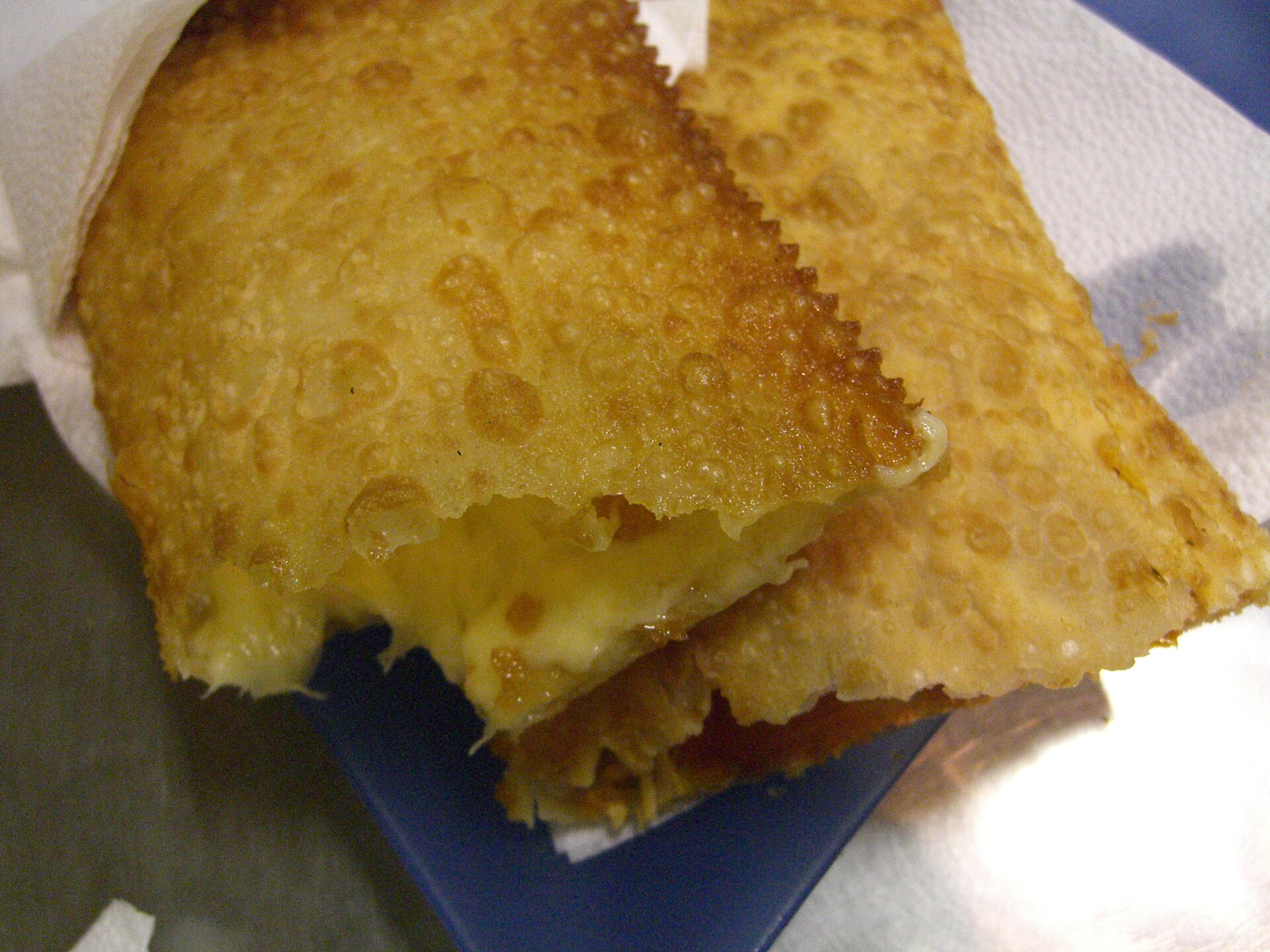
Pastel is Brazil’s favorite street snack: a large, thin pastry pocket stuffed with cheese, seasoned beef, or countless other fillings, deep-fried until the shell puffs into crisp, blistered, golden glass. Bite in and it shatters, giving way to a hot, savory center. At Brazilian street markets, the feira, pastel stands fry them to order, and the classic pairing is a pastel with a glass of cold sugarcane juice. Making them at home comes down to a thin dough and hot oil, and the reward is a snack far better than anything frozen.
A Street-Market Icon
Pastel is one of the most common street foods in Brazil, found nationwide but especially tied to the weekend feiras of Sao Paulo, where pastelarias fry them fresh. Its origins are not fully settled, but the most widely repeated account holds that pastel grew from the fried spring rolls of Chinese and Japanese immigrants, who adapted the idea into a larger, thinner-shelled snack to sell in Brazil. The shape and fillings became Brazilian, while the thin, crisp fried pastry stayed. Today savory pasteis rule, filled with beef, cheese, chicken, or shrimp, though sweet versions with chocolate or guava exist too.
The Dough
The defining feature of a pastel is its thin, crisp, bubbly shell, and that starts with the dough. It is a simple flour-and-water dough with a little oil and salt, but two things set it apart: it must be rolled very thin, and many Brazilian cooks add a splash of cachaca or vodka, whose alcohol cooks off and leaves the fried shell extra crisp and blistered. Knead it smooth and let it rest so it rolls out easily without springing back. Store-bought pastel wrappers, sold at Brazilian markets, are a genuine shortcut many home cooks use. Thin is the goal, since thick dough fries heavy and doughy.
The Fillings
The two classic fillings are carne, seasoned ground beef cooked with onion and garlic, and queijo, simply melting cheese like mozzarella. Both are beloved, and the choice is a matter of loyalty for many Brazilians. Beyond them, pastel takes chicken with catupiry cheese, heart of palm, shrimp, or ground beef with a whole olive and egg inside, and sweet fillings for dessert versions. Whatever you choose, cook and cool the filling before it goes in, and keep it from being too wet, since a soggy filling steams the shell and can burst it. Season the beef boldly, as the mild dough carries it.
Filling and Sealing
Roll the dough thin and cut it into large rectangles or circles, bigger than you might expect, since pasteis are generous. Place a spoon of filling on one half, leaving a clear border, brush the edges with water, fold the dough over, and press out the air as you seal. Then crimp the edges firmly with a fork, which locks them shut so the pastel does not open and leak oil in the fryer. A tight seal is what keeps the filling in and the oil out, so press well and check for gaps. Keep the shaped pasteis under a towel so they do not dry.
Frying
Fry pasteis in hot oil, 350 to 375 F, deep enough for them to float. At the right heat they puff up almost immediately, the thin shell blistering and turning golden in a couple of minutes; spoon hot oil over the top or flip them so both sides color evenly. Too-cool oil is the enemy, soaking the dough and leaving it pale and greasy instead of crisp and light. Fry a few at a time so the temperature holds. Drain them briefly on a rack or paper and eat them hot, while the shell is at its crispest. They deflate and soften as they cool, so serve fast.
Serving Pastel
Serve pasteis hot and fresh, the moment they come out of the oil, as a snack, a starter, or a casual meal. At Brazilian markets the traditional pairing is caldo de cana, cold pressed sugarcane juice, whose sweetness balances the savory, crisp pastry; a cold beer works just as well for grown-ups. Set out a squeeze of lime or a little hot sauce for those who want it. Pasteis are best eaten right away and do not keep their crunch, so fry them in batches and serve as you go, letting people eat them straight from the fryer the way a feira does.
Common Questions
Can I use store-bought wrappers?
Yes. Brazilian markets sell ready pastel dough (massa de pastel) in sheets, and many home cooks use it. It saves rolling and gives a reliably thin, crisp shell. Spring roll wrappers are a rougher substitute but change the texture.
Why did my pastel turn out greasy?
The oil was too cool or the dough too thick. Fry at 350 to 375 F so the pastel puffs and crisps fast, and roll the dough thin. A splash of cachaca or vodka in the dough also helps it fry crisp rather than absorbing oil.
Can I bake or air-fry them?
You can air-fry or bake pasteis with a brush of oil for a lighter snack, but the shell will not blister and shatter the way deep-frying makes it. The crisp, bubbly texture is the whole appeal, so frying is the traditional and best method.
Pastel is a Brazilian deep-fried pastry with a thin, crisp shell and savory filling, a nationwide street-market snack widely thought to have grown from spring rolls adapted by Asian immigrants in Brazil.