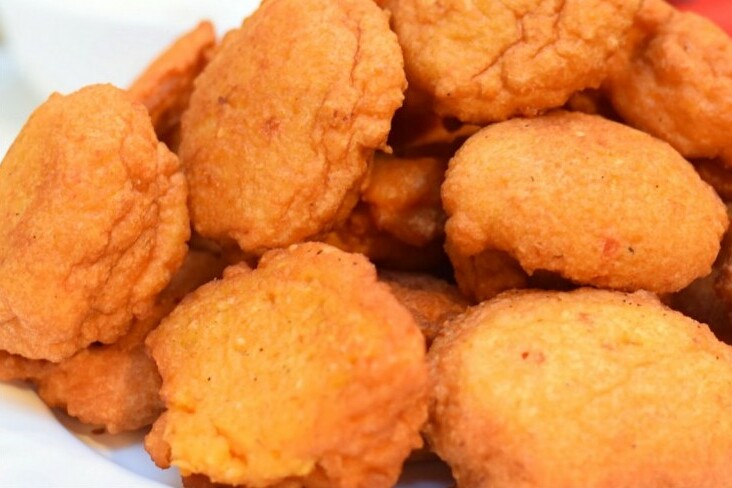
Acaraje is a fritter of ground black-eyed peas, beaten until fluffy and deep-fried in red palm oil until the outside crackles and the inside stays soft, then split open like a bun and packed with vatapa, caruru, whole shrimp, and a spoonful of fiery pepper sauce. It is sold on the streets of Salvador by women in white lace dresses, eaten standing up, and it is impossible to eat tidily. Few dishes anywhere carry as much history in a single bite.
From Akara to Acaraje
Acaraje descends directly from akara, the black-eyed pea fritter that has been a staple in West Africa for centuries, brought to Brazil by enslaved Africans, particularly Yoruba people from what is now Nigeria and Benin. The name itself comes from Yoruba. In Bahia it became something more than food: it is deeply tied to Candomble, the Afro-Brazilian religion, where it is prepared as an offering to the orixas, above all to Iansa, the goddess of winds and storms. The baianas do acaraje who sell it were among Brazil’s first independent businesswomen after abolition, and they remain custodians of the tradition.
Peeling the Peas
The first job is the tedious one and it cannot be avoided. Soak dried black-eyed peas overnight until they swell, then rub handfuls of them briskly between your palms so the skins slip off. Cover them with water, agitate, and pour off the skins that float to the surface, repeating until the peas are clean and pale. Any skins left behind turn the batter grey and make the finished fritters dense rather than light. It takes time, and it is the single step that separates a good acaraje from a heavy one.
The Batter
Blend the peeled peas with roughly chopped onion and salt into a thick paste, using as little water as possible, since a wet batter spreads in the oil instead of holding its shape. Traditionally this was ground on a stone; a food processor does it now. Then comes the step people skip: beat the paste hard with a wooden spoon or a mixer for several minutes until it visibly lightens in color and grows fluffy. That beating whips air into the batter and is what makes the fritters puff up in the oil rather than frying into dense lumps.
Dende
Acaraje is fried in dende, unrefined red palm oil, which gives the fritters their orange color and a distinctive earthy flavor that no other fat reproduces. It is sold at Brazilian and African groceries and online. Heat it until a small piece of batter sizzles immediately, then drop in large spoonfuls, shaped with two spoons in the traditional oval, and fry until deep golden on both sides. Frying in neutral oil produces something perfectly edible but no longer acaraje, since the dende is as central to the dish as the peas themselves.
The Fillings
Split the hot fritter almost in half and open it out like a pocket. Inside go vatapa, a thick paste of bread, coconut milk, ground peanuts or cashews, dried shrimp, and dende; caruru, okra stewed with dried shrimp and more dende; whole dried or fresh shrimp; and a simple salad of chopped tomato and onion for freshness. Malagueta pepper sauce is offered on the side, and vendors will ask whether you want it quente or frio, hot or not. The combination is rich, and the salad and pepper are what keep it from becoming overwhelming.
Serving Acaraje
Eat it immediately, standing, with plenty of napkins, because the fritter softens within minutes and the fillings go everywhere. In Salvador it is sold from tables set up on street corners in the late afternoon, and buying one is as much a social ritual as a meal. Abara is its close relative, made from the same batter but steamed in banana leaves instead of fried, and it is often sold alongside. If the full spread of fillings is too much work, a plain fritter with pepper sauce is still worth making.
Common Questions
Do I really have to peel the peas?
Yes. The skins make the batter grey and the fritters heavy. Soaking overnight loosens them enough to rub off between your palms, and repeated rinsing floats them away. It is tedious but it is what makes the texture light.
Can I substitute the palm oil?
Neutral oil fries the fritters perfectly well, but dende supplies the color and the earthy flavor that define acaraje. It is sold at Brazilian, African, and Caribbean groceries. Without it the result is a good bean fritter rather than acaraje.
What is the difference between acaraje and abara?
Both use the same black-eyed pea batter. Acaraje is deep-fried in dende, while abara is wrapped in banana leaves and steamed, giving a soft, moist result. They are sold side by side in Bahia and share the same fillings.
Acaraje is a deep-fried black-eyed pea fritter from Bahia whose roots lie in the West African akara, brought to Brazil by enslaved Africans, particularly Yoruba people from present-day Nigeria and Benin.