Pide is a long, boat-shaped flatbread with its edges rolled inward and its ends pinched to sharp points, baked at high heat with a topping of spiced minced meat, melted cheese, or egg. It comes to the table cut into thick pieces and brushed with butter, and it is eaten with the hands. Turkish pide salons build entire menus around it, and the dough is simple enough that the whole thing is achievable at home with a hot oven and a baking stone.
More Than One Bread
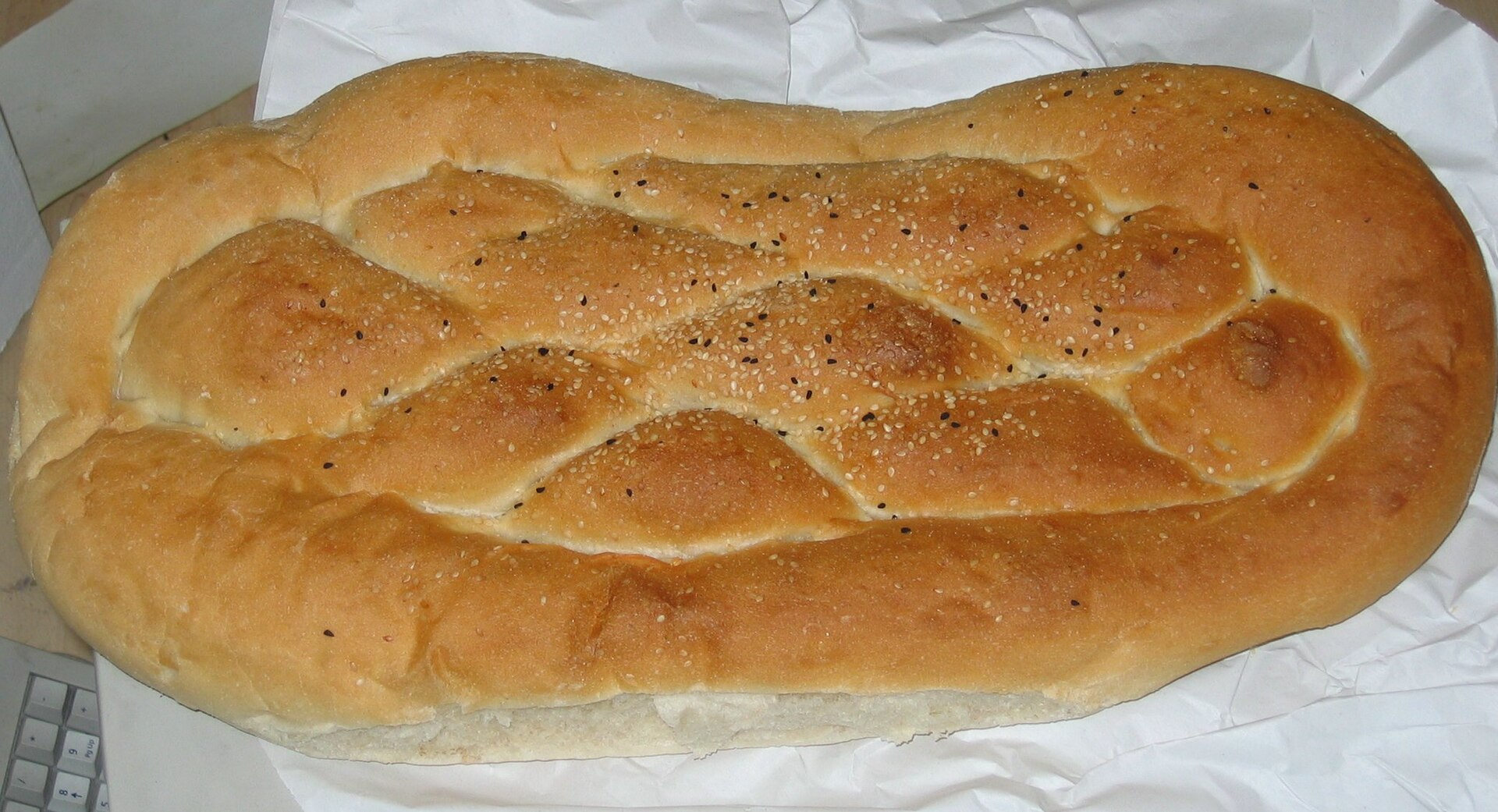
The word pide covers two different breads in Turkey. There is Ramazan pidesi, the round, flat, dimpled loaf topped with sesame and nigella seeds that appears in bakeries throughout Ramadan and is bought fresh for the iftar table. And there is the pide meant here: an oval or boat-shaped base baked with toppings, sold in specialist pide salons across the country. The name belongs to the same broad family as the flatbreads found right across the eastern Mediterranean and the Middle East, though the boat shape with folded edges is distinctly Turkish.
The Dough
Pide dough is a straightforward yeasted bread dough, softer and more hydrated than pizza dough, made with bread flour, water, yeast, salt, sugar, and a little olive oil. Some recipes add yogurt or milk for a more tender crumb. Knead it until smooth and elastic, then let it rise until doubled. The higher hydration is what gives pide its characteristic chew, soft in the middle with a crisp base rather than the thin snap of a pizza. Let the divided pieces rest again before shaping, which relaxes the gluten and stops the dough springing back as you roll.
The Toppings
The two standards are kiymali, with spiced minced lamb or beef, and kasarli, with grated kasar cheese. For the meat version, mix raw ground meat with finely chopped onion, tomato, green pepper, parsley, pul biber, and cumin, then spread it thin so it cooks through in the short bake. Cheese versions often add sucuk, the spiced Turkish sausage, or a cracked egg in the center during the last minutes. Karadeniz pide, from the Black Sea region, is filled with cheese and butter and finished with an egg. Keep the layer thin whichever you choose.
Shaping the Boat
Roll each piece of dough into a long oval, roughly a foot in length, and spread the topping down the middle, leaving a clear border on both sides. Fold the long edges up and over the filling so they overlap it slightly, creating the raised rim that holds everything in. Then pinch each end firmly and twist to a point, which gives pide its unmistakable boat silhouette. The folded edges bake into a thick chewy crust, and pinching the ends properly matters, since they open in the oven if the seal is weak.
Baking Hot
Pide salons use wood-fired stone ovens running far hotter than a domestic oven, and the closer you get to that, the better. Preheat a baking stone or a heavy inverted tray at the highest temperature your oven reaches, for at least half an hour, then slide the shaped pide directly onto it. Fierce bottom heat is what puffs the crust and crisps the base before the topping overcooks. It bakes in ten to fifteen minutes. Brush the crust generously with melted butter the moment it comes out, while it is hot enough to absorb it.
Serving Pide
Cut it crosswise into thick strips with a wheel or a large knife and serve it immediately, eaten with the hands. The standard accompaniments are simple: a wedge of lemon to squeeze over the meat version, sliced raw onion with sumac, pickled chilies, and a glass of ayran, the salted yogurt drink. It is a shared dish, ordered by the boat and torn apart at the table. Leftovers reheat acceptably in a hot oven, though pide is at its best within minutes of leaving the heat.
Common Questions
How is pide different from lahmacun?
Lahmacun is a very thin round flatbread with a fine layer of minced meat, rolled up to eat. Pide is thicker and boat-shaped with folded edges and a more substantial topping. Lahmacun is closer to a wrap; pide is closer to a filled bread.
Can I make pide without a baking stone?
Yes. Preheat a heavy baking tray upside down at the highest oven temperature for half an hour and slide the pide onto it. A cast-iron pan works too. The goal is intense heat coming from underneath, whatever the surface.
Why is the dough under my topping raw?
The topping was too thick or too wet. Spread it in a thin even layer, drain any watery tomato, and bake on a preheated stone so the base sets quickly. A hotter oven and a thinner filling solve this almost every time.
Pide is a Turkish flatbread that covers both the round dimpled loaf eaten during Ramadan and the long boat-shaped version baked with toppings in a hot stone oven.