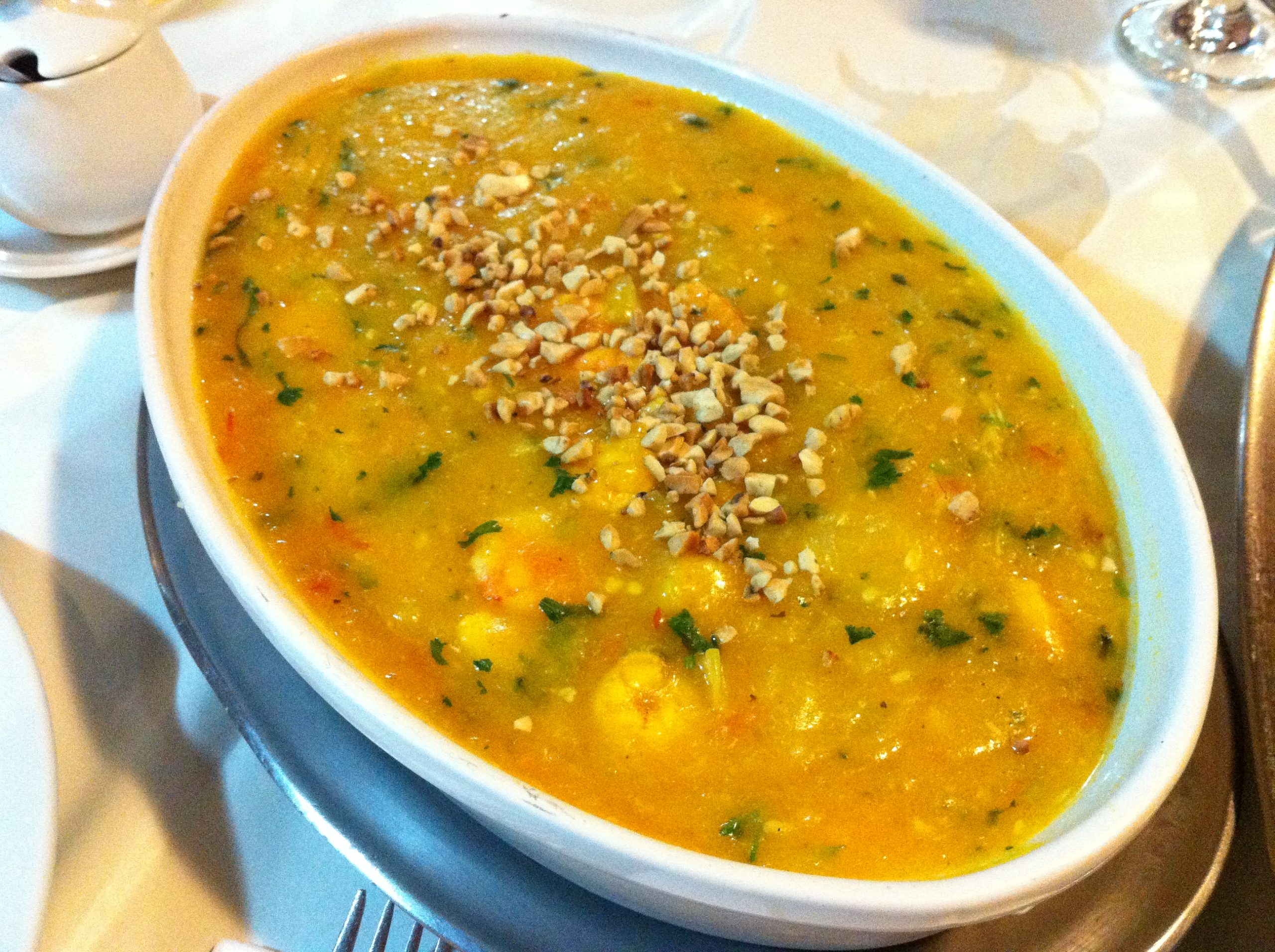
Bobó de camarão is one of the treasures of Bahian cooking: plump shrimp simmered in a rich, silky puree of cassava and coconut milk, tinted orange and perfumed by dendê palm oil. It is creamy and comforting yet full of the bright, layered flavors of northeastern Brazil, and it is served, inevitably, over a bed of white rice. Behind its restaurant-worthy look is a straightforward method, boil and blend cassava, build a flavor base, add shrimp, so it comes together more easily than its lush result suggests.
A Dish of Bahia
Bobó de camarão comes from Bahia, the state on Brazil’s northeastern coast whose cooking reflects deep West African roots alongside Indigenous and Portuguese influences. The dish speaks that heritage directly: the word bobó traces to the Ewe people of West Africa, brought to Brazil in the era of slavery, and originally named a dish made with beans, before Afro-Brazilian cooks embraced cassava as the base. Its defining ingredients, cassava, coconut milk, and dendê palm oil, are the pillars of Bahian cuisine. Bobó is a staple of Bahian restaurants and, like its cousin moqueca, is beloved well beyond the region, served bubbling over rice.
Cassava Is the Base
The body of bobó is pureed cassava, also called yuca or manioc, the starchy root at the heart of Brazilian cooking. Peel and cube it, then boil it until it is completely soft, which takes a while, before blending it with some of its cooking liquid and the coconut milk into a smooth, thick puree. This silky puree, not a chunky stew, is what bobó is; the cassava melts into a creamy base that carries everything else. Fresh cassava gives the best flavor, and frozen cassava, sold at Latin and international markets, is a reliable shortcut. Cook it fully soft, since undercooked cassava stays grainy.
Coconut Milk and Dendê
Two ingredients give bobó its Bahian soul. Coconut milk enriches the cassava puree, softening it into something creamy and faintly sweet. Dendê, red palm oil, is the signature: a thick, vividly orange oil with a distinctive earthy, nutty flavor that colors the dish and marks it unmistakably as Bahian. Dendê is strong, so add it near the end and use it with a light hand; a little transforms the stew, while too much overwhelms. It is sold at African, Brazilian, and Latin markets. If you cannot find dendê, the dish loses its signature color and note, so it is worth seeking for the real thing.
Building the Flavor
The stew is built on a base of sauteed aromatics, onion, garlic, tomato, and red bell pepper softened together, the Brazilian refogado that starts so many dishes. Season the shrimp first with lime, garlic, and salt for brightness. Stir the cassava-coconut puree into the aromatic base and simmer it until thick and creamy, tasting and seasoning as it goes, since the mild cassava needs salt and a lively hand to shine. A fresh chili adds heat for those who want it. This layered base under the smooth puree is what keeps bobó from tasting flat, so build it with care and taste often.
The Shrimp
Shrimp is the classic protein, and it goes in near the end. Once the puree is hot, thick, and well seasoned, add the shrimp and cook them just until they turn pink and firm, a few minutes only. Shrimp cook fast and turn rubbery when overdone, especially sitting in a hot puree, so pull the pot from the heat as soon as they are done. Reserving the shrimp shells to simmer into a quick stock for thinning the puree is a traditional touch that deepens the flavor. Finish the pot with the dendê and a generous handful of chopped cilantro, stirred in off the heat.
Serving Bobó de Camarão
Serve bobó de camarão hot, ladled over plain white rice, which soaks up the creamy sauce; a scatter of extra cilantro and a wedge of lime finish each plate. It is rich enough to stand as a main on its own, and a simple green salad is all it needs alongside. Like many stews it deepens in flavor the next day, though the shrimp are best cooked fresh, so some cooks make the cassava base ahead and add shrimp at serving time. Bring it to the table in the pot and let people help themselves over rice, Bahian style.
Common Questions
What is dendê and can I substitute it?
Dendê is red palm oil, giving bobó its orange color and earthy flavor, sold at African, Brazilian, and Latin markets. There is no exact substitute; a little regular oil keeps the dish edible but loses the signature note. For authentic bobó, dendê is worth seeking out.
Fresh or frozen cassava?
Both work. Fresh cassava has the best flavor but takes peeling and longer boiling. Frozen cassava, sold at Latin and international markets, is peeled and cut, and cooks reliably. Either way, boil it until fully soft before blending it smooth.
How is bobó different from moqueca?
Both are Bahian seafood dishes with coconut milk and dendê, but bobó is thickened into a creamy puree with cassava, while moqueca is a brothier stew without the cassava base. Bobó is richer and thicker; moqueca is more of a soupy stew.
Bobó de camarão is a Bahian shrimp stew thickened with pureed cassava and enriched with coconut milk and dendê palm oil, a dish of Afro-Brazilian heritage whose name traces to West Africa.