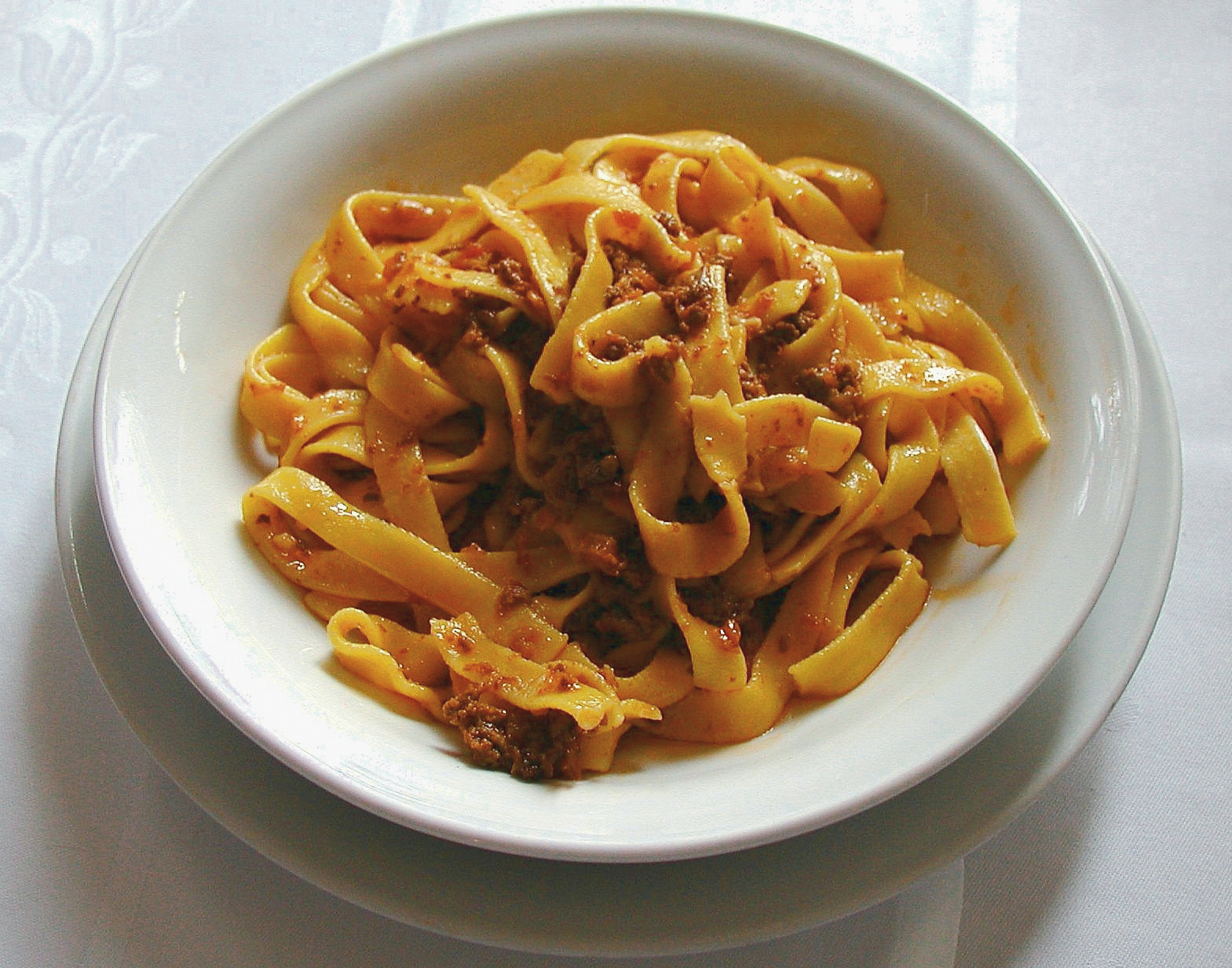
Ragu alla bolognese is the real thing behind what much of the world calls spaghetti bolognese: a slow-simmered meat sauce from Bologna, built on beef, pork, and soffritto, enriched with wine and milk, cooked low and slow for hours until it is rich and mellow. It is not a quick tomato-meat sauce, and it is not traditionally served on spaghetti. Made properly and tossed with fresh tagliatelle, it is one of the great pasta dishes of Italy, deeply savory and comforting, and worth every hour on the stove.
The Sauce of Bologna
Ragu alla bolognese comes from Bologna, in Emilia-Romagna, a region considered by many the gastronomic heart of Italy. Its origins trace back centuries to the region’s kitchens, and an official recipe was registered with the Bologna Chamber of Commerce by the Accademia Italiana della Cucina to protect the tradition. Here is the thing most people outside Italy get wrong: authentic ragu alla bolognese is traditionally served with fresh tagliatelle, the wide, flat egg noodles, not spaghetti. Spaghetti bolognese, as served abroad, is a foreign adaptation that barely exists in Italy. The real dish is richer and more refined than its international cousin.
The Soffritto and Meat
The foundation is a soffritto, finely chopped onion, carrot, and celery, softened slowly in fat, often with pancetta for depth. This aromatic base, cooked gently until soft and sweet, underpins the whole sauce, so do not rush it. Then the meat: a mix of ground beef and pork is traditional, browned well to build flavor. The official recipe uses coarsely ground beef and pancetta. Brown the meat properly rather than just greying it, since the browning develops the savory depth that carries the ragu. This is a meat sauce first and foremost, with tomato playing a supporting role rather than dominating as in many versions abroad.
Wine, Then Milk
Two liquids give bolognese its character before the tomato ever appears. First, dry white wine, added to the browned meat and cooked off, which lifts and deepens the flavor. White is traditional in Bologna, though red is also used. Then, and this surprises people, milk: whole milk is added and simmered until absorbed, and it tenderizes the meat and gives the ragu its characteristic mellow, rounded richness. This milk step is a hallmark of authentic bolognese and one of the things that sets it apart. Add them in order, letting each cook in before the next, building the sauce in layers rather than all at once.
The Long, Slow Simmer
After the milk comes the tomato, less than you might expect, since bolognese is not a red, tomato-heavy sauce but a brown, meaty one, plus some broth. Then it simmers, very gently, for two to three hours or more, barely bubbling, with more broth or water added as it reduces. This long, slow cook is the entire secret. It melds the flavors, tenderizes the meat, and concentrates the sauce into something deep and complex that a quick simmer can never achieve. Keep the heat as low as it goes and let time do the work. A true bolognese is measured in hours, not minutes.
The Pasta Pairing
The traditional partner for ragu alla bolognese is fresh tagliatelle, and the pairing is no accident. The wide, flat, slightly rough egg noodles have the surface and structure to catch and hold the meaty sauce, so every strand carries ragu. This is why Bologna does not serve it on spaghetti, whose thin, smooth strands let the sauce slide off. Toss the cooked tagliatelle with the ragu and a splash of starchy pasta water so it coats evenly, rather than piling sauce on top of plain noodles. Fresh egg pasta is ideal; a good dried tagliatelle or pappardelle works too. Finish with Parmesan.
Serving Bolognese
Serve the tagliatelle al ragu hot, tossed together and topped with plenty of grated Parmigiano-Reggiano. A green salad and bread round out the meal. Like all slow-cooked meat sauces, bolognese is even better the next day once the flavors settle, so it is a natural make-ahead; it keeps several days refrigerated and freezes beautifully, which makes a big batch worthwhile. The ragu also fills lasagna and other baked pasta. Given how long it takes, cooking a double batch and freezing half is smart. Reheat gently and cook fresh pasta to toss it with each time.
Common Questions
Why not spaghetti?
In Bologna, ragu is served with fresh tagliatelle, whose wide, rough surface holds the meat sauce. Spaghetti’s thin, smooth strands let it slide off. Spaghetti bolognese is a foreign adaptation, not the Italian tradition. Use tagliatelle or pappardelle for the authentic dish.
Why add milk?
Milk is a traditional step in authentic bolognese. Added after the wine and simmered in, it tenderizes the meat and gives the ragu its mellow, rounded richness. It is one of the things that distinguishes real ragu alla bolognese from a plain meat sauce.
How long does it really need to cook?
At least two hours, and three or more is better. Bolognese is a slow sauce, and the long, gentle simmer is what develops its deep flavor and tender texture. A quick version is a different, lesser sauce. Give it the time.
Ragu alla bolognese is a slow-cooked meat sauce from Bologna in Emilia-Romagna, traditionally served with fresh tagliatelle rather than spaghetti, with an official recipe registered in Bologna.