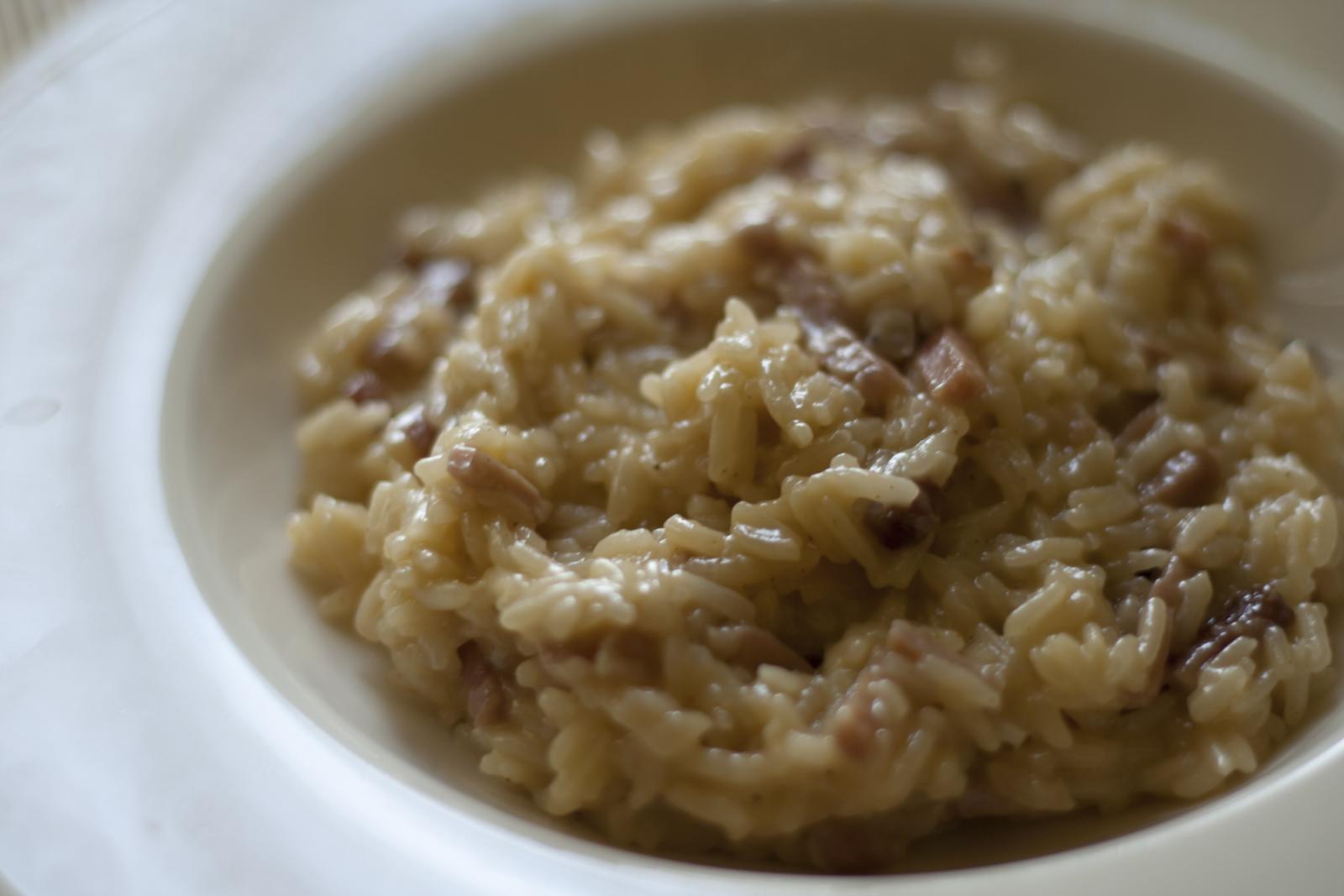
Risotto alla Milanese is a study in how little it takes to make something rich. Short-grain rice is toasted, then coaxed to creaminess with ladle after ladle of hot stock, tinted gold with saffron, and finished with a hard beating of butter and Parmesan. There is no cream; the creaminess is pure technique, the starch of the rice released through patient stirring. It is the signature rice dish of Milan, luxurious yet built from a short list of ingredients, and it rewards the twenty minutes of attention it asks for.
The Gold of Milan
Risotto alla Milanese comes from Milan, in Italy’s northern Lombardy region, where rice, not pasta, anchors much of the traditional cooking. Its defining feature is saffron, which turns the rice a brilliant gold and lends a subtle, distinctive flavor. Traditionally it is enriched with bone marrow, a mark of its Milanese roots, though many modern versions leave it out. It is the classic partner to osso buco, the braised veal shank of the same city, the two served together as a signature Milanese plate. On its own it stands as one of Italy’s most elegant simple dishes.
The Rice
Risotto needs a specific kind of rice: a starchy, short-grain Italian variety such as Arborio, Carnaroli, or Vialone Nano. These grains release their starch slowly as they cook, which is what gives risotto its creamy body, and they hold a firm center so the finished rice stays al dente rather than turning to mush. Long-grain rice will not work; it lacks the starch and stays separate. Do not rinse the rice, since washing away the surface starch defeats the whole purpose. The rice is the source of the creaminess, so the variety is not a detail to skip over.
Toasting and Wine
The method begins by softening onion in butter, then adding the dry rice and toasting it for a couple of minutes, stirring, until the grains turn translucent at the edges and smell faintly nutty. This toasting, the tostatura, firms the grains so they hold their shape through the long cooking. Then a splash of dry white wine goes in and is stirred until it evaporates, adding acidity and depth. Only after the wine has cooked away does the stock begin. Skipping the toast gives a softer, less structured risotto, so give the rice its two minutes in the fat.
The Stock, One Ladle at a Time
This is the heart of risotto and the part that takes patience. Keep the stock hot in a separate pot, and add it to the rice one ladle at a time, stirring, letting each addition be almost fully absorbed before adding the next. The constant stirring and gradual liquid coax the starch out of the rice, building the creamy texture bit by bit over about eighteen minutes. Hot stock is important; cold stock shocks the rice and stalls the cooking. Steep the saffron in some of the stock and add it partway through, turning the rice its signature gold.
The Mantecatura
The finish has a name, mantecatura, and it is what makes risotto glossy and rich. When the rice is al dente and creamy, take the pan off the heat and beat in cold butter and grated Parmesan vigorously, which emulsifies into the rice and gives it its final sheen and body. Off the heat is important, so the cheese melts smoothly without turning stringy. The risotto stays loose and flowing, not stiff; the Italian phrase is all’onda, meaning it moves like a wave when you shake the pan. If it is too thick, loosen it with a splash of stock.
Serving It
Risotto waits for no one, so serve it immediately, while it is loose and creamy; it stiffens quickly as it sits and cools. Spoon it onto warm plates and spread it into a thin layer rather than a mound, the Milanese way, with extra Parmesan on top. It is a course on its own, or the traditional bed for osso buco. There are no great leftovers, since reheated risotto turns dense and pasty, though Italians repurpose it into fried rice cakes called arancini or a crisp pan-fried cake. Make what you will eat and serve it hot.
Common Questions
Do I really have to stir constantly?
Frequent stirring is what releases the rice’s starch and builds the creamy texture, so it matters. You need not stir every second, but keep at it steadily throughout, adding stock gradually. The attention is the whole technique.
What rice can I use?
Arborio is the most widely available; Carnaroli and Vialone Nano are prized for holding their shape. All are starchy short-grain Italian rices made for risotto. Long-grain rice will not give the creamy result.
Is bone marrow necessary?
It is traditional to Milanese risotto and adds richness, but many modern versions omit it. The dish is excellent with just butter, Parmesan, and saffron, so leave it out if you prefer or cannot find it.
Risotto alla Milanese is the saffron-tinted risotto of Milan in northern Italy, a rich rice dish colored gold and finished with butter and Parmesan.