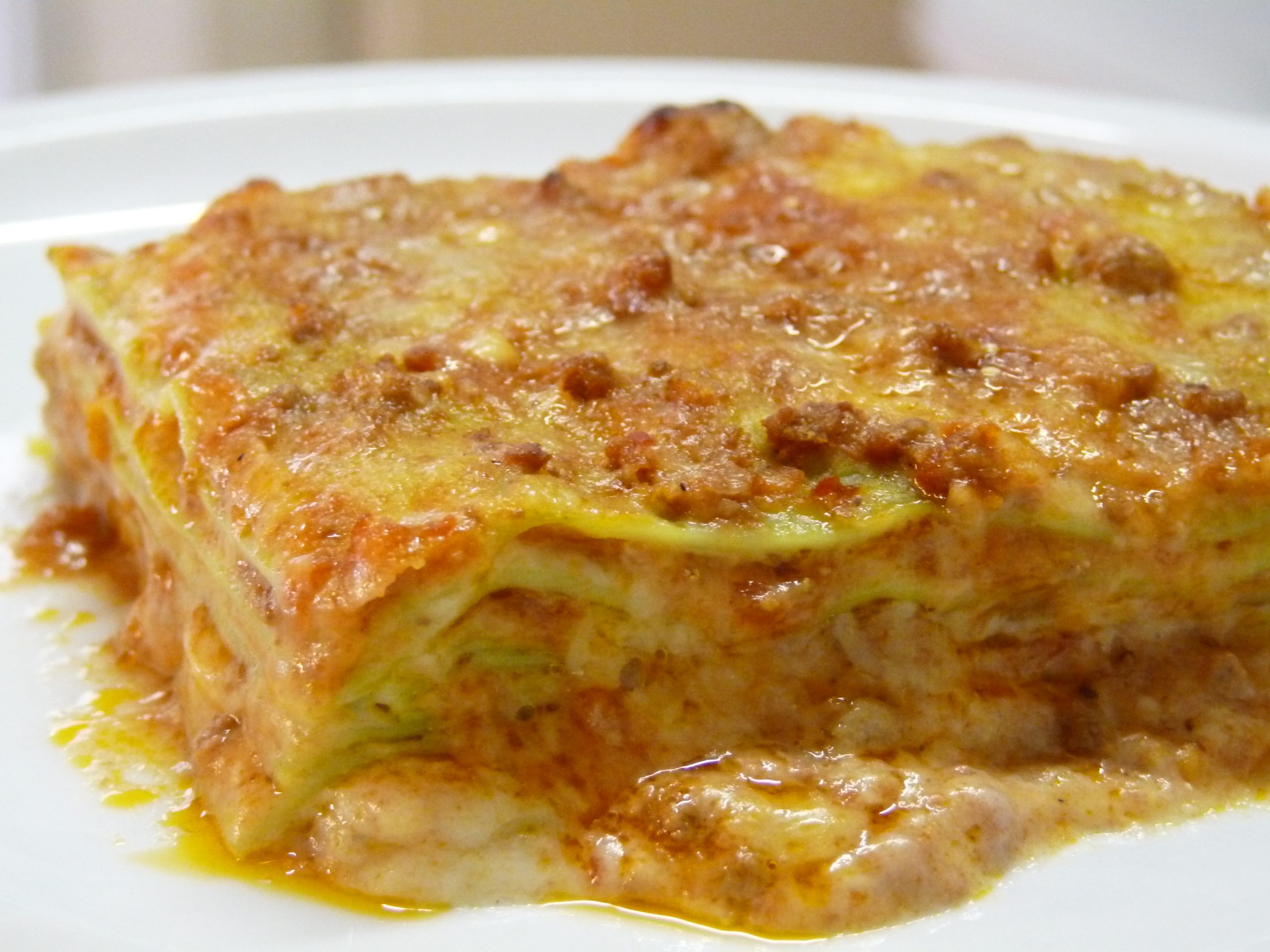
Lasagna is the ultimate baked pasta: sheets of pasta layered with slow-cooked meat ragu, silky bechamel, and plenty of Parmesan, baked until the top is golden and the edges bubble. Done properly it is rich, deep, and utterly satisfying, a dish worth a Sunday afternoon. The classic version from Emilia-Romagna uses bechamel rather than ricotta, which gives it an elegance the heavier Italian-American style lacks. It takes time, mainly for the ragu, but the components are simple, and a great lasagna is one of the finest things you can put on a table.
The Pride of Bologna
Lasagna is an old dish; the oldest known written reference to it in Italy dates to the Middle Ages, in a document from Bologna. The classic baked version most associated with the dish, lasagne alla bolognese, comes from Emilia-Romagna and its capital Bologna, layering meat ragu, bechamel, and Parmesan. It is worth knowing that this bechamel-based northern version differs from the Italian-American lasagna many people grow up with, which uses ricotta and mozzarella and a tomatoey sauce. There are regional versions all over Italy, from Naples to Genoa, each with its own character, but the Bolognese is the benchmark.
The Ragu
The heart of a great lasagna is the ragu, the slow-cooked meat sauce, and it cannot be rushed. Start with a soffritto of finely chopped onion, carrot, and celery softened in fat, then brown the ground meat, deglaze with wine, and add tomato and a splash of milk. Then simmer it long and slow, at least an hour and a half and ideally longer, until it is rich, thick, and deeply flavored. This long cook is where lasagna gets its soul; a quick sauce makes a flat, ordinary lasagna. The milk is a traditional touch that softens and enriches the meat. Make the ragu ahead if you can.
Bechamel, Not Ricotta
The classic Emilia-Romagna lasagna is bound with bechamel, the smooth white sauce of butter, flour, and milk, not with ricotta. This is a defining difference from the Italian-American version, and it gives the dish a silkier, more refined, less heavy character. Make a bechamel by cooking a butter-and-flour roux, whisking in milk, and cooking until it is thick and smooth. It should pour but not run. Spread thin layers of it through the lasagna along with the ragu, where it melts into a creamy binder. If you have only known ricotta lasagna, the bechamel version is a revelation, lighter and more elegant.
The Pasta
Lasagna is made with wide, flat pasta sheets. Fresh egg pasta, especially the green spinach pasta traditional in some Bolognese versions, gives the most tender, delicate result and is worth it if you make or buy fresh sheets. Dried lasagna sheets work well too; boil them until just pliable unless they are the no-boil kind, which soften in the oven from the moisture of the sauces. Either way, do not overcook the pasta before baking, since it cooks further in the oven. The pasta is the structure that holds the layers, so aim for tender sheets that yield to a fork without being mushy.
Layering and Baking
Building the lasagna is the satisfying part. Start with a thin smear of ragu on the bottom of the dish so the pasta does not stick, then layer: pasta, ragu, bechamel, and a scatter of Parmesan, repeating to build several layers. Keep the layers even and not too thick. Finish with bechamel and a generous blanket of Parmesan on top, which browns beautifully. Bake until the top is golden and the whole thing bubbles at the edges. Then, and this matters, let it rest fifteen to twenty minutes before cutting, so the layers settle and hold together instead of sliding into a heap on the plate.
Serving Lasagna
Lasagna is a centerpiece dish, cut into generous squares and served with a simple green salad and bread. It is rich, so it needs little alongside. It is a natural make-ahead: you can assemble it a day before and bake it when needed, or bake it fully and reheat, and many say it tastes even better the next day once the flavors settle. It keeps several days refrigerated and freezes well, whole or in portions. Because it feeds a crowd and holds so well, lasagna is ideal for gatherings, letting you do the work in advance and simply bake and serve.
Common Questions
Bechamel or ricotta?
The classic Emilia-Romagna lasagna uses bechamel, which gives a silkier, lighter result. Ricotta is the Italian-American style. Both make good lasagna, but for the traditional Bolognese version described here, use bechamel. The choice defines the character of the dish.
Do I have to boil the pasta first?
It depends on the pasta. Regular dried sheets are boiled until just pliable first; no-boil sheets soften in the oven from the sauces. Fresh pasta needs only a brief blanch or none. Do not overcook it, since it bakes further in the oven.
Can I make it ahead?
Yes, and it is ideal for it. Assemble the lasagna a day ahead and bake when needed, or bake and reheat. The flavors deepen overnight. It also freezes well. This make-ahead quality is part of why lasagna suits feeding a crowd.
Lasagna is a baked dish of wide flat pasta layered with fillings; the classic version, lasagne alla bolognese from Emilia-Romagna, layers meat ragu, bechamel, and Parmesan.