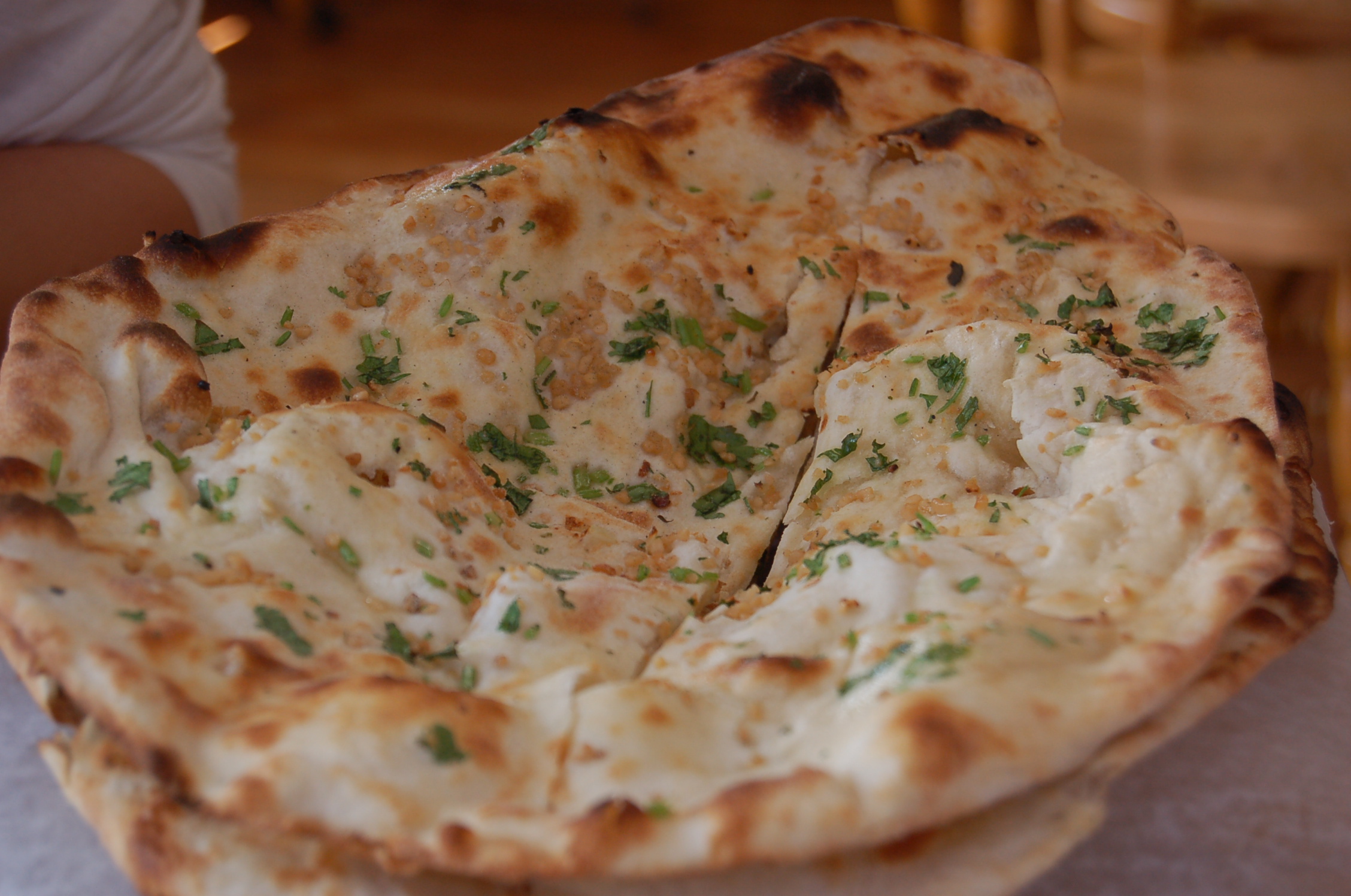
Naan is the soft, pillowy, slightly charred flatbread that makes an Indian meal complete: torn into pieces to scoop up curry, soak up sauce, and wrap around bites of meat. Fresh, warm, and brushed with butter, homemade naan is far better than anything from a package, and you do not need a tandoor to make it. A hot cast-iron pan on the stove does a fine job of giving it the blisters and puff that define good naan. It takes a little time for the dough to rise, but the cooking is fast.
The Bread of the Tandoor
Naan is a leavened flatbread traditionally baked in a tandoor, the fiercely hot clay oven, where rounds of dough are slapped onto the inner wall and cook in a minute or two, puffing and charring against the heat. It is a staple across North India and much of Central and South Asia, and it is the classic partner to rich curries like butter chicken and dal makhani. Unlike unleavened flatbreads such as roti or chapati, naan is made with a leavened dough, which gives it its characteristic soft, chewy, pillowy texture. It is restaurant and celebration bread as much as everyday food.
A Leavened, Enriched Dough
What makes naan naan is its dough. It is leavened, usually with yeast, and enriched, most importantly with yogurt, which gives it a soft, tender crumb and a subtle tang. Some recipes add milk or egg as well. This enriched, leavened dough is what sets naan apart from plainer flatbreads and gives it that signature softness. Make a soft, slightly sticky dough, knead it until smooth and elastic, then let it rise until doubled. The rise develops both flavor and the airy texture. Do not make the dough too stiff, since a soft dough gives a softer, more pillowy naan.
Shaping
Once risen, divide the dough into pieces and roll each one out into the classic teardrop or oval shape, or simply a rough round. Do not roll it too thin, since naan should have some body and chew, not be cracker-thin. Roll it unevenly and a little rustic; naan is not meant to be a perfect circle. If you want to add flavorings like garlic or nigella seeds, press them into the surface now so they stick as it cooks. Keep the shaped pieces covered until you cook them so they do not dry out. Work with one or two at a time as the pan heats.
Cooking on the Stovetop
Without a tandoor, a cast-iron pan or skillet is the best tool, and the key is heat. Get the dry pan very hot, almost smoking, before the dough goes in. Lay a rolled naan in the pan and let it cook until big bubbles form and the underside is charred in spots, then flip it. Pressing gently helps it puff up. The high heat is what mimics the tandoor, giving naan its blistered, charred spots and puffed pockets. A pan that is not hot enough gives pale, flat, tough naan. Some cooks brush the top with a little water before cooking to help it stick and puff.
Butter and Serving
The finishing touch is butter: brush each naan with melted butter or ghee the moment it comes off the heat, while it is hot enough to drink it in. Minced garlic in the butter makes garlic naan; a scatter of fresh cilantro or nigella seeds is a nice addition. Serve naan hot, straight from the pan, since it is at its best fresh and soft and loses its magic as it cools and stiffens. Stack cooked naans under a towel to keep them warm while you cook the rest. Serve with any rich curry, and use it to scoop up every last bit of sauce.
Flavored Variations
Plain naan is the starting point, but the dough takes flavorings well. Garlic naan, brushed or studded with minced garlic and cilantro, is the most popular, cutting the richness of a curry perfectly. Butter naan is simply the plain version brushed generously with butter or ghee. For a sweet-savory version, stuff the dough with a spiced mix before rolling: keema naan holds spiced minced meat, while peshawari naan is filled with a sweet paste of nuts, coconut, and dried fruit. Nigella seeds, sesame, or a scatter of fresh herbs pressed into the surface before cooking add another layer. The method stays the same for all of them; only the additions change, so once you can make plain naan, the variations are easy.
Common Questions
Can I make naan without yeast?
Yes. A quick version leavens the dough with baking powder and extra yogurt instead of yeast, skipping the rise. It is faster and still soft, though yeasted naan has more flavor and a chewier, more traditional texture. Both work well.
Why is yogurt in the dough?
Yogurt makes naan soft and tender and adds a subtle tang, and it is part of what distinguishes naan from plainer flatbreads. It works with the leavening to give the pillowy texture. Do not leave it out if you can help it.
How do I get the charred spots without a tandoor?
Use a very hot dry cast-iron pan, heated almost to smoking before the dough goes in. The intense heat blisters and chars the naan much as a tandoor would. A pan that is not hot enough gives pale, tough bread instead.
Naan is a leavened flatbread traditionally baked against the wall of a hot tandoor oven, a staple across North India and much of Central and South Asia for scooping up curries.