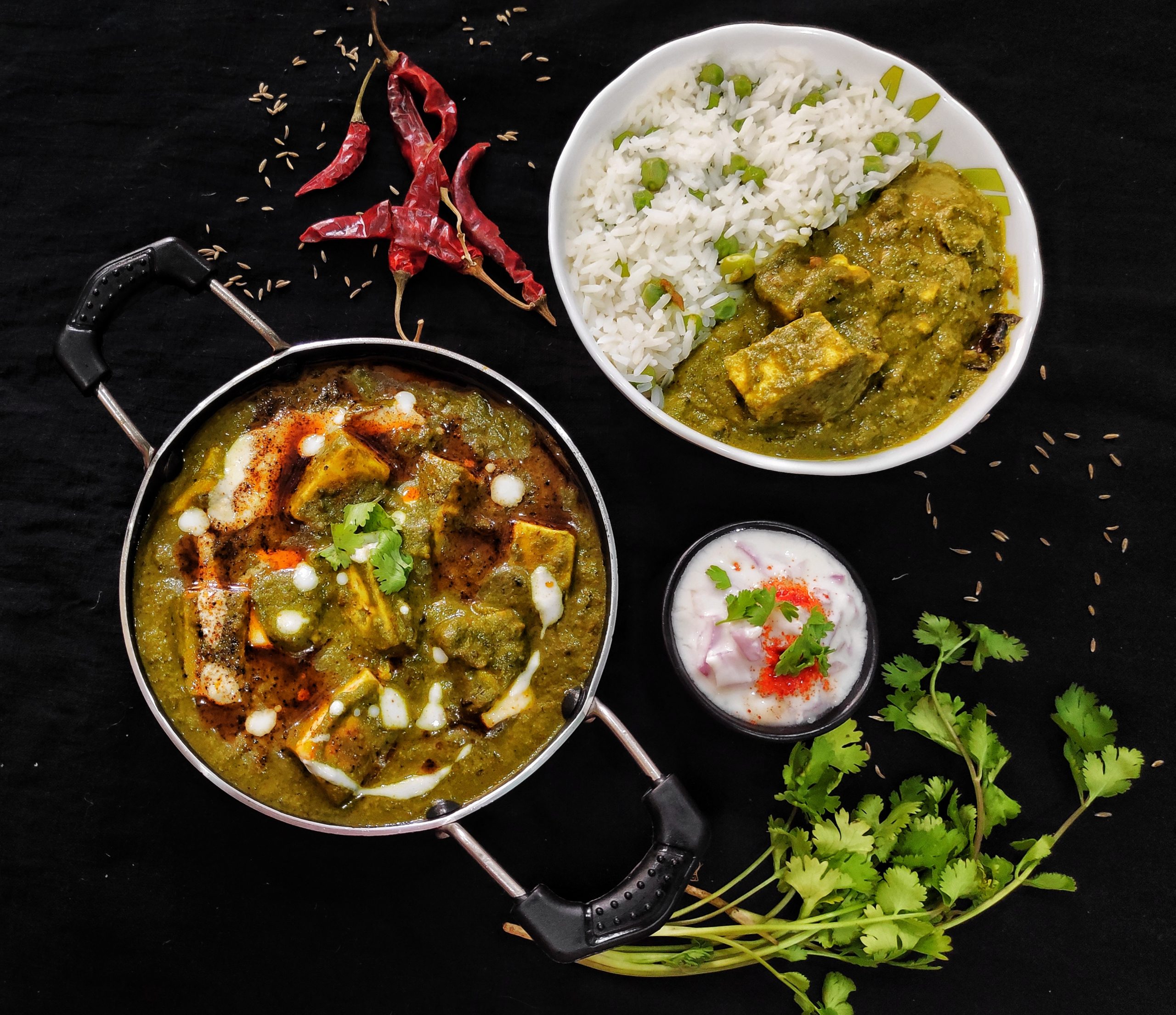
Palak paneer takes a pound of spinach and turns it into a rich, smooth, spiced gravy studded with soft cubes of fresh paneer cheese. It is one of the most popular vegetarian dishes in North Indian cooking, and for good reason: it is hearty, deeply flavored, and a genuinely appealing way to eat a large quantity of greens. The keys are keeping the spinach bright green rather than drab, and keeping the paneer soft rather than rubbery. Get those two things right and the dish comes together easily.
Spinach and Cheese
The name is literal: palak means spinach and paneer is the fresh Indian cheese. The dish belongs to North Indian cooking and is a fixture on restaurant menus and home tables alike. A related dish, saag paneer, uses a mix of leafy greens such as mustard greens rather than spinach alone, and the two names are sometimes used loosely, but true palak paneer is spinach only. The gravy is smooth and spiced, and the paneer provides protein and a mild, milky contrast to the earthy greens.
Keeping the Green
The most common palak paneer mistake is a dull, olive-brown gravy. Bright green comes from treating the spinach gently. Blanch it in boiling water for only a minute, then immediately plunge it into cold water, which stops the cooking and sets the color, before pureeing. Then cook the puree only briefly once it goes into the gravy, since long simmering turns spinach drab and flat-tasting. The vivid green of a good palak paneer is not just for looks; it signals spinach that still tastes fresh rather than overcooked and tired.
The Paneer
Paneer is a fresh, firm cheese that holds its shape when cooked, sold at Indian groceries and many supermarkets, or made at home by curdling milk with lemon. You can add the cubes raw, or fry them lightly until golden for a bit of texture and flavor. If you fry them, a useful trick is to soak the fried cubes in warm water for a few minutes afterward, which keeps them soft; frying can make paneer firm and even rubbery, and the soak reverses that. Add the paneer near the end so it warms through without toughening.
The Gravy Base
Under the spinach is a standard Indian gravy base. Onions cooked to golden, then ginger, garlic, and green chilies, then ground spices bloomed in the oil, then tomatoes cooked down until soft and the oil separates. This base carries the flavor, so build it properly before the spinach goes in, using the same browning and oil-separation cues as any Indian curry. The spinach puree then joins this cooked base and simmers just long enough to marry, rather than being cooked from raw, which keeps it green and fresh while still tasting fully seasoned.
Spicing and Richness
Palak paneer is warmly spiced rather than fiery: cumin, turmeric, and garam masala do most of the work, with green chilies pureed into the spinach for a gentle heat you can adjust. A spoon of cream or a knob of butter stirred in at the end adds richness and rounds out any bitterness in the greens, which is common in restaurant versions; leave it out for a lighter, more spinach-forward dish. Some cooks add a pinch of kasuri methi, dried fenugreek leaves, for a distinctive aroma. Season with salt and finish with garam masala for warmth.
Serving It
Palak paneer is served hot with Indian flatbread, naan, roti, or paratha, for scooping up the gravy, or with plain or cumin rice. It is rich enough to be a main on its own with bread, and it sits well alongside a dal or a dry vegetable dish in a larger spread. It keeps three days refrigerated and the flavor holds, though the color dulls a little over time. Loosen it with water or a splash of cream when reheating, and warm it gently so the paneer stays soft rather than firming up.
Smooth or Textured
How finely you puree the spinach decides the character of the dish. A completely smooth puree gives the silky, restaurant-style gravy most people picture, where the paneer floats in an even green sauce. Leaving the spinach a little coarse, roughly chopped rather than blended smooth, gives a more rustic, home-style palak with visible pieces of leaf and more bite. Neither is more correct; they are two traditions. If you want the smooth version, blend the blanched spinach thoroughly before it goes into the gravy. For the rustic one, pulse it briefly or just chop it fine. Decide before you cook, since it shapes the whole plate.
Common Questions
What is the difference between palak paneer and saag paneer?
Palak paneer uses spinach only. Saag paneer uses a mix of leafy greens, which can include mustard greens and others. The names are sometimes used loosely, but the traditional distinction is the greens.
How do I keep the paneer soft?
Add it raw, or if you fry it, soak the fried cubes in warm water for a few minutes to soften them. Add the paneer near the end and warm it gently rather than boiling it, which firms it up.
Can I use frozen spinach?
Yes. Thaw it and use it in place of blanched fresh spinach, then puree. The color is slightly less vivid than fresh blanched spinach, but it works well and saves time.
Palak paneer is a North Indian dish of paneer cheese in a pureed spinach gravy, spiced with ginger, garlic, and garam masala, served with flatbread or rice.