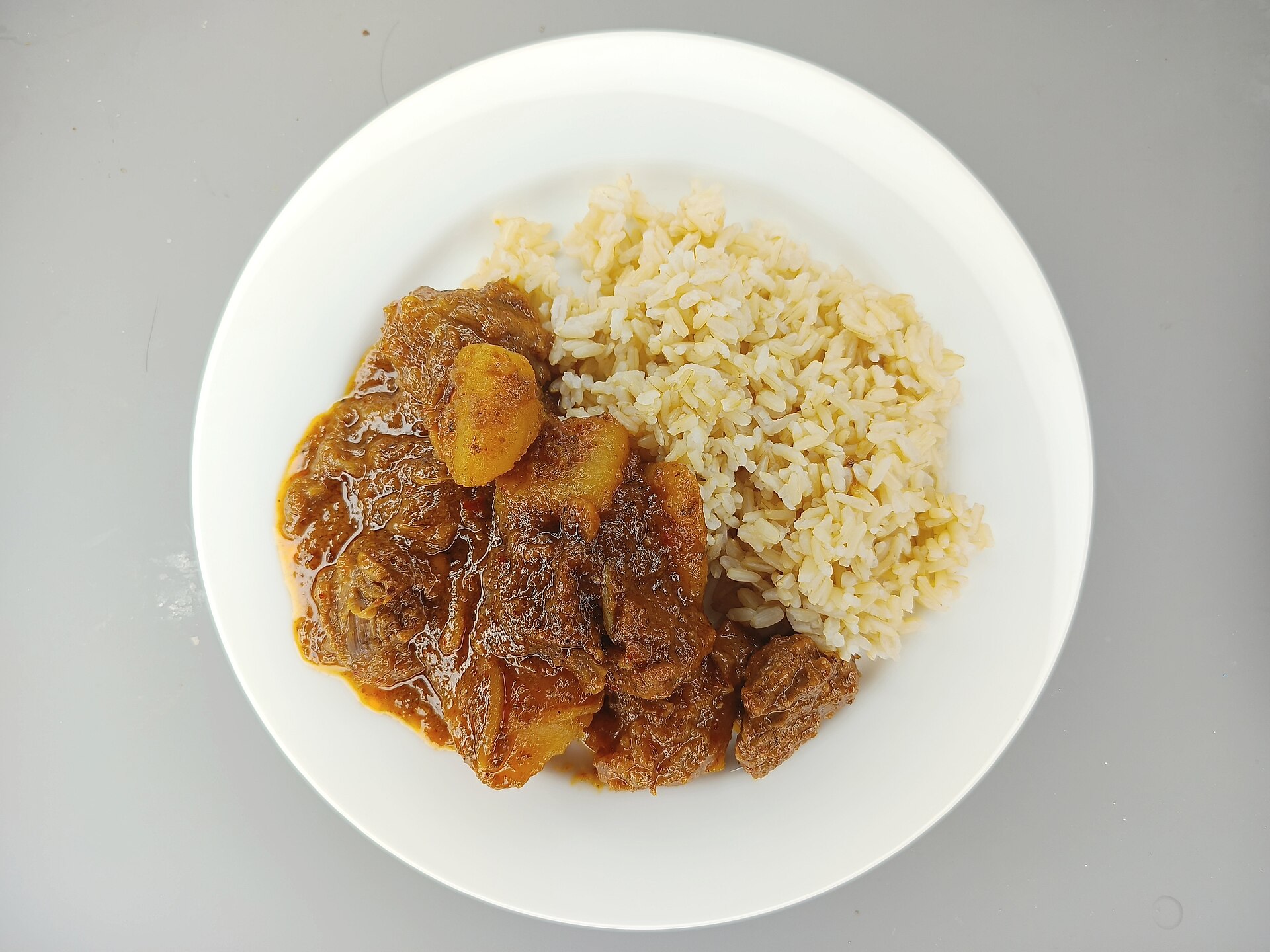
Massaman is the Thai curry for people who think they do not like heat. It is rich, mild, and deeply fragrant, built on coconut milk and warm dry spices like cinnamon, cardamom, and clove, with tender beef, soft potatoes, and whole peanuts. Sweet, savory, and gently sour, it tastes unlike the fierce green and red Thai curries, and it often tops lists of the world’s best dishes. It takes a long, slow simmer to make the beef tender, but the work is mostly waiting, and the payoff is a curry of remarkable depth.
A Curry Apart
Massaman stands apart from other Thai curries because of its origins and its spices. It has Muslim roots, and its name is linked to that heritage, reflecting the influence of traders and communities who brought warm dry spices, cinnamon, cardamom, cloves, star anise, into Thai cooking. Those spices, more associated with the Middle East and South Asia, are what set massaman apart from the herb-driven green and red curries. It is milder and sweeter than those, and it is most often made with beef, though chicken and lamb versions exist. It shows the layered influences within Thai cuisine.
The Curry Paste
The flavor base is massaman curry paste, a blend of chilies, lemongrass, galangal, garlic, shallots, and the warm dry spices that define the curry. Making it from scratch by pounding the ingredients gives the best flavor, but a good store-bought massaman paste makes an excellent curry and saves considerable effort. The key technique, whichever paste you use, is to fry it in the thick coconut cream, the solid part at the top of the can, until it is fragrant and the oil separates out. This blooms the spices and builds the deep base that the rest of the curry rests on. Do not skip it.
The Beef and the Simmer
Massaman is usually made with beef, and it wants a tough, collagen-rich cut like chuck or shin that turns tender over a long braise. Lean cuts stay dry and stringy. After browning the beef in the paste, it simmers gently in coconut milk and water until it is meltingly soft, which takes an hour and a half or more. This slow cooking is what makes the beef surrender, and it cannot be rushed with high heat, which only toughens the meat. The long simmer also lets the spices infuse the sauce. Patience here is the difference between tender and chewy.
Potatoes and Peanuts
Two ingredients mark massaman apart from other Thai curries: potatoes and peanuts. Chunks of potato, added partway through, soak up the sauce and make the curry hearty and comforting, a rare starch inside a Thai curry. Roasted peanuts add crunch, richness, and a nutty depth that suits the warm spices. Onion wedges cook down and sweeten the sauce. These additions give massaman its distinctive character, closer to a rich stew than a fiery curry. Add the potatoes with enough time to cook through and soak up flavor, but not so early that they fall apart into the sauce.
Balancing the Sauce
Like most Thai dishes, massaman is finished by balancing sweet, sour, and salty. Tamarind paste brings the sour note, palm sugar the sweetness, and fish sauce the salt and savor. Massaman leans sweeter and milder than other Thai curries, so the balance tips that way, but it still needs the sour and salty to keep it from being cloying. Add these at the end and taste as you go, adjusting until the sauce is rounded and full. The coconut milk gives richness and body, and the sauce wants to be thick enough to coat the beef and potatoes rather than thin and watery.
Serving Massaman
Serve massaman curry with steamed jasmine rice, which soaks up the rich sauce. It is a hearty, satisfying main, mild enough that it suits people who avoid spicy food, which makes it a good curry for a mixed table. Like most braises it is even better the next day, once the flavors settle and deepen, so it makes an excellent make-ahead. It keeps three days refrigerated and freezes well. Reheat it gently. A scatter of extra peanuts and some fresh cilantro on top brightens each bowl. This is comfort food, meant to be eaten slowly.
Common Questions
Is massaman spicy?
It is the mildest of the common Thai curries, rich and gently sweet rather than fiery. The warm dry spices and coconut milk dominate over chili heat. This makes it a good choice for people who find green or red curry too hot.
Can I use chicken instead of beef?
Yes. Chicken massaman is common and cooks much faster, since chicken does not need the long braise beef does. Use thighs for the best result, and add them later so they do not overcook. Lamb also works well.
Do I need to make the paste from scratch?
No. A good store-bought massaman paste makes an excellent curry and saves a lot of work. Frying it in coconut cream until the oil separates is the step that matters most for flavor, whichever paste you use.
Massaman is a rich, mild Thai curry with Muslim origins, distinguished from other Thai curries by warm dry spices like cinnamon and cardamom alongside coconut milk, potatoes, and peanuts.