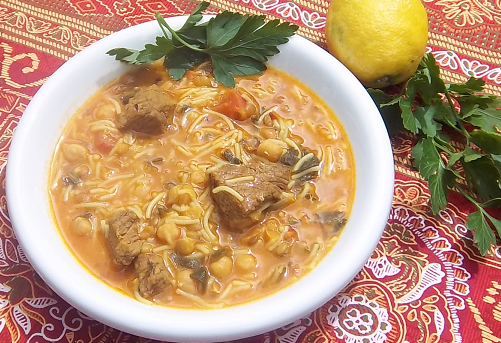
Harira is Morocco’s great soup: a thick, fragrant bowl of tomatoes, lentils, and chickpeas, often with tender lamb, warmed with spices and finished with a shower of fresh herbs and a squeeze of lemon. It is hearty enough to be a meal and comforting enough to be craved. Above all it is the soup of Ramadan, the dish that breaks the daily fast at sundown, though Moroccans eat it year-round. Every family has its own version, but the soul of harira is always the same: rich, herby, and deeply satisfying.
The Soup of Ramadan
Harira is bound up with Ramadan, the Islamic holy month of fasting, when it is the traditional dish to break the fast at iftar, the evening meal. After a day without food or water, a bowl of nourishing harira, served with dates and sweet honey-soaked chebakia pastries, restores and sustains. But it is not only a Ramadan food; it is eaten throughout the year as a starter or a light meal, sold in working-class restaurants and made in home kitchens. Recipes pass down through families, each with its own guarded secrets, so no two hariras taste quite the same.
The Base
Harira starts with a tomato base built on aromatics. Onion and celery are cooked with the lamb and spices, then tomatoes, both pureed fresh and canned, cook down into a thick, savory foundation. The tomato is central, giving harira its color and its slightly tangy depth. Lamb or beef in small pieces is traditional and adds richness, though a meatless version for fasting or for vegetarians is common and good. Take the time to cook the tomato base down properly before adding liquid, since a well-developed base is what gives the finished soup its body and flavor.
Lentils and Chickpeas
The legumes give harira its substance. Lentils, usually brown or green, cook down and thicken the soup, while chickpeas add texture and heartiness. Dried chickpeas soaked overnight are traditional, though canned ones work and save time; add them later since they are already cooked. The lentils go in earlier to simmer until soft. Between the lentils, chickpeas, and meat, harira is filling enough to be a full meal, which is exactly what is needed after a day of fasting. Simmer everything until the lentils are tender and beginning to break down into the broth.
The Spices and Herbs
Harira is warmly spiced with turmeric, ginger, cinnamon, and pepper, which give it a fragrant, gently exotic character without heat. The fresh herbs are just as important: large amounts of chopped cilantro and parsley go in, mostly near the end so they stay bright and green. These herbs are not a garnish but a defining flavor, and a timid amount leaves the soup tasting flat. Some cooks add a little celery leaf too. The combination of warm spices and fresh green herbs is what gives harira its distinctive, layered aroma that fills the kitchen as it cooks.
Thickening the Soup
What sets harira apart from a simple lentil soup is its velvety, slightly thickened body. This comes one of two traditional ways: broken vermicelli noodles simmered in near the end, or a tadouira, a slurry of flour whisked with water, stirred in slowly to give the soup a smooth, cohesive texture. Some versions use both. The trick with the flour slurry is to add it gradually while stirring constantly, so it thickens the soup evenly without forming lumps. This thickening step gives harira its characteristic mouthfeel, more substantial and comforting than a thin broth, and marks it as the real thing.
Serving Harira
Serve harira hot, with lemon wedges to squeeze over each bowl, since the bright acidity lifts the rich, spiced soup. During Ramadan it comes with dates and chebakia, the sesame-and-honey pastries, whose sweetness balances the savory soup, and often with hard-boiled eggs. Bread is always alongside. Harira keeps well and deepens overnight, so it is a fine make-ahead; it thickens as it stands, so loosen it with water or stock when reheating. Made in a big pot, it feeds a crowd, which suits its role as the soup that gathers families around the table at the end of a fasting day.
Common Questions
Can I make harira vegetarian?
Yes. Leave out the meat and use a vegetable stock or water. The lentils, chickpeas, tomato, and herbs carry the soup, and a meatless harira is common, especially as a lighter option. It stays hearty and satisfying.
How do I thicken it traditionally?
Use a tadouira, a slurry of flour whisked with water, stirred in slowly near the end, or simmer in broken vermicelli. Both give harira its velvety body. Add the flour slurry gradually while stirring to avoid lumps.
What do I serve with it?
Lemon wedges to squeeze over, and traditionally dates and chebakia pastries during Ramadan, plus bread and sometimes hard-boiled eggs. The lemon and the sweet date are the classic companions that balance the savory, spiced soup.
Harira is a hearty Moroccan soup of tomatoes, lentils, chickpeas, and often lamb, traditionally eaten to break the daily fast during Ramadan and served year-round as a starter or meal.