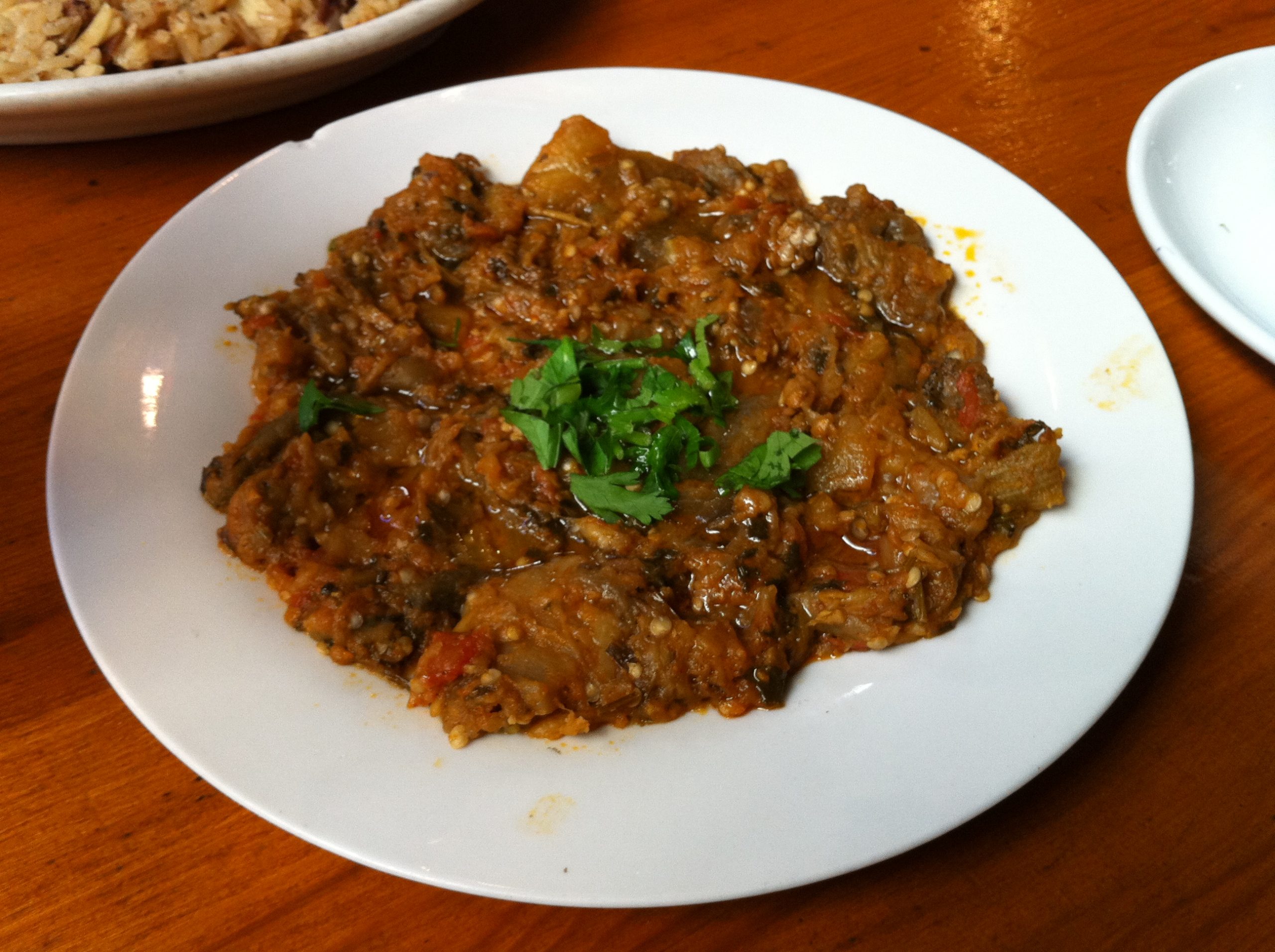
Zaalouk is a Moroccan cooked salad that turns eggplant and tomato into something rich, smoky, and deeply savory. The vegetables are cooked down soft and mashed together with garlic, olive oil, cumin, and paprika until they meld into a thick, spoonable dip. Vegan, simple, and better the next day, it is a staple of the Moroccan mezze table, scooped up with bread. It shows the Moroccan gift for coaxing big flavor out of humble vegetables and a handful of spices, and it takes almost no skill to make well.
A Moroccan Cooked Salad
Zaalouk belongs to the family of Moroccan cooked salads, the small warm or cold vegetable dishes set out at the start of a meal alongside taktouka, a pepper and tomato salad, and others. These salads open a Moroccan meal, eaten with bread before the tagine or couscous arrives. Zaalouk is among the most beloved, found in home kitchens and casual cafes across the country. It is humble, everyday food rather than a celebration dish, the kind of thing a Moroccan cook makes without a recipe, and it is naturally vegan and healthy.
The Eggplant
Eggplant is the base, and it needs to be cooked until completely soft so it mashes into a silky texture rather than staying in firm chunks. There are two approaches. Roasting or charring the eggplant first, over a flame or in a hot oven, gives a smoky flavor that many consider essential to good zaalouk. Alternatively, you can peel and cube the eggplant and cook it down in the pan with the tomatoes until it collapses. Either way, the goal is soft, meltingly tender eggplant. Undercooked, firm eggplant will not break down into the smooth, unified dip zaalouk is meant to be.
Tomato and Garlic
Tomato is the other half of zaalouk, cooked down with plenty of garlic into a thick sauce that binds the dish. Fresh ripe tomatoes are ideal in season, but canned tomatoes make a good version year-round, so this is not a summer-only dish. Cook the tomatoes down until they lose their raw edge and thicken, then work in the soft eggplant. Garlic is generous, cooked briefly in the olive oil first so it perfumes the base. As the eggplant and tomato cook together and you mash them, they merge into one thick, rich mixture bound by the oil.
The Spices
Zaalouk is defined by two spices above all: cumin and paprika. Cumin brings its warm, earthy note, and paprika adds color and a gentle sweetness. A little chili or cayenne brings optional heat, though zaalouk is more savory than spicy. Fresh cilantro and parsley, stirred in near the end, add brightness, and a squeeze of lemon at the finish lifts the whole dish and balances the richness of the oil. Good olive oil matters here, since it carries the flavors and gives zaalouk its characteristic sheen. Taste and balance the salt, lemon, and cumin, which carry the dish.
Cooking It Down
The final texture is the mark of a good zaalouk. Keep cooking and mashing the eggplant and tomato together until the mixture thickens and the olive oil begins to come together with it, glistening at the edges. It needs to be thick enough to scoop and hold on a piece of bread, not watery. This takes a little patience as the excess moisture cooks off, but it is what turns a loose vegetable mash into the rich, cohesive dip zaalouk is meant to be. Mash it to your preferred texture, from nearly smooth to slightly chunky.
Serving Zaalouk
Zaalouk is served warm or at room temperature, as part of a spread of Moroccan salads to start a meal, or as a side to grilled meat or fish. The essential companion is bread, khobz or any crusty loaf, torn and used to scoop it up, since zaalouk is meant to be eaten by hand, not with a fork. Like many such dishes, it tastes even better the next day once the flavors have settled, so it is worth making ahead. It keeps four days refrigerated, and a little extra olive oil and lemon revive leftovers.
Common Questions
Should I roast or boil the eggplant?
Roasting or charring adds a smoky flavor many consider essential. Cooking it down in the pan with the tomatoes is easier and still good. Either way, cook the eggplant until completely soft so it mashes smooth.
Fresh or canned tomatoes?
Ripe fresh tomatoes are ideal in season, but canned tomatoes make a good zaalouk year-round. Cook either down until thick. A spoon of tomato paste deepens the flavor if your fresh tomatoes are pale.
Is zaalouk served hot or cold?
Both. It is served warm or at room temperature, and leftovers are good cold. The flavors deepen overnight, so it is often made ahead. Bring it back toward room temperature and refresh it with olive oil and lemon before serving.
Zaalouk is a Moroccan cooked salad of eggplant and tomato mashed together with garlic, olive oil, and spices, served warm or cold as part of a mezze spread with bread.