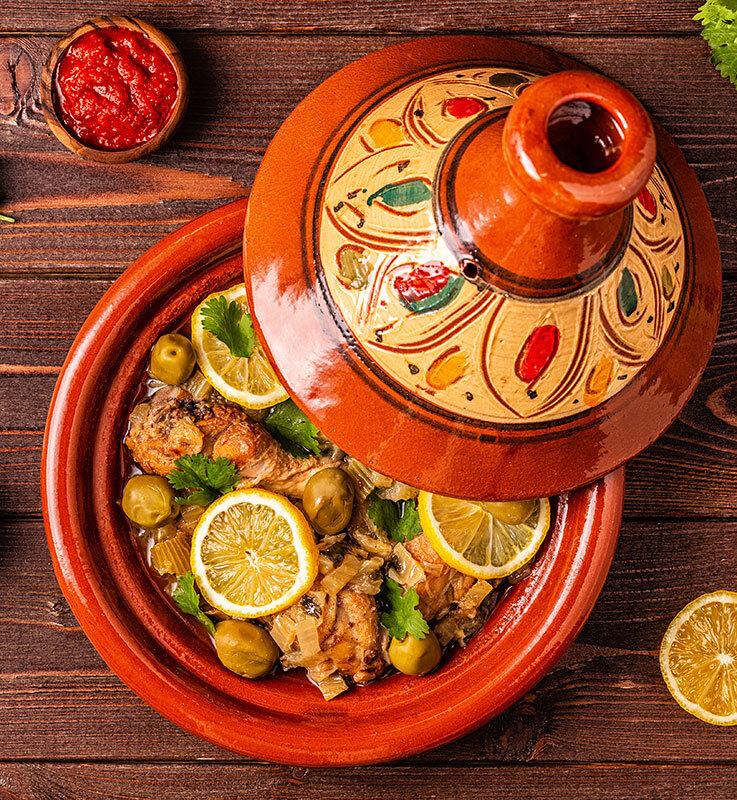
This lamb tagine is Moroccan cooking at its most celebrated: chunks of lamb slow-simmered with saffron, ginger, and cinnamon until they fall apart, then crowned with prunes glazed in honey and a scatter of golden fried almonds. It is sweet and savory at once, tender and fragrant, the kind of dish brought out for guests and special occasions. The clay tagine pot gives it its name, but you can make it beautifully in any heavy pot. The long, gentle cook does the work, and the sweet-savory finish is unforgettable.
The Dish and the Pot
A tagine is both a dish and the conical clay pot it is cooked in, and it is of Berber, or Amazigh, origin, central to Moroccan cooking. The distinctive cone-shaped lid traps rising steam and returns it to the pot, so the food cooks slowly and stays moist with little added liquid. There are countless tagine variations across Morocco, from savory chicken with preserved lemon and olives to this sweet lamb version with dried fruit. The lamb-and-prune tagine showcases the Moroccan love of combining meat with fruit, honey, and warm spices into one sweet-savory dish.
The Lamb and Spices
Lamb shoulder, with its fat and connective tissue, is ideal, since it turns meltingly tender over a long braise where lean cuts stay dry. The spicing is warm and fragrant rather than hot: saffron, ground ginger, cinnamon, and pepper, with grated onion cooked down into the sauce. These give the tagine its golden color and its deep, aromatic character. Brown the lamb with the onion and spices to build flavor, then let it simmer gently. Moroccan tagines are perfumed and gently sweet, not fiery, so season for fragrance and depth. The onion collapses into a rich sauce as it cooks.
The Long Simmer
A tagine cannot be rushed. After browning, add water to nearly cover the lamb, cover the pot, and simmer very gently until the meat is fork-tender and falling apart, around two hours or more. Low, patient heat is what breaks the lamb down and lets the spices meld into the sauce; high heat only toughens it. The tagine pot does this naturally with its steam-trapping lid, but any heavy covered pot works if you keep the heat low and check the liquid. Near the end, uncover and reduce the sauce until it is thick and clings to the meat.
The Honeyed Prunes
The prunes are what make this tagine special, and they are cooked separately so they stay whole and glossy. Simmer pitted prunes with honey and a little cinnamon until they are soft, plump, and glazed in a sticky syrup, then spoon them over the finished lamb rather than stirring them in. This keeps them intact and lets their concentrated sweetness sit against the savory meat. The honey deepens their sweetness and gives them shine. This sweet-and-savory pairing of tender lamb with honeyed dried fruit is the signature of the dish, and doing the prunes separately keeps both elements at their best.
The Almonds and Finish
Fried almonds are the final flourish, adding crunch and a nutty richness that plays against the soft meat and prunes. Fry whole blanched almonds in a little oil until golden, or toast them, then scatter them over the top along with a sprinkle of sesame seeds. The textural contrast, tender lamb, soft prunes, crisp almonds, is part of what makes the dish so satisfying. Some versions add a scatter of toasted sesame too. Arrange the tagine with the meat in the center, the glazed prunes over it, and the almonds and sesame on top, for a generous, celebratory presentation.
Serving the Tagine
Serve the lamb tagine hot, straight from the pot, with plenty of Moroccan bread (khobz) to scoop up the meat and rich sauce, since in Morocco tagine is traditionally eaten by hand with bread rather than cutlery. It also goes well spooned over couscous. It is a communal dish, set in the center of the table for everyone to share. Like most braises it is even better the next day, once the flavors settle, so it makes a fine make-ahead for entertaining; it keeps several days refrigerated and reheats gently. Bring it to the table whole and let everyone dig in together.
Common Questions
Do I need a tagine pot?
No. The conical pot is traditional and cooks by trapping steam, but any heavy covered pot or Dutch oven gives the same tender results if you keep the heat low and slow. The long, gentle simmer matters more than the specific vessel.
Can I use a different dried fruit?
Yes. Dried apricots and figs are traditional alternatives to prunes in Moroccan tagines and work the same way, simmered with honey and cinnamon and added on top. Each gives a slightly different sweetness. Prunes are the classic choice here.
What do I serve it with?
Moroccan bread (khobz) to scoop up the sauce is traditional, since tagine is eaten by hand with bread. It also goes well over couscous. A simple salad alongside rounds out the meal. The rich, sweet-savory sauce is meant to be mopped up.
Tagine is a Berber dish named after the conical clay pot it cooks in; the sweet lamb version with prunes blends tender meat with honey, cinnamon, and dried fruit in the Moroccan sweet-savory style.