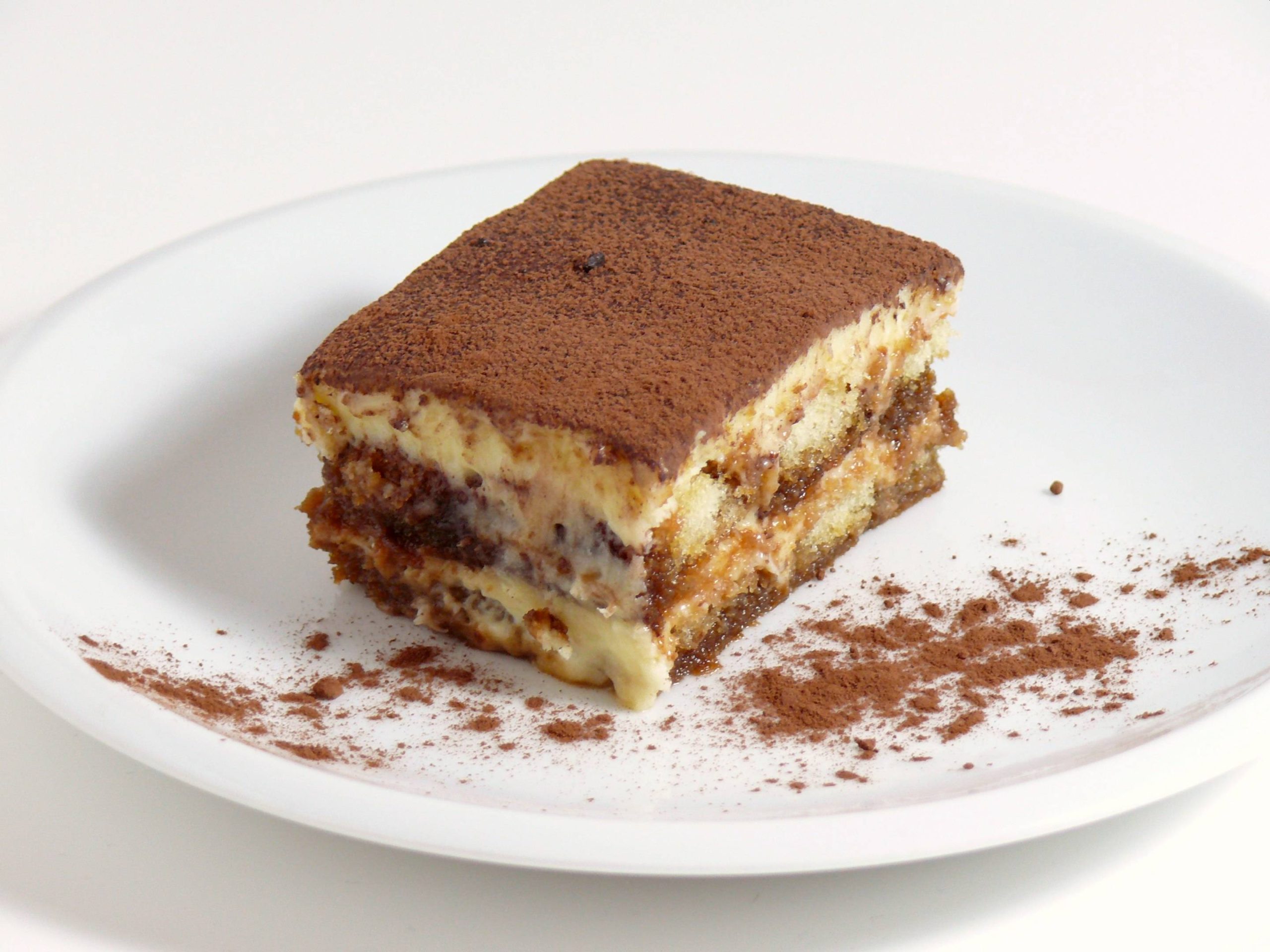
Tiramisu is Italy’s most famous dessert, and it earns the title. Ladyfingers dipped in espresso are layered with a light, airy mascarpone cream and dusted with bitter cocoa, the whole thing chilled until it sets into something between a cake and a custard. There is no baking and no complicated technique, just a few components assembled with care. The name means pick me up, a nod to the espresso running through it. Made well, with the biscuits dipped just right and the dessert given time to set, it is close to perfect.
A Modern Classic, Disputed
For a dessert that feels timeless, tiramisu is young. Its modern form was popularized in northeastern Italy from the late 1960s and into the 1970s, and its exact origin is passionately disputed between two regions. Veneto, and specifically the restaurant Le Beccherie in Treviso, is widely credited with the version we know, associated with pastry chef Roberto Linguanotto and owner Ada Campeol. Neighboring Friuli-Venezia Giulia makes an earlier claim, and the Italian government has recognized it there as a traditional regional product. What is not disputed is the recipe: coffee, mascarpone, eggs, sugar, ladyfingers, and cocoa.
The Ingredients
Tiramisu rests on a handful of specific things done well. Mascarpone, the rich Italian cream cheese, is the base of the cream and has no real substitute; nothing else gives the same texture. Savoiardi, the crisp Italian ladyfinger biscuits, hold up to the coffee soak where soft sponge would collapse. The coffee must be strong, real espresso or a very strong brew, since weak coffee gives a pale, flat dessert. Cocoa is unsweetened, dusted on top for its bitter edge against the sweet cream. A splash of Marsala or coffee liqueur is traditional, and easily left out.
The Cream
The cream is what makes or breaks tiramisu, and lightness is the goal. Egg yolks and sugar are whisked into a pale, thick zabaglione, then mascarpone is beaten in. Whipped cream folded through lightens it into something airy rather than dense. Whisking the yolks and sugar over a pan of simmering water, a gentle bain-marie, warms them enough to be food-safe while keeping them fluffy, which addresses the concern many have about raw eggs. Fold gently once the whipped cream goes in, so you keep the air; a heavy hand deflates it into a flat, heavy cream.
The Dip
The most common tiramisu mistake is soggy ladyfingers, and it comes from dipping them too long. Dip each biscuit in the cooled coffee fast, a quick in and out, one second per side, so it absorbs just enough coffee to flavor and soften without turning to mush. The biscuit should still have some structure, not fall apart in your fingers. It will continue to soften as the dessert rests, so under-dipping is far safer than over-dipping. Cool the coffee first; hot coffee dissolves the biscuits instantly. This single step separates a clean tiramisu from a wet, collapsed one.
Layering and Chilling
Assemble in a dish: a layer of dipped ladyfingers, a layer of mascarpone cream spread smooth, then repeat, finishing with cream on top. Two layers is standard. Then comes the hardest part, waiting. Tiramisu must chill for at least six hours and ideally overnight, which lets it set to a sliceable texture and lets the flavors meld together. It genuinely tastes better on the second day. Rushing the chill gives a loose, soupy dessert that will not hold a shape. Cover it and leave it alone; the fridge does the real work while you sleep.
Serving Tiramisu
Dust the top generously with unsweetened cocoa just before serving, not ahead, since cocoa left on the cream too long dampens and sinks in. In Italian homes tiramisu is served straight from the dish, spooned onto plates, rather than cut into neat portions, though a well-set one slices cleanly enough. It keeps two to three days refrigerated, covered, and the texture holds well. Do not freeze it, since the mascarpone splits when thawed. Serve it cold, at the end of a meal, with a small glass of the same liqueur alongside if you like.
Common Questions
Are the raw eggs safe?
Whisking the yolks and sugar over simmering water warms them enough to reduce the risk while keeping the cream light. For full safety, use pasteurized eggs. Some versions skip the yolks entirely and use only whipped cream and mascarpone.
Can I make it without alcohol?
Yes. The Marsala or liqueur is optional and easily left out; the dessert is excellent with just coffee. This is also how to make it suitable for children and anyone avoiding alcohol.
Why is my tiramisu soggy?
The ladyfingers were dipped too long. Dip them fast, one second per side, in cooled coffee. They soften further as the dessert chills, so a quick dip is enough. Over-soaking is the main cause of a mushy result.
Tiramisu is a layered Italian dessert of coffee-soaked ladyfingers and mascarpone cream whose modern form was popularized in northeastern Italy from the late 1960s, with its exact origin disputed between Veneto and Friuli.