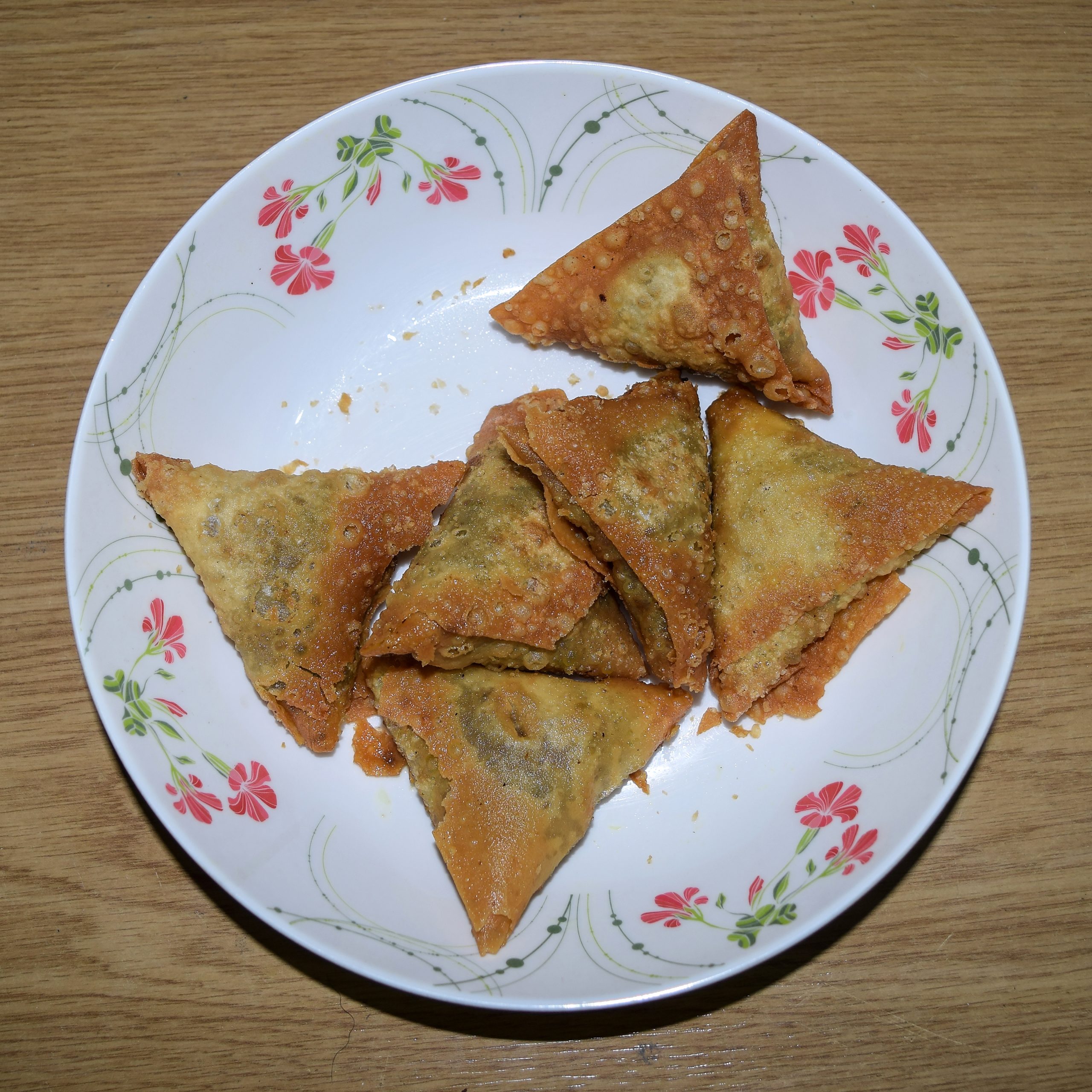
The samosa is the snack the whole subcontinent agrees on: a crisp, sturdy pastry triangle filled with spiced potatoes and peas, fried golden and served hot with chutney. It is street food, tea-time food, and party food, sold from carts and made in home kitchens across South Asia and its diaspora. Making samosas takes some patience with the shaping and a careful hand at the fryer, but nothing about it is difficult. The reward is a snack far better than any frozen box, crisp outside and warmly spiced within.
An Old and Traveled Snack
The samosa is a fried turnover popular across the Indian subcontinent, and its history runs long and wide. The name traces to a Middle Persian word for a triangular pastry, and versions of the snack have origins reaching back to the medieval era or earlier, carried and adapted along trade routes. Related turnovers appear across the Middle East, Central Asia, East Africa, and Southeast Asia under many names. The Indian potato-and-pea samosa is the version best known worldwide, though meat-filled and other fillings are also traditional across different regions.
The Dough
Samosa pastry is different from most, and getting it right matters. The dough is made firm and stiff, with oil or ghee rubbed into the flour before the water goes in, which shortens the pastry and helps it fry crisp. A soft dough gives a soft, bready shell; a stiff dough gives the sturdy, bubbly, shatter-crisp crust a proper samosa needs. Rest the dough so it rolls out smoothly. This is not the place for a slack, wet dough, so add water gradually and stop when it just comes together into a tight, firm mass.
The Filling
The classic filling is spiced potato and pea. Boiled potatoes are diced, not mashed, so the filling has texture, and mixed with peas, ginger, green chili, and spices. Cumin seeds tempered in oil, garam masala, coriander, and the tangy amchur give it its flavor; a squeeze of lemon stands in for amchur. Cool the filling completely before shaping, since hot filling makes the dough soggy and hard to seal. The filling needs to be dry and well seasoned, tasting good on its own, because the pastry around it is deliberately plain.
Shaping the Cones
Shaping takes a little practice. Roll a piece of dough into an oval and cut it in half, giving two half-circles. Take one, form it into a cone by folding the straight edge over on itself and sealing the seam with a dab of water, then fill the cone with the potato mixture. Press the top opening closed, sealing the edge well with water so it does not burst in the oil. A pleat or two along the base gives the samosa its flat bottom to stand on. Seal every seam firmly; gaps let oil in and filling out.
Frying Low and Slow
Frying is where samosas are won or lost. The oil stays only medium-hot, around 325 F, not screaming. Hot oil browns the outside fast while leaving the pastry undercooked, giving a shell that is dark but soft. A moderate temperature lets the samosas fry slowly, eight to ten minutes, cooking the dough through and developing the crisp, bubbly, blistered crust that defines a good samosa. Fry them in unhurried batches without crowding the pot. Patience at the fryer, resisting the urge to turn up the heat, is the single biggest factor in the texture.
Serving and Make-Ahead
Samosas are served hot with chutney, the classic pair being sweet-sour tamarind chutney and fresh green mint-cilantro chutney. They are best straight from the oil, when the shell is loudest. For a party, shape the samosas ahead and fry them in batches as guests arrive, or freeze the shaped raw samosas on a tray, then fry them from frozen, adding a couple of minutes. This freezer trick, the same one used for many fried snacks, means one shaping session gives hot, fresh samosas on demand for weeks.
Chutneys on the Side
A samosa without chutney is only half the snack. Two sauces are traditional and they pull in opposite directions, which is the point. Sweet-and-sour tamarind chutney, dark and sticky, brings a tangy sweetness. Green chutney, made from fresh cilantro and mint with green chili and lime, brings a sharp, herbal heat. Together they cut the richness of the fried pastry and light up the mild potato filling. Both keep for several days in the fridge and take only minutes to blend, so make them while the filling cools. For a fuller plate, samosas are also served broken up as chaat, topped with yogurt, chutneys, onion, and crisp sev.
Common Questions
Why are my samosas soft instead of crisp?
The dough was too soft, or the oil was too hot so the outside browned before the pastry cooked. Make a firm, stiff dough and fry low and slow at around 325 F so the shell cooks through and crisps.
Can I bake or air-fry them?
Yes, for a lighter version. Brush the samosas with oil and bake or air-fry until golden. The shell is less bubbly and shatter-crisp than deep-fried, but it works and uses far less oil.
Can I freeze them?
Yes. Freeze the shaped raw samosas on a tray until solid, then bag them. Fry straight from frozen, adding a couple of minutes. This lets you make a big batch and fry fresh whenever you want them.
The samosa is a fried, savory turnover popular across the Indian subcontinent, its name traced to a Persian word for a triangular pastry, and its history reaching back to the medieval era.