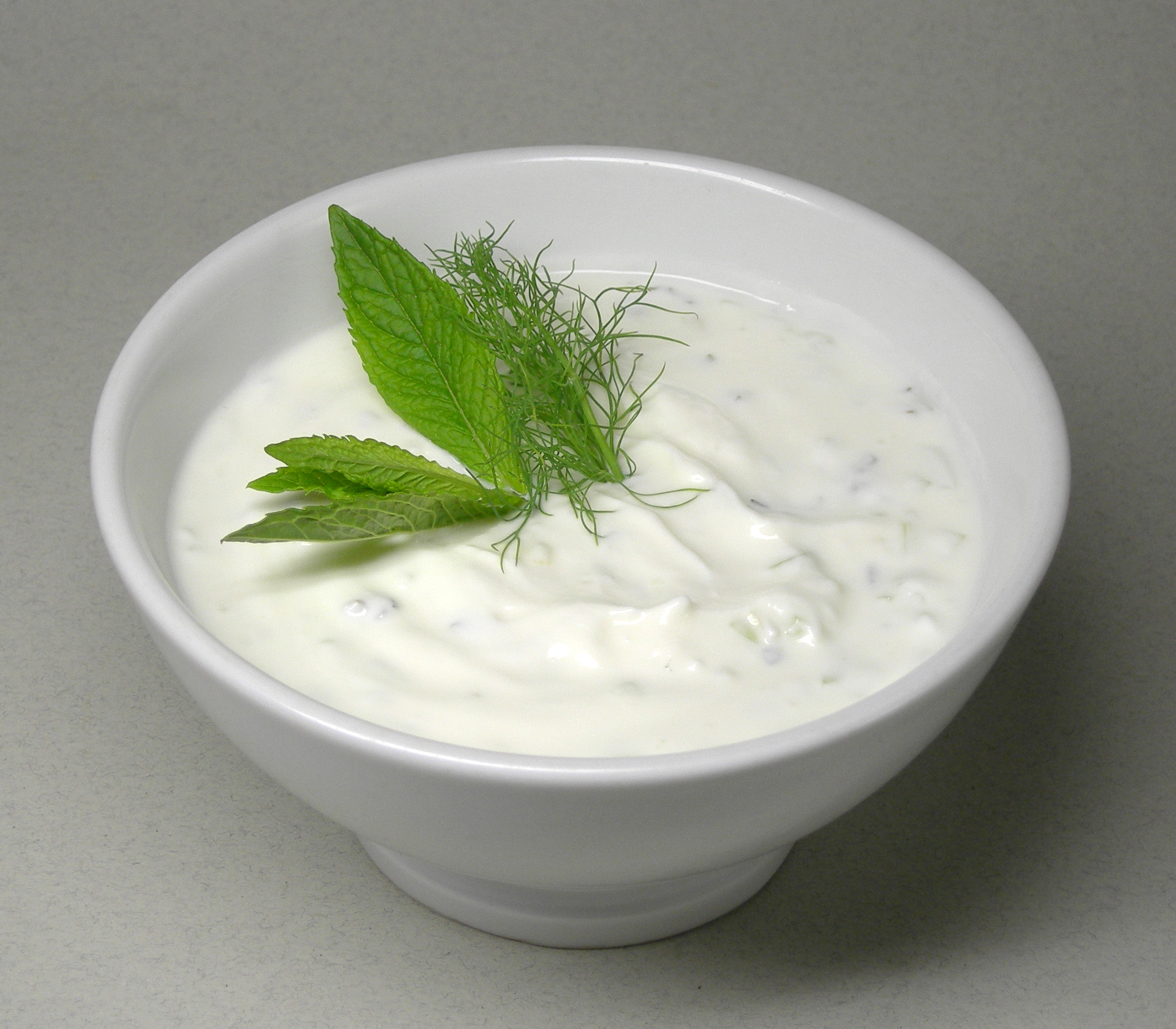
Tzatziki is the cool, garlicky yogurt dip that turns up beside almost everything in Greek cooking: grilled souvlaki, warm pita, fried vegetables, or just a spoon and some bread. It is thick strained yogurt mixed with grated cucumber, garlic, olive oil, and herbs, and it takes fifteen minutes to make. The technique is nearly nothing. The two things that separate great tzatziki from watery, bland tzatziki are draining the cucumber and letting the finished dip rest so the garlic mellows and the flavors settle.
A Greek Staple
Tzatziki is served across Greece as a dip, a sauce, and part of a meze spread. It is the standard partner to grilled meats, spooned into souvlaki and gyro wraps, dolloped beside skewers, and set out with bread at the start of a meal. Similar yogurt-and-cucumber preparations exist across the eastern Mediterranean and the Balkans under different names, but the Greek version, heavy with garlic and olive oil, has its own distinct character. It is one of those foundational recipes that, once you can make it, quietly improves a dozen other dishes.
The Yogurt
Thick, strained Greek yogurt is the base, and its body is what gives tzatziki its dense, scoopable texture. Full-fat yogurt makes the richest, creamiest dip; low-fat works but is thinner and less satisfying. If you only have regular unstrained yogurt, strain it first through cheesecloth or a fine sieve for an hour or two to thicken it, or the tzatziki will be loose. The quality of the yogurt shows, since it is most of the dip, so use a good one with a clean, tangy flavor.
Drain the Cucumber
The single most important step is getting the water out of the cucumber. Grate it, toss it with a little salt, and let it sit for ten minutes, which draws out its moisture, then squeeze it dry with your hands or in a clean towel with real force. Skipping this leaves a watery dip that turns thin and puddles on the plate within minutes. A well-squeezed cucumber keeps the tzatziki thick and lets it hold its texture. Grate the cucumber rather than dicing it, so it distributes evenly and disappears into the yogurt.
Garlic and Seasoning
Tzatziki is meant to be garlicky, and grating the garlic rather than chopping it lets it melt into the yogurt with no raw chunks. Start with a few cloves and add more to taste, remembering that the garlic bite softens as the dip rests, so it will be milder tomorrow than tonight. Olive oil adds richness and a fruity note, a little red wine vinegar or lemon juice brings brightness, and fresh dill or mint is the traditional herb. Salt ties it together. Taste and balance the garlic, salt, and acidity before chilling.
Rest Before Serving
Tzatziki is better after an hour in the fridge than straight from the bowl. The rest lets the flavors meld and, importantly, tames the sharp edge of the raw garlic into something rounder. Made a few hours or a day ahead, it only improves, which makes it ideal to prepare before a meal or a party. Serve it cold, with a drizzle of olive oil and a little extra herb on top. It keeps three or four days refrigerated, though it may weep slightly, so give it a stir before serving again.
How to Use It
Tzatziki goes with far more than souvlaki. Spread it in wraps and sandwiches, spoon it over grilled or roasted vegetables, serve it as a dip with warm pita and raw vegetables, or set it alongside fried zucchini and eggplant. It cools spicy food and cuts rich, grilled meats. As part of a meze table it sits among other dips and small plates. Because it keeps well and improves overnight, a batch made at the start of the week earns its place in the fridge many times over.
Getting the Texture Right
Texture is where tzatziki succeeds or fails, and it comes down to two variables you control: the thickness of the yogurt and the dryness of the cucumber. Thick strained yogurt and a well-squeezed cucumber give a dense dip that holds its shape on a spoon and clings to a piece of pita. Thin yogurt or a wet cucumber gives a soupy sauce that runs off everything. If your finished tzatziki turns out looser than you want, straining it in a fine sieve for an hour tightens it back up. Aim for a texture you could mound, not pour, and the dip will do its job at the table.
Common Questions
Why is my tzatziki watery?
The cucumber was not squeezed dry, or the yogurt was too thin. Grate and salt the cucumber, then squeeze out all its liquid, and use thick strained Greek yogurt. Straining regular yogurt first also helps.
Dill or mint?
Both are traditional. Dill is the most common in Greek tzatziki, with mint a fresh alternative. Some cooks use a little of each. Choose by preference; the dip works with either.
How long does it keep?
Three to four days refrigerated. The garlic mellows over time and the dip may release a little liquid, so stir it before serving. The flavor is best from a few hours after making through the next day.
Tzatziki is a Greek dip and sauce of strained yogurt with cucumber and garlic, served across Greece with grilled meats, bread, and vegetables.