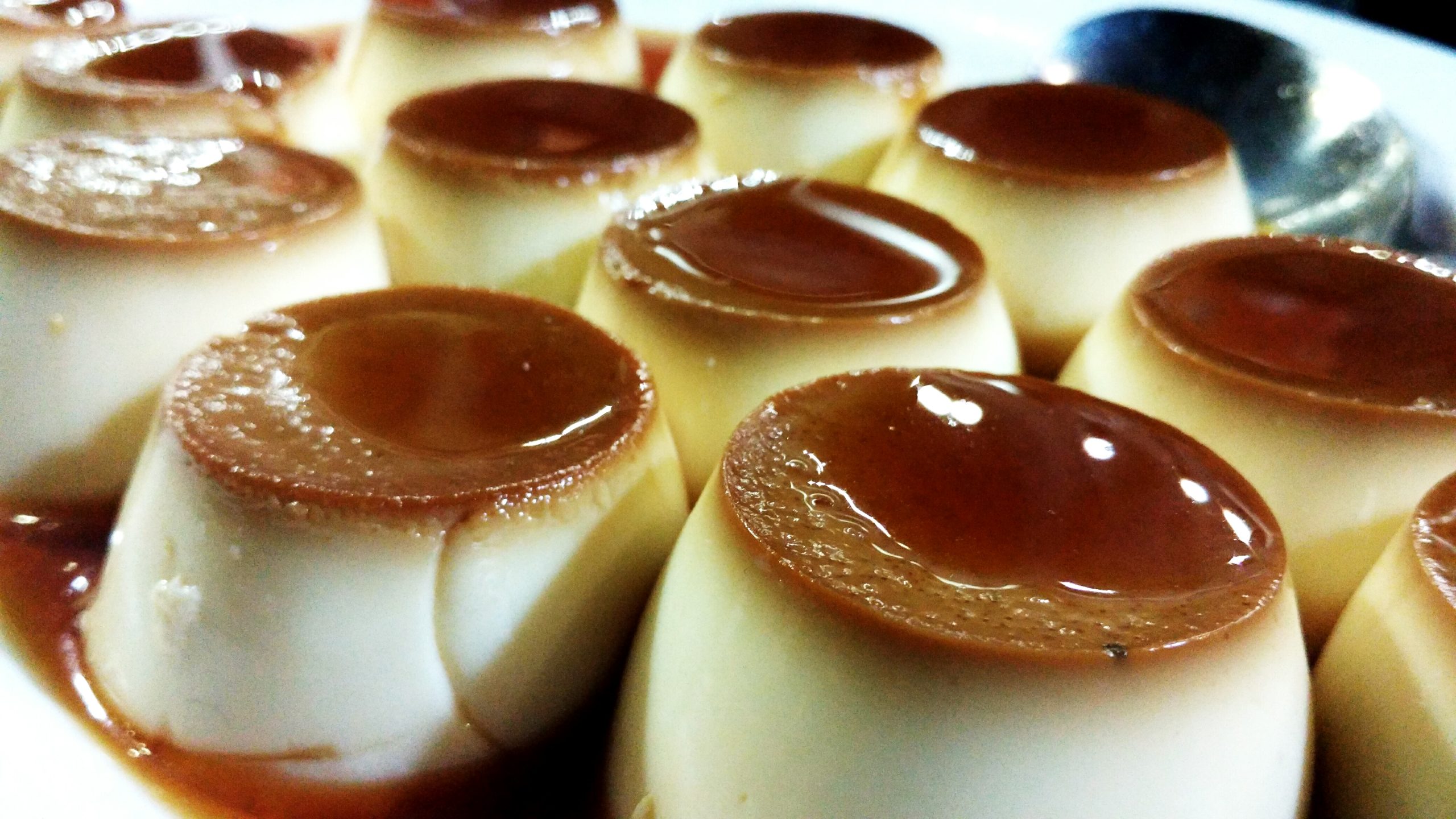
Leche flan is the Philippines’ crowning custard: a dense, satiny caramel flan made rich and golden with a small mountain of egg yolks and two kinds of canned milk. It is denser and sweeter than the European creme caramel it descends from, steamed rather than baked in most homes, and turned out of its mold so the amber caramel runs down over the top. It appears at fiestas and Christmas tables, tops halo-halo, and stands alone as the dessert Filipino grandmothers are judged by.
A Spanish Custard Made Filipino
Flan came to the Philippines with Spanish colonization, part of a long culinary inheritance that also gave the country adobo’s name, embutido, and much of its fiesta table. Filipino cooks made it their own by enriching it heavily, using egg yolks alone rather than whole eggs and reaching for the canned condensed and evaporated milk that became pantry staples. The result is far denser and more decadent than a French creme caramel. The name leche flan, milk flan, points straight at that richness. It is a colonial import fully naturalized into Filipino dessert.
Yolks, and Only Yolks
The single biggest difference between leche flan and a lighter custard is the eggs. Leche flan uses yolks only, often ten or a dozen for one batch, which gives it that heavy, silky, almost fudgy texture and its deep yellow color. The whites are left out entirely, so save them for meringue, another dessert, or an omelet. This heavy use of yolks is not a variation; it is the definition of the dish. A recipe using whole eggs makes a fine custard, but it is not leche flan.
The Caramel
The bottom of the mold gets a layer of caramel that becomes the sauce when the flan is inverted. Melt sugar slowly over low heat until it turns a clear amber, watching closely because caramel goes from perfect to burnt in seconds, and swirl it to coat the base of the mold. Traditional leche flan is made in a llanera, an oval metal tin, and many cooks caramelize the sugar directly in the tin over a flame. Let the caramel harden before the custard goes on top; it will melt back into sauce during cooking and chilling.
Mixing and Straining
Whisk the yolks with condensed milk, evaporated milk, and a flavoring, vanilla or, traditionally, a strip of lime or calamansi zest to cut the richness. Whisk gently rather than beating in air, since bubbles become holes in the finished flan. Then strain the mixture through a fine sieve before pouring it over the caramel; straining catches any stray bits of white or chalaza and is the simplest guarantee of a perfectly smooth custard. Pour it into the caramel-lined molds and cover them with foil to keep condensation from dripping onto the surface.
Gentle Steaming
Most Filipino homes steam leche flan rather than bake it, and the key word is gentle. Steam over low, steady heat for forty to fifty minutes, until the custard is set but still wobbles slightly in the center; it firms further as it chills. Too much heat is the classic mistake, causing the custard to bubble and cook into a spongy, hole-riddled texture instead of a silky one. If you prefer the oven, bake the molds in a water bath at a low temperature for a similar result. Either way, low and slow wins.
Chilling and Unmolding
Leche flan needs to chill thoroughly, at least four hours and better overnight, both to set fully and to let the caramel loosen back into a pourable sauce. To serve, run a thin knife around the edge, place a plate over the mold, and invert in one confident motion; the flan drops out and the amber caramel flows over and around it. Serve it cold, in slices or whole, on its own, or use it to crown a glass of halo-halo. Made ahead and chilled, it is the ideal do-nothing dessert for a party.
Leche Flan for Celebrations
Leche flan is a party dessert above all, and its make-ahead nature is the reason. Because it must chill overnight anyway, it is the dish you prepare the day before a fiesta, Christmas, or birthday and pull from the fridge when the meal ends, needing nothing but a plate and a confident flip. It scales easily by lining up more molds, travels well covered, and holds several days chilled. It also does double duty as a component, crowning halo-halo or layered into other Filipino sweets. For a cook who wants one reliable dessert that impresses without last-minute work, leche flan is the answer generations of Filipino households have already chosen.
Common Questions
Why is my flan full of holes?
The heat was too high while cooking, or too much air was beaten into the custard. Steam or bake gently, whisk without foaming, and strain the mixture. Low, steady heat gives the silky texture.
Do I need a llanera mold?
No. The traditional oval tins give the classic shape, but any metal or heatproof mold, ramekins, or a round pan works. Adjust the cooking time for depth: shallower molds set faster, deeper ones slower.
What do I do with the leftover egg whites?
Save them. They keep several days refrigerated or freeze well, and they make meringue, macaroons, or an egg-white omelet. Many Filipino bakeries turn flan whites into other sweets, so nothing goes to waste.
Leche flan is the Filipino take on caramel custard brought by Spanish colonizers, richer and denser than its European cousin thanks to a generous load of egg yolks.