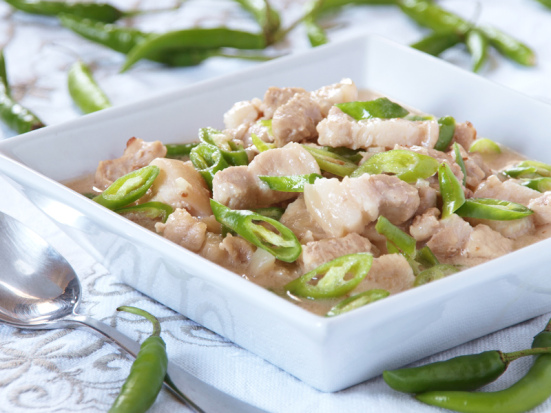
Bicol Express is pork belly simmered in coconut milk with a serious load of chili and a savory backbone of shrimp paste. It is rich, creamy, and genuinely hot, the coconut softening the fire without putting it out. The dish comes from Bicol, a region in the southern part of Luzon where coconuts grow everywhere and hot peppers turn up in nearly everything, so a stew that leans hard on both is the local signature. Over rice, it is comfort food with a kick that keeps you reaching for the spoon.
Named for a Train
The dish takes its name from the Bicol Express, the passenger train that once ran between Manila and the Bicol region. The popular account credits a Manila cook with creating and naming the dish in the 1970s, inspired by the region’s fiery coconut cooking and the train that served it. Whatever the exact origin, the name stuck and the dish spread nationwide. In Bicol itself, similar chili-and-coconut pork dishes long predate the modern name, part of a regional cuisine built on gata, coconut milk, and siling labuyo, the small hot chili.
Coconut and Chili, the Bicol Pair
Bicolano cooking is defined by two things: coconut milk in abundance and heat that runs hotter than most of the Philippines. Bicol Express puts both front and center. The coconut milk gives the stew its creamy body and a gentle sweetness that tempers the peppers, while the chilies, both mild long green ones for flavor and small hot ones for fire, provide the punch the region is known for. Getting the balance right is the whole game: enough heat to make it a Bicol dish, enough coconut to keep it eatable.
The Pork
Pork belly is the classic cut, its fat melting into the coconut sauce and turning the whole pot silky. Slice it into strips or bite-size pieces so it cooks in a reasonable time and takes on the sauce. Some cooks brown the pork first for a deeper flavor; others simply simmer it. The fat is part of the point here, so leaner cuts make a thinner, less satisfying stew. If you want it a touch lighter, a mix of belly and shoulder keeps richness while cutting some of the fat.
Shrimp Paste for Depth
The savory foundation comes from bagoong, fermented shrimp paste, which brings salt and a deep, funky umami that plain salt cannot. Cook it briefly with the aromatics and pork before the coconut milk goes in, so its rawness mellows and its flavor spreads through the dish. A little goes a long way, and it also seasons the stew, so hold back on additional salt until you have tasted. Shrimp paste is sold at every Filipino and most Asian groceries; there is no true substitute for the character it gives.
Simmering to a Glossy Sauce
Once the coconut milk goes in, keep the heat at a gentle simmer rather than a hard boil, which can cause the coconut milk to separate. Let it cook down slowly until the pork is tender and the sauce reduces to a thick, glossy coating; this takes around thirty minutes, plus another few after the chilies join. The finished sauce should cling to the pork, not pool thin around it. Some separation of oil is normal and even prized in many Filipino coconut dishes, so a little sheen of coconut oil on top is a good sign, not a fault.
Serving and Heat Control
Bicol Express is rich and spicy, so it wants plenty of plain rice to carry it and cool the palate. For a milder pot, use the long green chilies for flavor and hold back the small hot ones, adding them at the end so you can taste as you go. For a fully Bicolano level of heat, pile them in. Leftovers keep three days and the flavor deepens, though the coconut sauce thickens further; loosen it with a splash of coconut milk or water when reheating over low heat.
Common Questions
How hot is Bicol Express supposed to be?
Traditionally quite hot, since Bicol cooking runs spicy. You control it through the number of small chilies. Use mostly long green chilies for a mild version and add the hot ones gradually to reach the level you want.
Can I make it without shrimp paste?
Shrimp paste gives the dish its savory depth, so leaving it out changes the character. Fish sauce can stand in for salt and some umami, but the funky note of bagoong is part of what makes this Bicol Express.
Why did my coconut sauce curdle?
It boiled too hard. Keep coconut milk at a gentle simmer, stir now and then, and let it reduce slowly. A little oil separating out is normal and desirable; a broken, grainy sauce comes from aggressive heat.
Bicol Express is a chili-and-coconut pork stew named for the Bicol region and its passenger train, from a part of the Philippines where coconut and hot peppers define the cooking.