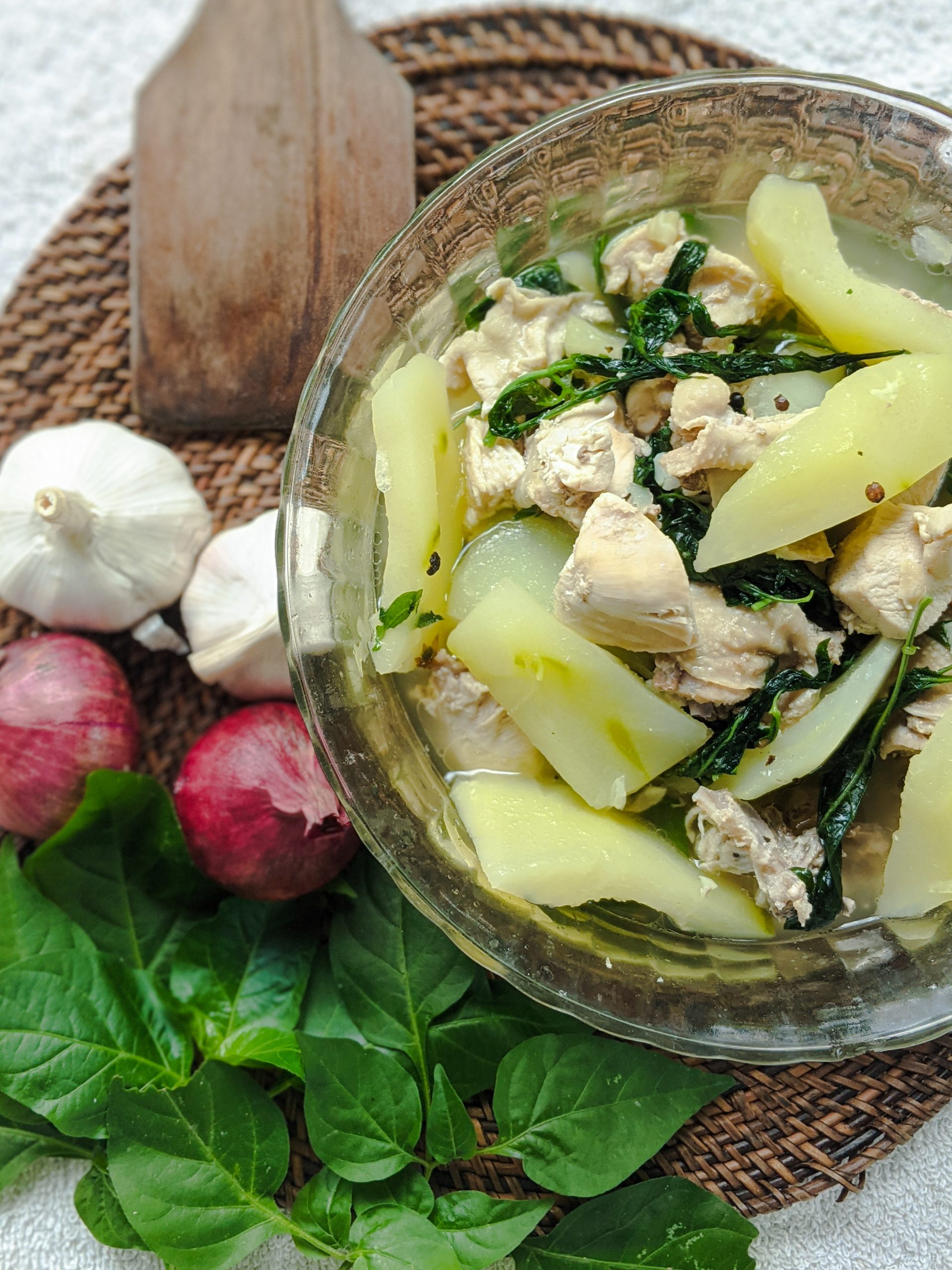
Chicken tinola is the soup a Filipino mother makes when someone is under the weather and the soup a Filipino family eats on an ordinary Tuesday: a clear, gingery broth with tender chicken, wedges of green papaya, and a handful of leafy greens. There is nothing rich or heavy about it. Its whole appeal is warmth, the clean heat of a lot of fresh ginger in a light broth, spooned over rice. It is easy, honest, and quietly one of the most beloved dishes in the country.
A Household Classic
Tinola is home cooking to the core, made in kitchens across the Philippines without ceremony. Its cultural footprint runs deep enough that it appears in Jose Rizal’s 1887 novel Noli Me Tangere, where the serving of tinola carries social meaning at the table, a detail Filipino students still learn in school. That literary cameo aside, tinola’s real fame is domestic: it is the gentle, restorative bowl associated with care, recovery, and the plain comfort of a weeknight dinner that asks little and gives a lot.
Ginger Is the Point
If sinigang is defined by sour and kare-kare by peanut, tinola is defined by ginger. Use more than feels normal, sliced thin so it perfumes the whole pot, because that clean, warming heat is the soul of the dish and the reason it feels medicinal in the best sense. Sauteing the ginger with garlic and onion at the start blooms its aroma before the water goes in. This is not a soup where ginger hides in the background; it leads, and a timid hand with it produces a bland, forgettable broth.
The Chicken and a Clear Broth
A whole chicken cut into pieces, bone in, gives the best broth, since the bones lend body to what is otherwise a very light soup. Native or free-range birds are traditional and make a deeper stock, but any chicken works. Brown the pieces lightly, then simmer them gently and skim the foam that rises early, which keeps the broth clear rather than cloudy. That clarity is part of tinola’s character; it is meant to look clean and golden, not murky. Fish sauce, patis, seasons it with salt and a savory backbone.
Papaya and Greens
The traditional vegetable is green, unripe papaya, cut into wedges, which softens in the broth into something between a squash and a melon, mild and faintly sweet. Chayote, called sayote in the Philippines, is the standard substitute where green papaya is scarce and behaves almost identically. The leafy green is classically dahon ng sili, chili leaves, prized for a faint pepperiness; spinach, moringa leaves, or bok choy stand in easily. Both go in near the end, the papaya to soften without collapsing and the greens for a single minute so they stay bright.
Serving and Variations
Tinola is served hot with rice, the broth spooned over each bite the way Filipinos eat most soups. A small dish of fish sauce with chili on the table lets people season to taste. The dish takes gentle variation well: some cooks add a splash of rice-washing water for a slightly cloudy, richer broth, others toss in malunggay leaves for their nutrition. Leftovers keep three days and the flavor holds, though the greens fade, so add a fresh handful when reheating. It does not need the freezer; tinola is quick enough to make fresh whenever it is wanted.
Tinola in the Everyday
Part of tinola’s staying power is how forgiving it is. It uses one pot, cheap ingredients, and a technique any beginner can manage on the first try. It scales up for a family or down for one, and it fits the Filipino rhythm of a hot soup with rice at almost any meal. Cooked with care, plenty of ginger, a clear broth, greens added late, it rises well above its simple parts, which is exactly why it has stayed on Filipino tables for well over a century.
A Bowl for Every Season
Tinola shifts easily to fit the cook and the weather. In colder months, extra ginger and a longer simmer make it warming and deep; in warmer weather, a lighter hand keeps it clean and refreshing. It welcomes what the kitchen holds: a handful of malunggay leaves for nutrition, a few chili leaves for fragrance, or an extra vegetable when the fridge is full. Some families finish it with a splash of patis and a crack of pepper at the table, others keep it plain. Because it asks so little and gives real comfort, tinola stays in rotation year-round, the quiet workhorse of the Filipino soup pot.
Common Questions
What if I cannot find green papaya?
Chayote is the standard substitute and behaves the same in the broth. Green (unripe) papaya and chayote are interchangeable in tinola, so use whichever your market carries.
Can I use only chicken breast?
You can, but bone-in pieces give a far better broth. If using breast, keep the simmer gentle and short so it does not dry out, and consider adding a few wings or thighs for body.
Is tinola spicy?
No. Its heat is the warmth of ginger, not chili. The chili leaves add fragrance rather than fire. Add fresh chili at the table if you want an actual kick.
Tinola is a clear ginger chicken soup found in Filipino homes across the country, a gentle everyday dish famously mentioned in Jose Rizal's novel Noli Me Tangere.