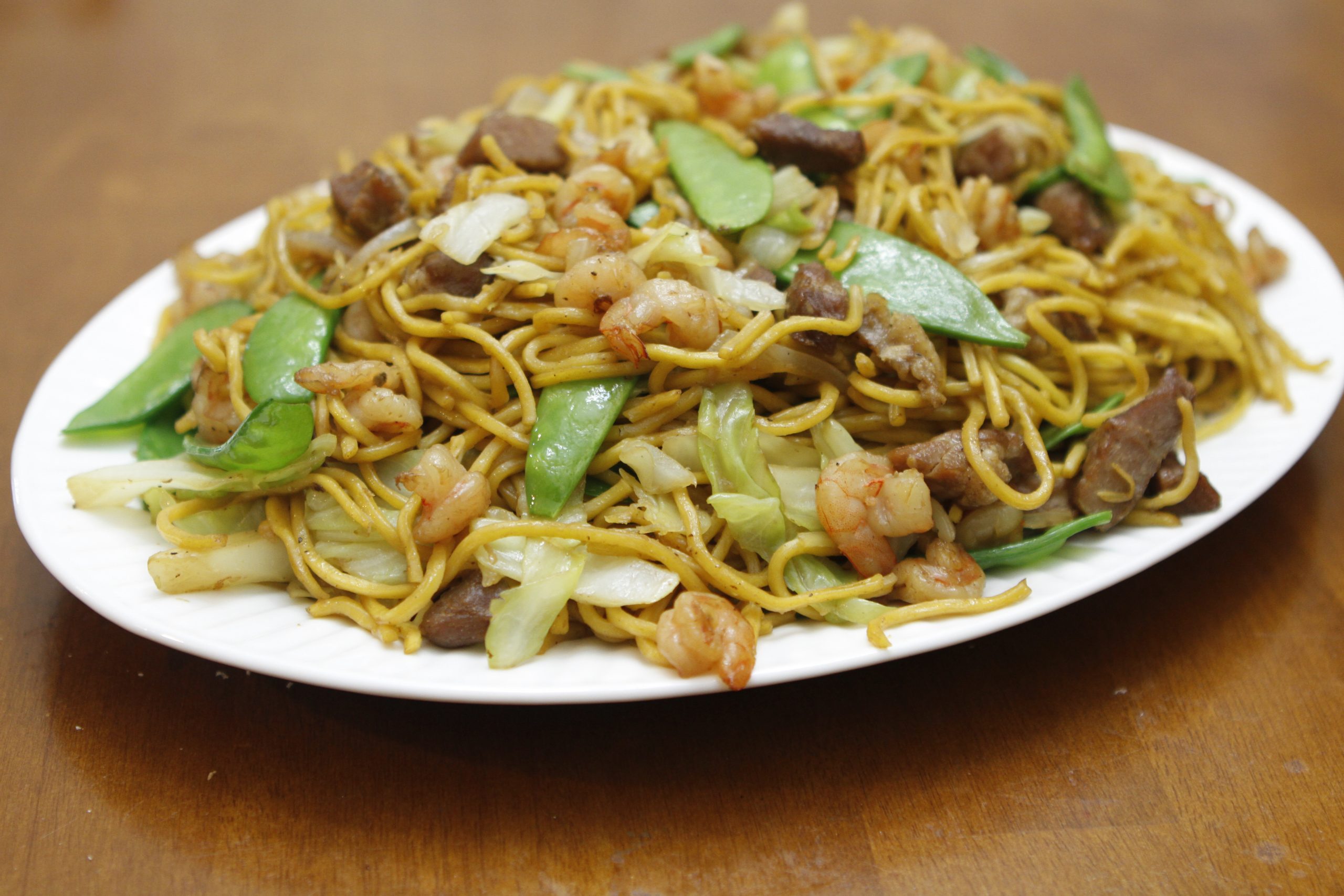
Pancit bihon is the noodle dish that shows up at every Filipino birthday, and the reason is baked into the culture: long noodles stand for long life, so a party without pancit feels incomplete. Thin rice noodles are stir-fried with chicken, shrimp, and a pile of vegetables, then seasoned with soy and fish sauce and brightened with a squeeze of calamansi at the table. It feeds a crowd cheaply, comes together in under an hour, and tastes like celebration.
A Chinese Root, a Filipino Dish
Pancit arrived with Chinese traders and settlers centuries ago, and the word itself comes from a Hokkien term for convenient food. Over generations it became thoroughly Filipino, splitting into dozens of regional versions named for their noodle or their town: pancit canton with wheat noodles, pancit malabon heavy with seafood, pancit palabok under a shrimp sauce. Bihon, made with thin rice vermicelli, is the everyday classic and the one most associated with home parties. Its Chinese ancestry is real and its Filipino identity is complete.
The Noodle
Bihon are thin, dry rice noodles, sold in bundles at any Asian grocery. They do not boil like pasta; instead they soak in warm water until pliable, then finish cooking in the pan by absorbing seasoned broth. Under-soaked noodles stay brittle, over-soaked ones turn to paste, so ten minutes and a pliable, not soft, texture is the target. Drain them well before they hit the pan. If you can only find pancit canton, the wheat version, the method is nearly identical, just adjust the liquid since wheat noodles drink less.
Cook in Stages
The secret to good pancit is not crowding one pan with everything at once. Cook the shrimp, then the vegetables, and set each aside as it finishes, so the shrimp stay plump and the carrots, beans, and cabbage keep their color and a little crunch. Everything rejoins the pan at the very end. Vegetables dumped in early and left to stew turn gray and limp, which is the difference between a bright party pancit and a sad cafeteria one. The extra bowls on the counter are worth it.
The Noodles Drink the Broth
Once the proteins and vegetables are out, the pan becomes a shallow bath: chicken broth, soy sauce, and fish sauce simmered together. The soaked noodles go in and you toss them constantly as they absorb the liquid, which is how they take on flavor and color instead of staying pale and bland. Add the broth in stages if the noodles drink it all before turning tender, and stop while they still have a little bite. This absorption step, not the seasoning bottle, is where pancit gets its taste.
Bringing It Together
With the noodles cooked and seasoned, fold the reserved vegetables, shredded chicken, and shrimp back in and toss just to heat through. Taste and adjust with more soy or fish sauce; the balance runs savory with a gentle salt-and-umami depth, not dark and heavy. Pile it on a platter, scatter sliced scallions or a little fried garlic on top, and set wedges of calamansi or lemon alongside. The citrus squeezed over each serving is the finishing move that makes the whole dish snap into focus.
Party Food and Leftovers
Pancit is built for a crowd. It scales up easily, holds at room temperature on a buffet, and tastes good warm or barely warm, which is why it anchors so many Filipino gatherings. Leftovers keep three days and reheat well in a pan with a splash of broth to loosen the noodles. It also welcomes whatever your fridge holds, roast pork, Chinese sausage, extra cabbage, so treat the recipe as a template. Make a big batch; pancit is one of the few party dishes people are genuinely happy to see again the next day.
Knowing the Pancit Family
Bihon is one entry in a large clan, and recognizing the others helps at a Filipino table. Pancit canton uses thick wheat noodles and fries up chewier. Pancit palabok wears a thick orange shrimp sauce with toppings rather than a stir-fry. Pancit malabon piles on seafood, and pancit habhab from Lucban is eaten off banana leaf with no fork. Many households cook bihon and canton together in one pan, a mix called bam-i. Learn the bihon method here and you hold the key to most of the family, since the stir-fry logic barely changes from one noodle to the next.
Common Questions
Why did my noodles turn mushy?
They soaked too long or absorbed too much liquid. Soak only until pliable, add the broth in stages, and pull the noodles while they still have a slight bite; they soften a little more off the heat.
Can I make it vegetarian?
Yes. Use vegetable broth, skip the meat and shrimp, and add tofu and more vegetables like snow peas and bell pepper. Swap the fish sauce for soy or a vegetarian fish sauce to keep it fully plant-based.
What is calamansi, and what replaces it?
Calamansi is a small, fragrant Philippine citrus, tart with a hint of orange. Lemon or lime is the standard substitute; use a little less since they are sharper. Bottled calamansi juice is sold frozen at Filipino groceries.
Pancit came to the Philippines through Chinese traders and became fully Filipino, served at birthdays and celebrations where long noodles stand for long life.