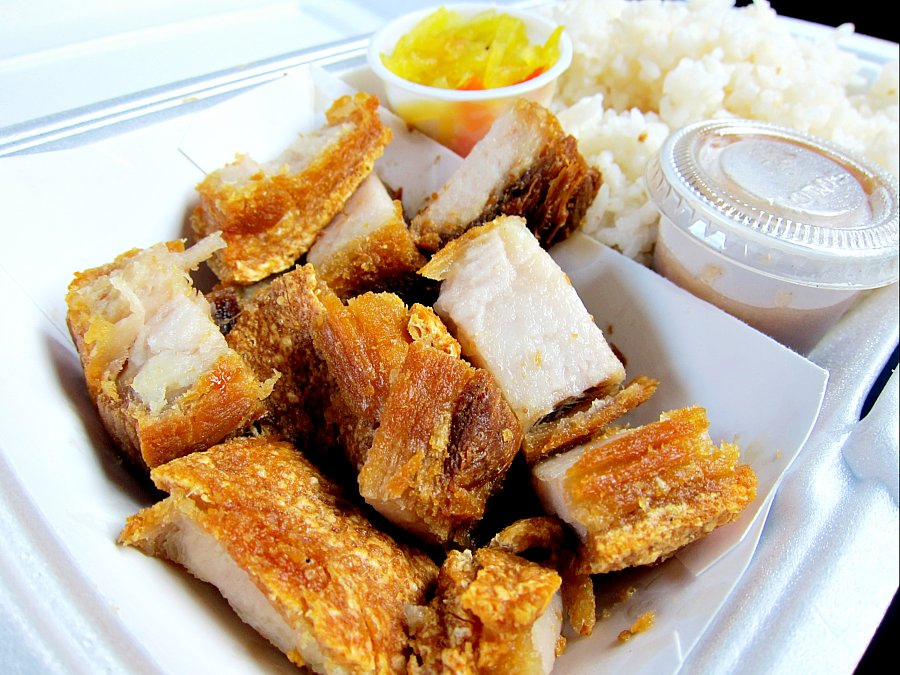
Lechon kawali is crispy pork belly done the Filipino way: boiled until the meat turns meltingly tender, dried hard, then deep-fried until the skin blisters into crackling that shatters at a touch. It is the home cook’s route to the sound and texture of whole-roast lechon, the pig that anchors Filipino celebrations, without a spit or a fire pit. The name says it plainly, lechon from the pan, kawali. Served with a tangy dip and rice, it is a dish worth the splatter and the wait.
Lechon Without the Whole Pig
Whole lechon, a pig roasted slowly over coals until its skin turns to glass, is the centerpiece of Filipino fiestas, weddings, and Christmas tables, and Cebu’s version is famous across the country. It is also a project no home cook attempts on a Tuesday. Lechon kawali is the everyday answer, capturing the same prized contrast, crackling skin against rich, tender meat, from a slab of belly and a pan of oil. It shares the celebration’s flavor while fitting an ordinary kitchen and an ordinary evening.
Boil First, for Tender Meat
The two-step method is what makes this work. First the belly simmers in seasoned water with onion, garlic, bay, peppercorns, and plenty of salt until it is fork-tender, around forty-five minutes. This cooks the meat through and seasons it deep, so the later frying only has to crisp the skin rather than cook the interior. Skimming keeps the pot clean, and the aromatics matter, since the belly absorbs their flavor while it simmers. A slab that goes straight to the fryer without this step ends up tough inside and burnt outside.
The Drying Step Nobody Should Skip
Crackling is a battle against water. After boiling, the skin is soft and wet, and wet skin fries into leather, not glass. The fix is drying: cool the belly, then leave it uncovered in the fridge for several hours or, better, overnight, so the skin surface dehydrates and tightens. Just before frying, pat every face bone-dry with paper towels. This drying is the single biggest factor in whether your lechon kawali shatters or merely chews, and it is the step home cooks most often rush. Give it the time.
Frying Safely
Deep-frying wet-skinned pork is genuinely hazardous, so respect the oil. Heat it to around 350 F in a deep, heavy pot filled no more than halfway. Dry the belly thoroughly, lower it in slowly with tongs or a spider, and stand back, because even dried skin will spit as trapped moisture escapes. A splatter screen and long sleeves are sensible. Fry, turning as needed, for twelve to fifteen minutes until the skin has blistered all over and the whole slab is deep golden. Keep children and crowded counters away from the pot while it works.
Chopping and Dipping
Rest the fried belly five minutes so the juices settle and the skin sets, then chop it into bite-size pieces with a heavy knife or cleaver; the crack of the blade through the skin is the sound you worked for. The traditional partners are lechon sauce, a sweet-savory liver-based gravy, or a sharp dipping vinegar with garlic, chili, and pepper, sometimes called sawsawan. The rich pork wants that acid to cut it. Pile the pieces over rice, put a dish of dip beside them, and the meal needs nothing else.
Keeping and Reviving
Lechon kawali is at its peak in the first hour, when the skin is loudest. Leftovers keep three days refrigerated, and the way to bring the crackle back is heat, not the microwave: a hot oven, an air fryer, or a quick second fry re-crisps the skin, while a microwave turns it chewy. You can also boil and dry the belly a day ahead and fry it fresh right before serving, which is how many home cooks handle it for a party. That splits the work and puts the loud, hot pork on the table exactly when guests arrive.
Lechon Kawali Against Bagnet
Two Filipino crispy pork bellies get confused, and the difference is worth knowing. Lechon kawali is boiled then deep-fried once, eaten fresh and juicy the same day. Bagnet, the Ilocano specialty, is boiled and then fried in stages over days, air-dried between fries, which drives out far more moisture and gives a drier, longer-keeping, even crunchier result. Both are excellent; bagnet is the project version and lechon kawali the everyday one. If your first lechon kawali leaves you wanting still louder crackling, bagnet is the next door to knock on, but master the pan version first.
Common Questions
How do I guarantee crispy skin?
Dry the boiled belly uncovered in the fridge overnight and pat it bone-dry before frying. Hot enough oil, around 350 F, does the rest. Moisture is the only thing standing between you and crackling.
Can I use an air fryer instead of deep-frying?
Yes. After boiling and drying, air-fry the belly at high heat until the skin blisters, turning once. The crackling is very good and the process is far safer, though a deep fry still gives the most dramatic result.
What is lechon sauce made of?
It is a sweet-savory gravy built on liver or liver spread, vinegar, sugar, and breadcrumbs. Bottled versions are sold at Filipino groceries. A garlicky spiced vinegar is the simpler, equally traditional alternative.
Lechon kawali takes the crackling-skin appeal of the Philippines' celebrated whole-roast lechon and delivers it from a frying pan, kawali, so a home cook can make it any night.