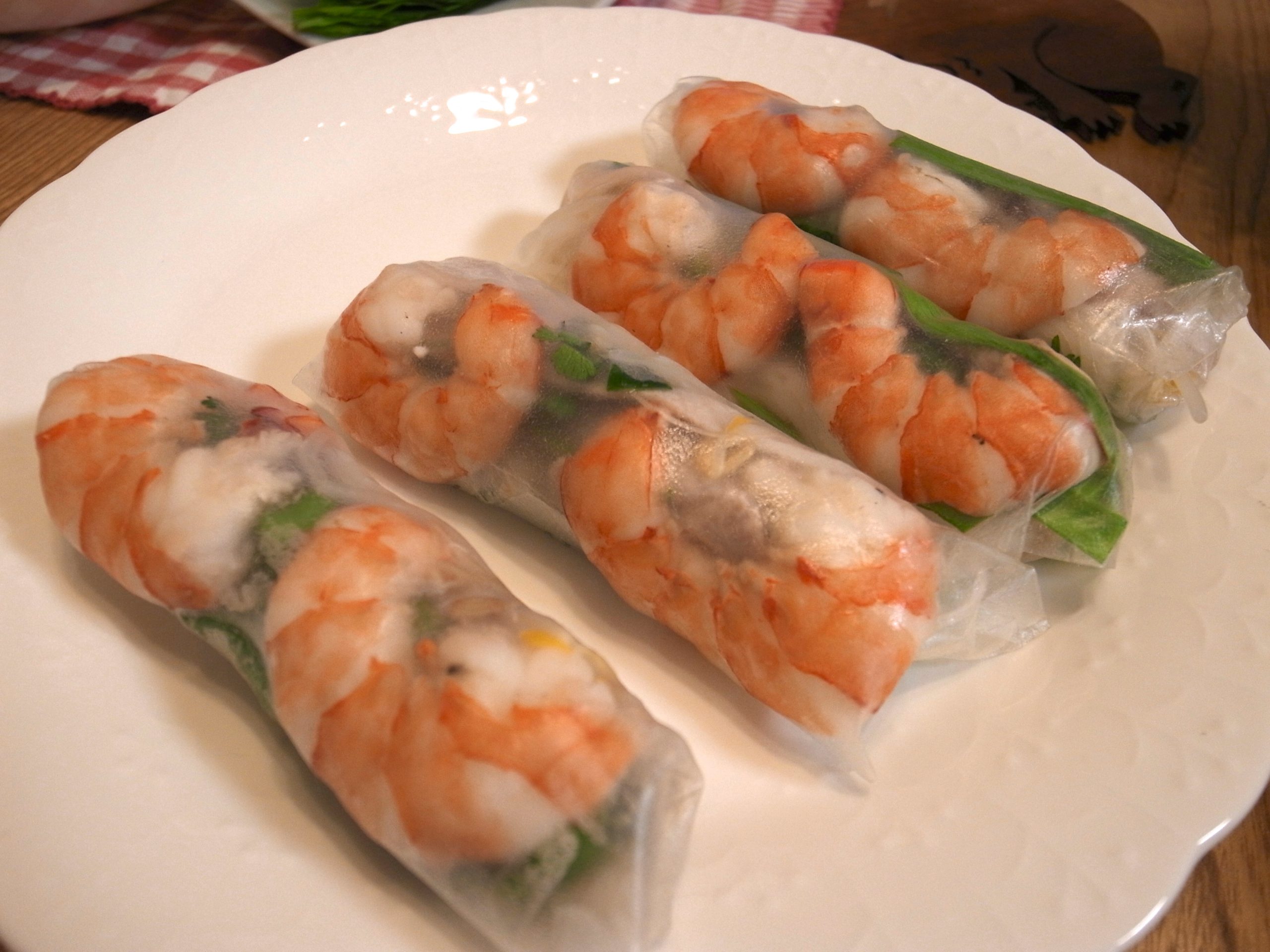
Fresh spring rolls, goi cuon, are Vietnam’s coolest dish in every sense: soft rice paper wrapped around plump shrimp, tender pork, springy vermicelli, and a garden of lettuce and herbs, served at room temperature with a rich hoisin-peanut sauce. Nothing is fried; everything is light, fresh, and clean. They look like restaurant work, but they are simply an exercise in rolling, and after two or three your hands learn it. The reward is a platter of translucent rolls with pink shrimp showing through, as pretty as anything you can make.
Fresh, Not Fried
Vietnamese spring rolls come in two distinct forms, and the difference matters. Goi cuon, the fresh or summer roll, is soft rice paper around cooked fillings and raw herbs, never fried, eaten cool. Cha gio, the fried spring roll, is a different dish entirely, crisp and hot. Goi cuon is the lighter of the two, a snack, starter, or light meal built on the Vietnamese love of fresh herbs and balance. The classic filling is shrimp and pork together, with rice vermicelli, lettuce, mint, and often a garlic chive poking out one end. It is health food that does not feel like a compromise.
The Fillings
The traditional pairing is boiled pork and poached shrimp. Boil pork belly or shoulder until just cooked and slice it thin; cook the shrimp, then halve them lengthwise so they lie flat and show their pink cut face through the wrapper. Rice vermicelli, cooked and well drained, gives the rolls body. Then the greens: soft lettuce, plenty of mint and cilantro, and garlic chives if you can find them. Prepare and arrange everything before you start rolling, because the assembly moves quickly once the rice paper is wet. Every element goes in cool, which is part of the charm.
Handling Rice Paper
Rice paper is the skill to learn, and it is a small one. Dip a wrapper in warm water briefly, just a few seconds, until it is pliable but not fully soft, then lay it on a damp cutting board or towel. It continues softening as you build the roll, so a brief dip is enough; an over-soaked wrapper turns sticky, stretchy, and tears. If one rips, throw it away and start again, since wrappers are cheap. Work one roll at a time and keep the finished rolls from touching each other, because the wrappers stick to themselves eagerly.
Rolling
Build the roll on the lower third of the softened wrapper: a piece of lettuce cradling herbs, a small bundle of vermicelli, and slices of pork. Fold the sides in, then roll upward once, snug. Now lay two or three shrimp halves, cut side up, on the wrapper just ahead of the roll, and finish rolling over them; this places the shrimp against the final layer so their pink shows through the translucent paper. Roll firmly, since a tight roll holds together and a loose one collapses at the first bite. A chive laid to stick out one end is the traditional flourish.
The Dipping Sauce
Goi cuon are mild by design, and the dipping sauce brings the punch. The classic is a hoisin-peanut sauce: hoisin warmed with peanut butter and a little water until smooth and pourable, topped with crushed roasted peanuts and, if you like, a dab of chili. Its sweet, rich depth against the cool, fresh rolls is the pairing that defines the dish. The other traditional option is nuoc cham, the bright lime-fish sauce dip, lighter and sharper. Serve one or both. A roll dragged through peanut sauce and eaten in two bites is the whole point of the exercise.
Serving Fresh Spring Rolls
Serve the rolls cool or at room temperature, whole or halved on the diagonal to show the layers, with the sauce alongside. They are best within a few hours of rolling; the wrappers dry out and toughen in the fridge, though covering them with a damp towel and plastic buys time. They do not freeze or keep overnight well, so roll what you will eat. For a party, set out the fillings and wrappers and let guests roll their own, which turns the dish into an activity. Light, fresh, and interactive, they suit warm weather especially well.
Common Questions
Why does my rice paper tear or stick?
It was soaked too long. Dip it only briefly, until pliable but not fully soft; it keeps softening as you work. Roll on a damp surface, and keep finished rolls separated, since the wrappers stick to each other.
Can I make them ahead?
They are best within a few hours. Cover finished rolls with a damp towel and plastic wrap at room temperature or briefly in the fridge. Overnight storage dries and toughens the wrappers, so roll close to serving time.
What can replace the pork or shrimp?
Tofu, cooked chicken, or extra vegetables and avocado all work inside the same wrapper with the same herbs and sauce. The formula is flexible: something savory, vermicelli, lettuce, and lots of herbs, rolled tight and dipped generously.
Goi cuon are Vietnamese fresh spring rolls, soft rice paper wrapped around shrimp, pork, rice vermicelli, lettuce, and herbs, served unfried at room temperature with a dipping sauce.