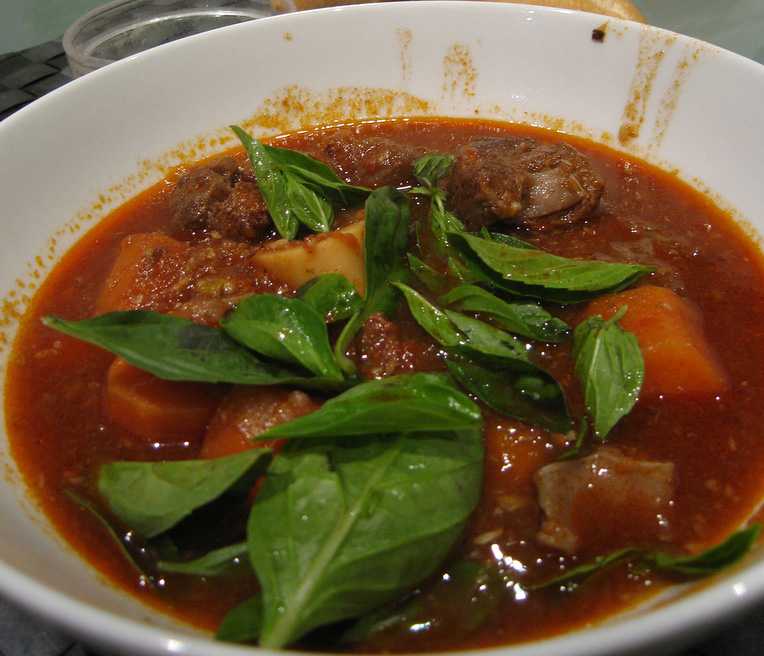
Bo kho is beef braised slowly with lemongrass, star anise, cinnamon, and five spice until the meat pulls apart and the broth runs a deep red-orange, thinner than a Western stew and closer to a soup. Chunks of sweet carrot go in near the end, herbs are piled on at the table, and a torn baguette is used to soak up the liquid. It is Saigon comfort food, eaten for breakfast as often as for dinner, and it asks almost nothing from the cook beyond time.
A French Stew in Vietnamese
Bo kho carries the mark of Vietnam’s colonial period, when French cooking entered the country’s kitchens and left behind the baguette, the coffee, and dishes like this one. It is related to the French braised beef with carrots, and the format is recognizable: seared beef, aromatics, long slow cooking, carrots added late. What makes it Vietnamese is everything layered on top, with lemongrass, fish sauce, star anise, and five spice replacing wine and herbs, and Chinese influence visible in the spicing. The result belongs to neither tradition entirely and is better for it.
The Beef
Use cuts with fat and connective tissue, since the long braise turns them silky while lean beef simply dries out. Chuck is the standard, and beef shank adds tendon that becomes meltingly soft after two hours; a mix of the two gives the best broth. Cut the meat into large chunks, roughly two inches, because smaller pieces disintegrate over that cooking time. Marinate them first with five spice, fish sauce, garlic, and ginger for at least half an hour, then sear them hard in batches to build the color and depth the finished stew depends on.
Lemongrass and Spices
Lemongrass is the defining aromatic and it goes in as whole bruised stalks rather than minced, so it can be pulled out before serving. Smash the stalks along their length with the back of a knife to open the fibers and release the oils. Star anise and cinnamon do the same work here as in pho, giving a warm background sweetness, and Chinese five spice powder ties the whole thing together. Ginger and garlic go into the marinade. Some cooks add makrut lime leaf, and a little chili gives heat for those who want it.
The Red Color
Bo kho is recognized by its red-orange broth, and the traditional source is annatto. Warm the seeds gently in oil until it turns a deep red, then strain them out and discard them, since the seeds themselves contribute little flavor. Many home cooks substitute tomato paste, which supplies both color and a tangy sweetness in one step and saves the separate preparation, while paprika is another common shortcut. The color is largely cosmetic, so use whichever is easiest, though annatto gives the most authentic shade.
The Braise
Cover the seared beef with water and coconut water, bring it up to a boil, and skim off the foam that rises in the first minutes for a cleaner broth. Then simmer it covered for around ninety minutes to two hours until the beef gives way completely. Coconut water is a southern Vietnamese habit that adds gentle sweetness without sugar and softens the salt of the fish sauce. Add the carrots for the final half hour so they stay in recognizable pieces. Keep the broth thin: Vietnamese stews sit closer to soup than to gravy.
Serving Bo Kho
Fish out the lemongrass, star anise, and cinnamon, then ladle the stew into bowls and top with Thai basil, cilantro, and sliced onion or scallion. The most common accompaniment is a crusty baguette, torn and dipped straight into the broth, with rice noodles and steamed rice as the other standard options. A small dish of salt, pepper, and lime juice for dipping the meat is a nice touch. Like every braise it tastes better the next day, so cook it ahead when you can, and the broth thickens slightly overnight as the gelatin from the shank sets.
Common Questions
What can I use instead of annatto?
Tomato paste is the most common substitute and adds tang along with color. Paprika works too. Annatto seeds warmed in oil give the most traditional red-orange shade, but the color is cosmetic and the stew tastes the same either way.
Can I use a pressure cooker?
Yes, and many Vietnamese households do. Sear the beef and cook the aromatics first, then pressure cook for around thirty-five minutes and add the carrots afterwards on the stove so they hold their shape.
Is bo kho a breakfast dish?
In Vietnam it is commonly eaten in the morning with bread, alongside pho and other hot dishes. It is equally at home as dinner, and it is a popular festive dish for Tet, when a large pot feeds a crowd over several days.
Bo kho is a Vietnamese beef stew flavored with lemongrass, star anise, and five spice, related to the French braised beef dishes that entered Vietnamese cooking during the colonial period.