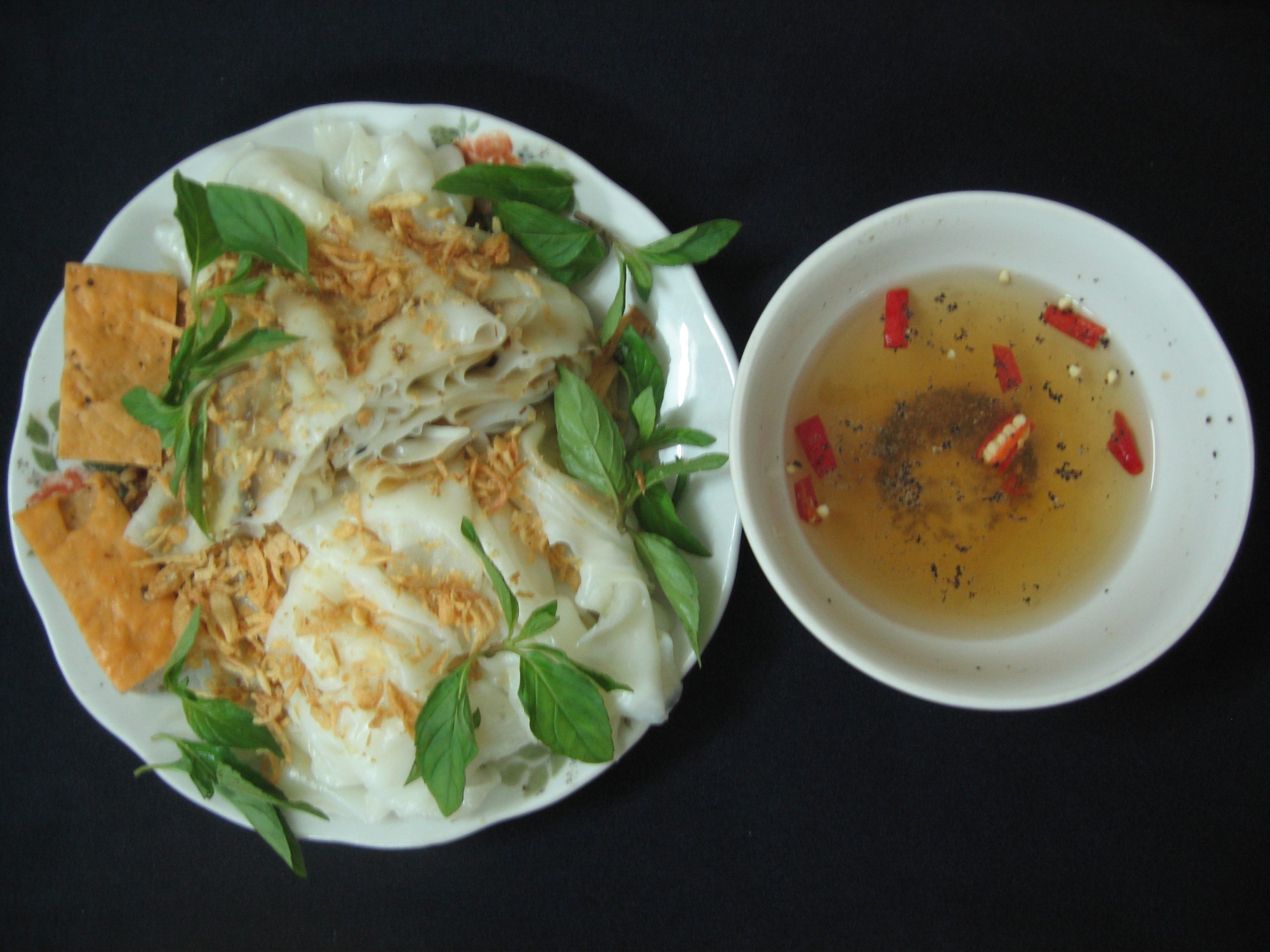
Banh cuon is rice batter steamed into sheets so thin they are almost see-through, rolled around a savory mix of ground pork and wood ear mushroom, then piled onto a plate under a shower of crisp fried shallots and eaten with a bowl of nuoc cham. It is soft, light, and slippery, a breakfast dish in Hanoi where morning eating is taken seriously. Making the sheets takes practice, and there is a straightforward pan method that gets very close to the traditional cloth steamer.
Hanoi in the Morning
Banh cuon comes from northern Vietnam and is particularly associated with Thanh Tri, an area of Hanoi with a long reputation for making it. The name means rolled, which describes it precisely. Watching it made is part of the experience: a vendor ladles batter onto a cloth stretched over boiling water, covers it for seconds, then lifts the finished sheet off with a flat bamboo stick in one motion. Regional versions differ noticeably, with northern sheets thinner and more transparent, southern ones thicker and sometimes filled with egg or jicama.
The Batter
Traditionally the batter is made from rice soaked and ground, and slightly fermented, which gives the sheets their faint tang and their elasticity. The home version uses rice flour with a proportion of tapioca starch, which supplies the stretch that stops the sheets tearing, mixed with a large amount of water into something as thin as milk, plus a spoonful of oil. Let it rest for at least half an hour before cooking. The rice flour settles quickly, so stir the batter every few sheets, or the later ones come out thick while the early ones were thin.
The Filling
The classic filling is ground pork cooked with minced wood ear mushrooms and shallots, seasoned with fish sauce and black pepper. Soak the dried wood ear until it swells, then chop it finely; its gentle crunch is what keeps the filling from being soft all the way through, and it is not an ingredient to skip. Some cooks add minced jicama or onion, which keeps the mixture moist. Cook it until dry rather than saucy, because any liquid will soak through the delicate rice sheet and tear it as you roll.
Steaming the Sheets
The traditional method stretches a piece of cloth tightly over a pot of boiling water, oils it, ladles on a thin layer of batter, covers it, and steams for well under a minute until the sheet turns translucent. Lifting it off intact is the skill. The practical home alternative is a wide nonstick pan, lightly oiled, over medium heat: pour in a very thin layer, tilt to coat, cover for thirty seconds or so until it sets and goes glossy, then slide it out onto an oiled surface. Either way, thin batter and short cooking are what keep the sheets pliable.
Rolling and Topping
Lay each sheet on an oiled board, spoon a line of filling near one edge, and roll it up loosely into a soft cylinder. Do not tighten it, since the appeal is a delicate roll rather than a compact one. Oil your hands and the surface generously, because the sheets stick to anything dry, including each other. Arrange the rolls on a plate and finish with a heavy scatter of crisp fried shallots, slices of cha lua, the steamed Vietnamese pork roll, and fresh herbs. Some versions add scallion oil or fried onion oil over the top.
Serving Banh Cuon
Serve with a bowl of nuoc cham, the sweet-sour fish sauce dip with garlic and chili, plus sliced cucumber, bean sprouts, and herbs. Northerners dip each piece into a small bowl; southerners often pour the sauce straight over the plate, since their version is lighter and sweeter. It is eaten warm rather than hot, most often for breakfast in Vietnam but at any hour elsewhere. Make the filling and the sauce ahead, since only the steaming needs to happen close to serving, and the sheets are best within an hour or two.
Common Questions
Can I make banh cuon without the cloth steamer?
Yes. A wide nonstick pan with a lid produces sheets very close to the traditional ones. Pour a thin layer, cover for about thirty seconds until the surface turns glossy and translucent, then slide it out onto an oiled board.
Why do my sheets tear?
They were over-steamed, the batter lacked tapioca starch, or the surface was not oiled. Cook them briefly, include starch for elasticity, and oil the board and your hands generously before lifting each sheet off.
What is the difference between banh cuon and banh uot?
Banh uot uses the same steamed rice sheets but serves them flat and unfilled, with toppings and sauce alongside. Banh cuon is the same sheet rolled around a pork and mushroom filling. The batter and the steaming method are identical.
Banh cuon is a Vietnamese dish originating in northern Vietnam, made from a thin wide sheet of fermented rice batter filled with seasoned ground pork, wood ear mushroom, and shallots.