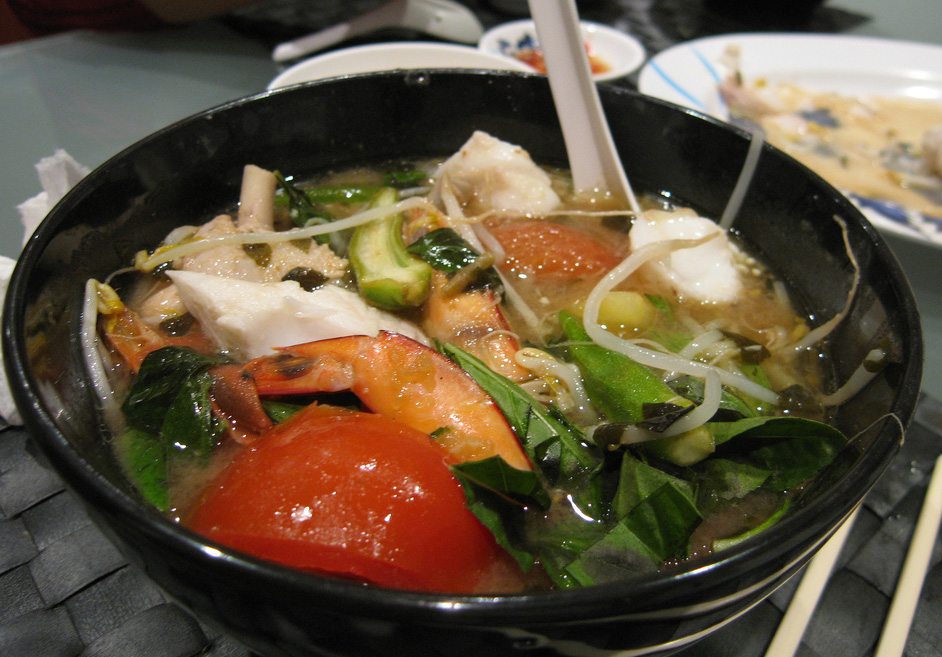
Canh chua is a bowl of sour tamarind broth loaded with fish, chunks of fresh pineapple, tomato wedges, spongy taro stem, and a raft of fresh herbs thrown in at the last second. It is sour and sweet at once, light rather than rich, and eaten as one dish among several at a Vietnamese family meal. It comes together in under half an hour and works with fish, shrimp, or nothing at all, which is why it appears on southern Vietnamese tables so constantly.
Soup of the Delta
The name is a plain description: canh refers to a shared family-style soup rather than a one-bowl noodle meal like pho, and chua means sour. It is indigenous to the Mekong Delta of southern Vietnam, a region of rivers and canals where freshwater fish and tropical fruit are both abundant, and the soup uses exactly what that region produces. Central Vietnam has its own versions. Across the border, the Khmer somlar machu is its close relative, which is unsurprising given how much the Delta and Cambodia share.
The Tamarind Broth
Tamarind supplies the sourness that gives the soup its name, and it needs to taste assertive rather than shy. Soak a block of tamarind pulp in hot water, work it with your fingers, and strain out the seeds and fibers, or use ready-made tamarind paste and adjust to taste. Fish sauce brings the salt and sugar balances the sour, and the three are tuned against each other until the broth tastes sharp and lively. Some cooks in the Delta use other souring agents entirely, including fresh lime, unripe tamarind fruit, or the local sour fruits available in season.
Pineapple and Tomato
Fresh pineapple is the ingredient people are most surprised by and the one they miss most when it is left out. Its sweetness plays directly against the tamarind, and its acidity reinforces the sour edge, so the broth ends up sweet and sour rather than simply tart. Cut it into chunks and add it early so it softens and releases into the liquid. Tomato wedges do similar work, adding color and a gentler tang, and they go in around the same time. Canned pineapple rings cut into pieces are an acceptable substitute when fresh is out of season.
Bac Ha and the Vegetables
Bac ha, the taro or elephant ear stem, is the vegetable that regular eaters of canh chua argue about being the best part. Peeled and sliced on the diagonal, it behaves like a sponge, soaking up broth while keeping a light crunch. Peel the tough outer skin thoroughly, since it can irritate the mouth otherwise. Okra and bean sprouts join it, both added at the very end so they keep their texture rather than going soft. Celery is a common substitute abroad where bac ha is hard to find, though the texture is not the same.
The Fish
Catfish is the traditional choice in the Delta, cut into thick steaks that hold together in the broth, with snakehead also common in Vietnam. Salmon, cod, and basa all work, and shrimp is a popular alternative that cooks in a minute. Pan-frying the fish briefly with a little garlic before it goes into the soup helps it keep its shape and stops it disintegrating as the pot simmers. Add it once the broth is seasoned and poach it gently, since boiling the fish hard breaks it apart and clouds an otherwise clear soup.
Serving Canh Chua
Take the pot off the heat and stir in the herbs at the last possible moment: rice paddy herb, whose particular aroma defines this soup, along with sawtooth coriander and Thai basil. Finish with fried garlic and sliced chili. Serve it hot in a communal bowl with steamed rice, alongside other dishes, and the classic partner is ca kho to, the caramel-braised fish in a clay pot, whose salty richness is exactly what this bright soup balances. Everyone spoons broth over their own rice as they eat.
Common Questions
What can I use instead of bac ha?
Celery is the usual substitute outside Vietnam, adding crunch if not the same spongy absorbency. Bac ha is sold fresh at Vietnamese markets and needs its outer skin peeled thoroughly. Some cooks simply add more okra and bean sprouts instead.
Can I make canh chua vegetarian?
Yes. Canh chua chay uses fried tofu and mushrooms in place of fish and soy sauce in place of fish sauce. The tamarind, pineapple, tomato, and herbs stay exactly the same, and the soup keeps its character.
How is it different from tom yum?
Both are sour Southeast Asian soups, but canh chua leans on tamarind with pineapple sweetness and fresh herbs, while Thai tom yum uses lemongrass, galangal, and chili paste. Canh chua is sweeter and milder; tom yum is hotter and more aromatic.
Canh chua, literally sour soup, is a Vietnamese soup indigenous to the Mekong Delta of southern Vietnam, built on a tamarind broth with fish, pineapple, and tomato.