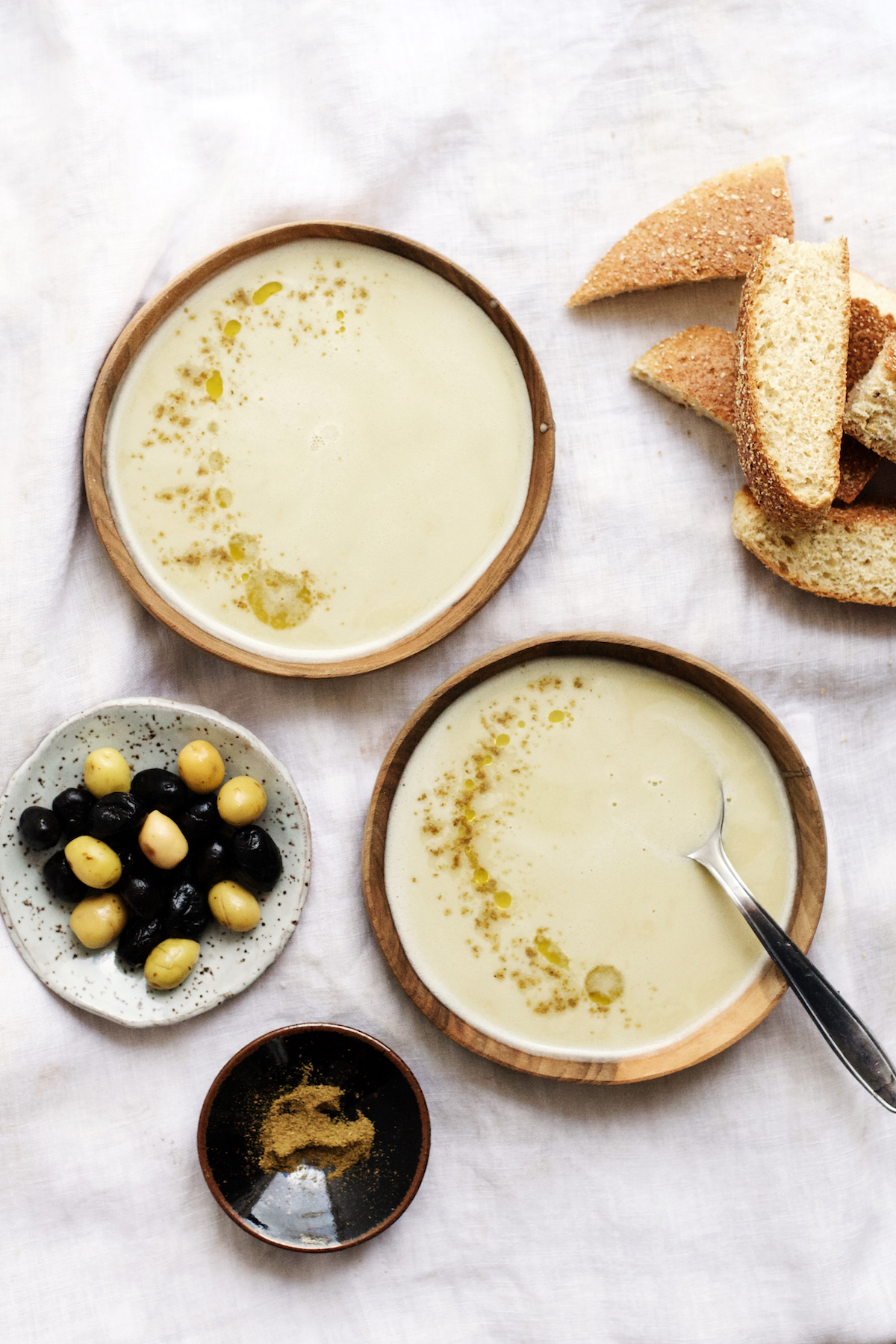
Bissara is one of the plainest things in Moroccan cooking and one of the most satisfying: dried fava beans simmered with garlic until they collapse, then blended smooth into a thick, pale, creamy soup and finished with a heavy pour of olive oil, a dusting of cumin, and a sprinkle of paprika. It costs almost nothing, takes four ingredients, and is eaten for breakfast on cold mornings from street stalls and home kitchens alike, scooped up with bread rather than spooned.
Breakfast in the North
Bissara, also written bessara, belongs above all to northern Morocco, where Tangier, Chefchaouen, and the surrounding region treat it as a winter staple. It is sold from small stalls and hole-in-the-wall places in the mornings, ladled into bowls for workers on their way to the day, and eaten again at home for dinner. Its reputation is as humble food, cheap and filling and made from a dried legume that keeps all year, which is precisely why it endured. In some regions it is made with dried split peas rather than fava beans, and both versions carry the same name.
The Right Beans
Buy split, skinless dried fava beans, sold at Middle Eastern and North African groceries and sometimes labeled split broad beans. Whole dried favas with their tough outer skins take far longer to cook and never reach the smooth creaminess this soup depends on, and peeling them by hand is miserable work. Soak the split ones overnight, which cuts the cooking time substantially, then drain and rinse them before they go in the pot. Older beans stay stubborn no matter how long they simmer, so buy from somewhere with turnover rather than a forgotten bag at the back of a shelf.
Cooking and Blending
Simmer the soaked beans in plenty of water with whole peeled garlic cloves until they have completely broken down, which takes an hour or more. Skim the foam that rises early on. The garlic cooks along with them and turns sweet and mellow, then blends into the soup, which is why bissara tastes of garlic without any harshness. Blend everything, beans and cooking liquid together, until it is entirely smooth. An immersion blender straight in the pot is easiest, and the soup should end up thick and creamy with no texture left at all.
Getting the Consistency
Bissara sits between a soup and a puree, thick enough to coat a spoon heavily but still pourable rather than solid. It continues thickening as it cools and as it stands, so keep a kettle of hot water beside the pot and loosen it as needed right up to serving. Some households in the north serve it noticeably thicker, almost like a dip for bread, while others keep it looser. Return the blended soup to the heat with olive oil, cumin, paprika, and salt and simmer for a few minutes so the spices cook into it rather than sitting on top.
The Finish
What arrives at the table matters as much as what happens in the pot. Each bowl gets a generous pool of raw olive oil poured over the surface, then a heavy dusting of ground cumin and sweet paprika, and often a pinch of cayenne for heat and a wedge of lemon. That top layer is where most of the flavor lives, so be generous with the oil and use one worth tasting. In Morocco the soup is sometimes topped with khlii, the preserved dried meat, or served alongside olives, which turns a simple bowl into something substantial.
Serving Bissara
Serve it very hot with plenty of khobz or crusty bread, which is the main utensil: pieces are torn off and dragged through the soup rather than a spoon doing all the work. It is breakfast food in the north, dinner elsewhere, and welcome on any cold day. Naturally vegan and gluten-free, it keeps four or five days refrigerated and thickens considerably in the fridge, so reheat it gently with a good splash of hot water and taste again for salt before serving.
Common Questions
Can I use split peas instead of fava beans?
Yes. Some Moroccan regions make bissara with dried split peas, and the name covers both. The method is identical, though split peas give a slightly sweeter, more yellow soup while fava beans produce the paler, earthier version most associated with the north.
Why is my bissara grainy?
The beans were undercooked or had their skins on. Use split skinless favas, soak them overnight, and simmer until they fall apart completely before blending. Blending underdone beans leaves a texture no amount of processing will fix.
How thick should it be?
Thick enough to coat a spoon heavily but still pourable. It stiffens as it cools, so loosen it with hot water right before serving. Some northern households prefer it dense enough to scoop like a dip, which is equally traditional.
Bissara is a Moroccan soup of dried fava beans or split peas blended into a thick creamy puree, eaten for breakfast or dinner and closely associated with northern Morocco.